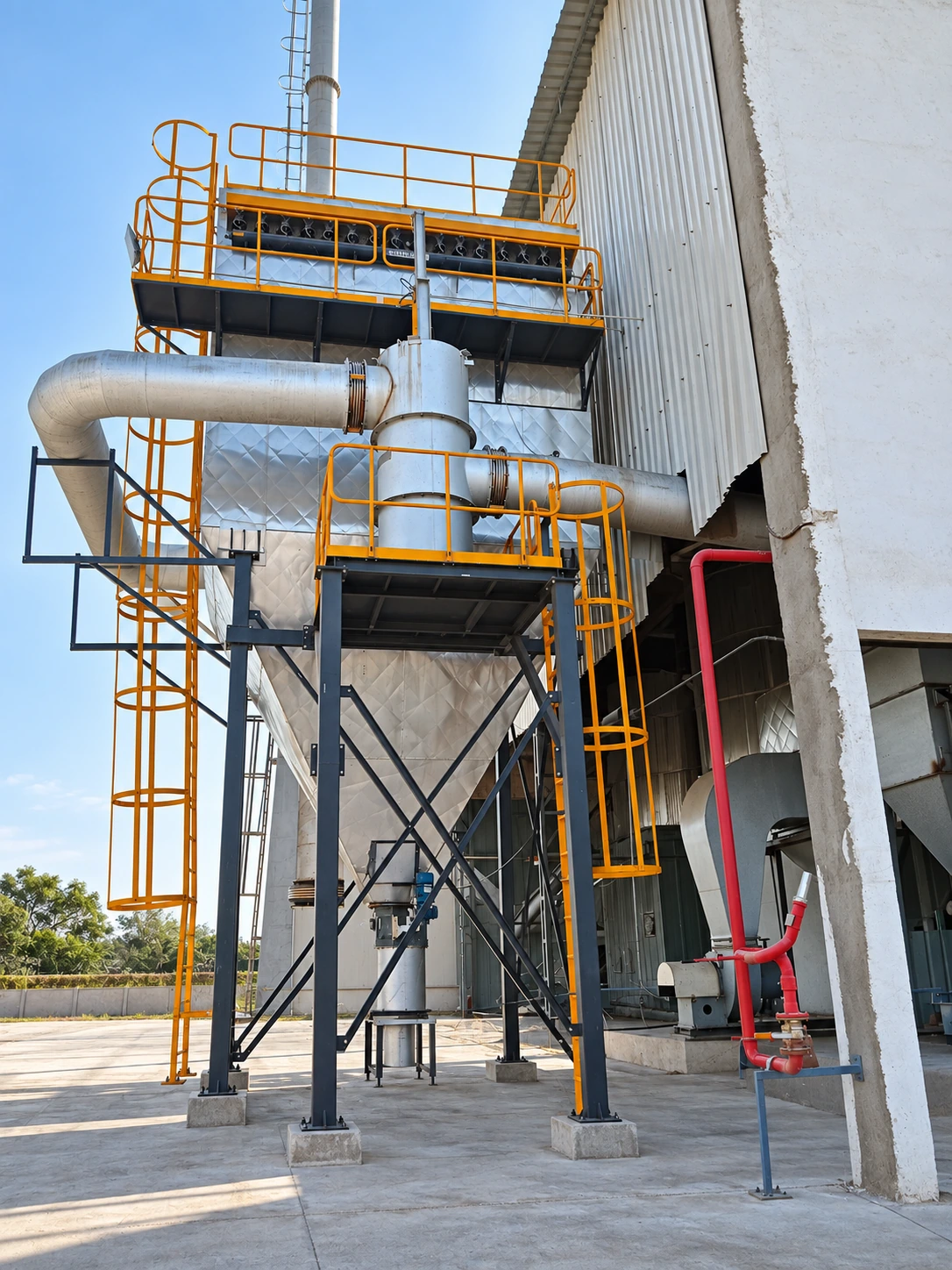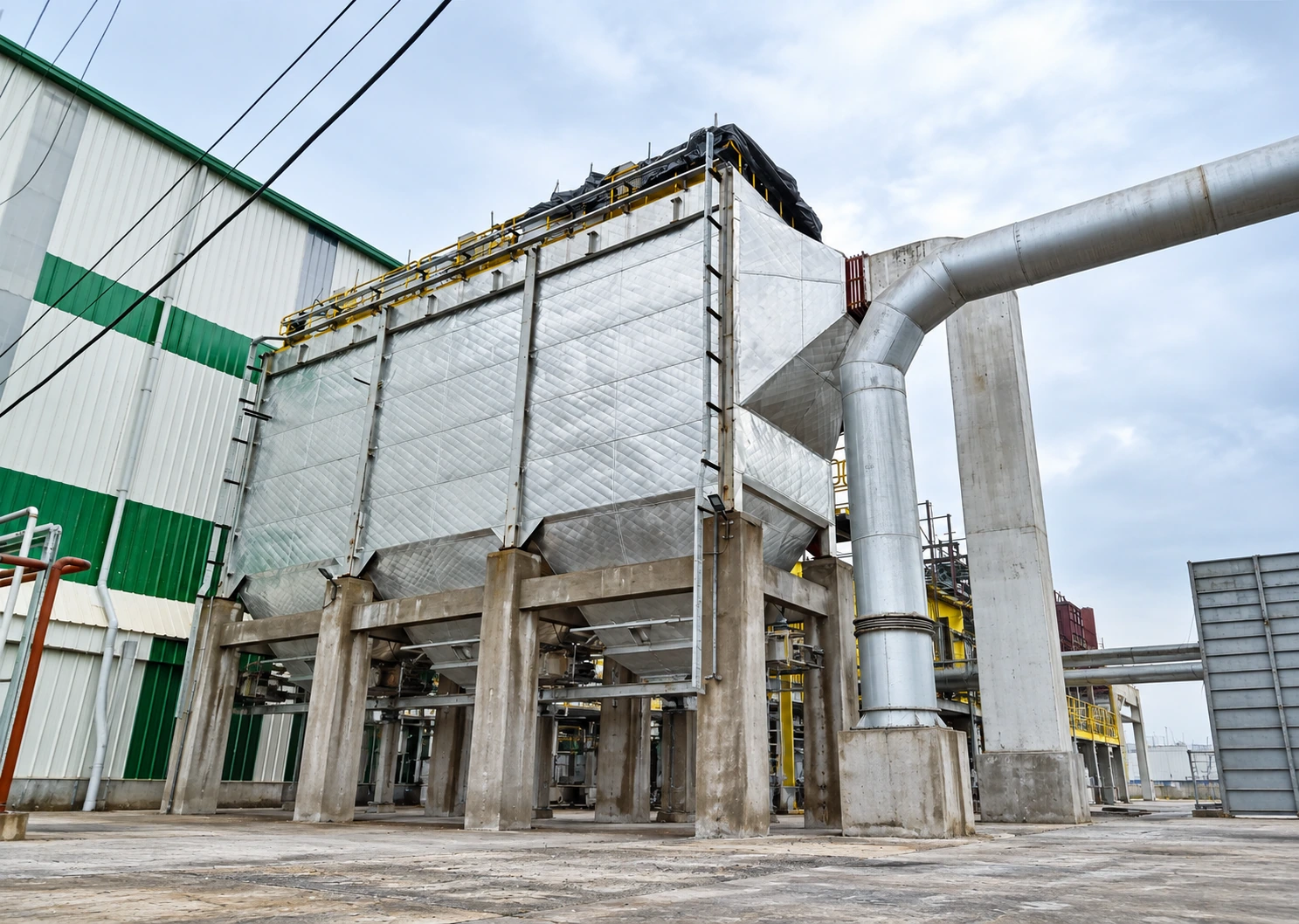

Industrial Boiler Fans including ID, FD, PA and SA Fans
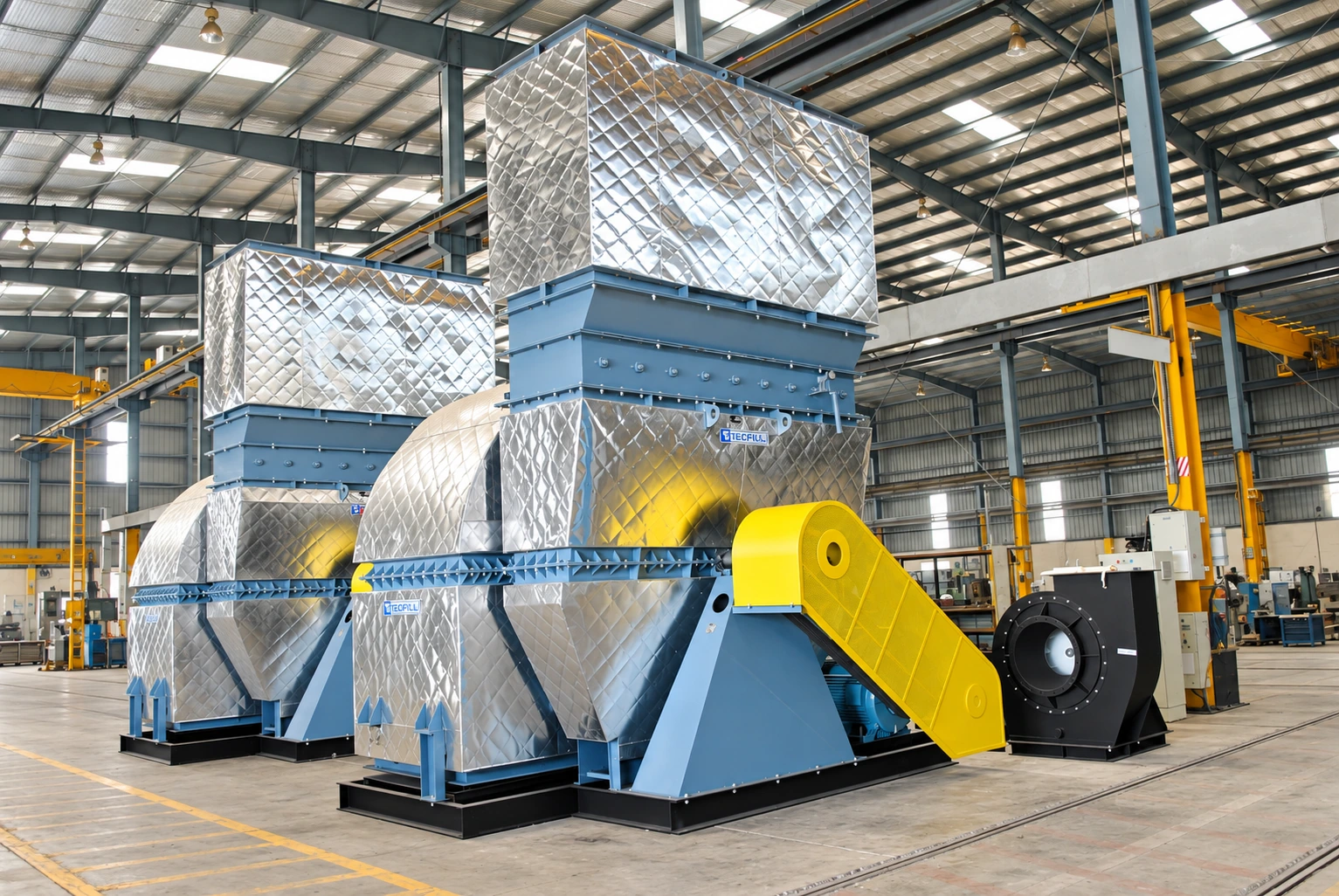
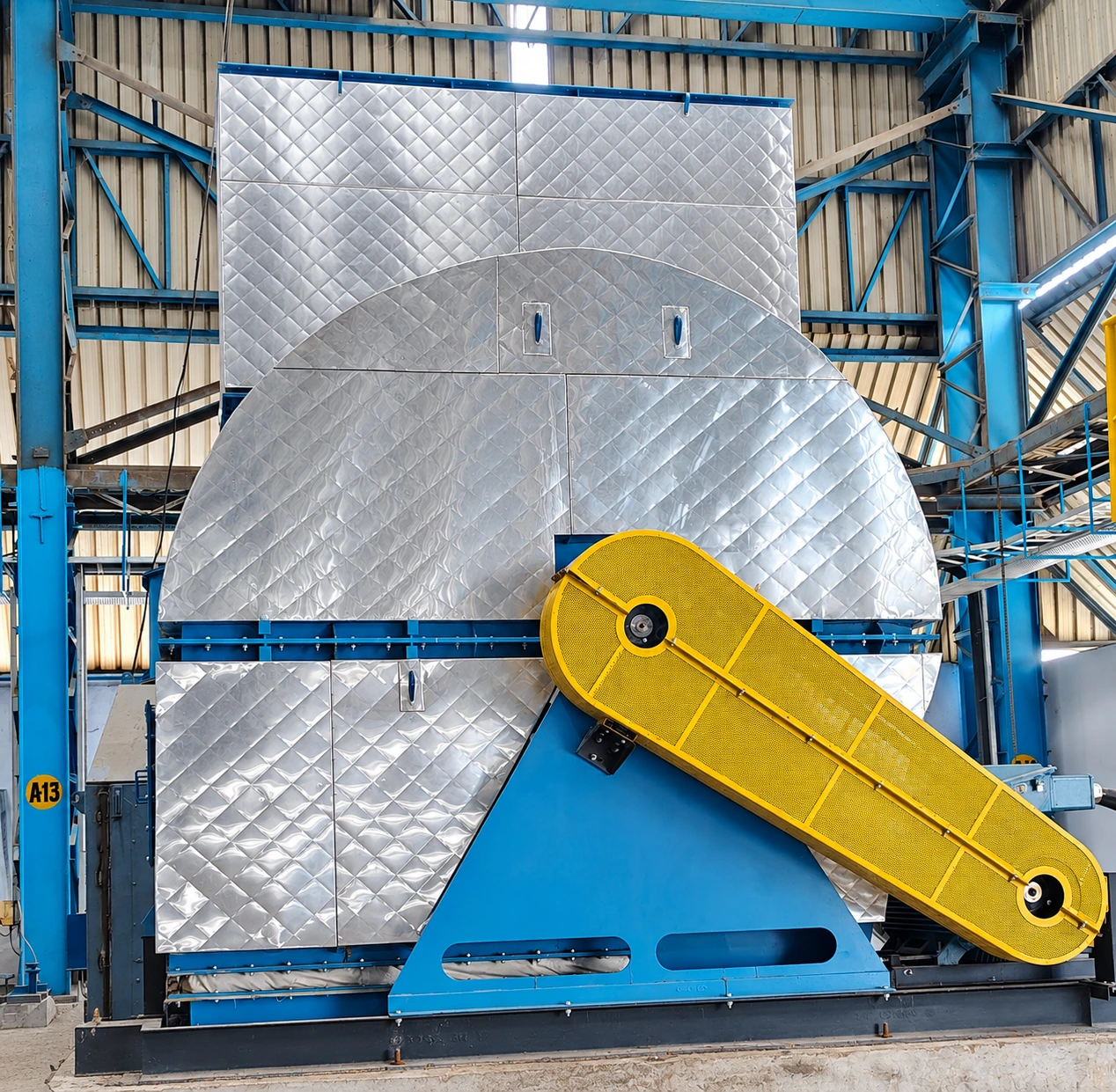
Industrial boiler fans control the movement of combustion air and flue gas through the boiler system. TECHFLOW supplies centrifugal ID, FD, PA and SA fans for qualified package, process, biomass, solid-fuel and process-heating duties. Each fan must be selected from its actual flow, static pressure, temperature, density, gas or air composition, dust exposure, control requirement and operating range—not from the duty name alone.
The boiler air and gas path
Combustion-air fans operate on the air side of the boiler, while the induced-draft fan operates on the flue-gas side. Their combined operation supports furnace pressure, combustion-air distribution and gas movement through heat-transfer surfaces, ducts, pollution-control equipment and the stack.
The exact arrangement depends on the firing technology. A boiler may not require every fan type, and the same abbreviation can conceal different duty conditions between OEMs. The fan schedule should therefore describe the process function and rated operating point in addition to the fan name.

Induced-draft fan
The ID fan draws flue gas through the boiler and downstream gas-cleaning equipment. It commonly handles elevated temperature and may be exposed to dust, erosion or corrosive constituents. Its static-pressure requirement must include the complete gas path: boiler surfaces, ducts, dampers, cyclone or multiclone where used, Bag Filter or ESP, stack and the required operating margin.
A collector change can alter the fan duty substantially. A Boiler Bag Filter introduces a filtration pressure-drop range that varies with operation and cleaning. A dry ESP application normally has lower gas-side resistance, but ducting, gas distribution and the remaining system still determine the actual fan requirement.
Forced-draft fan
The FD fan supplies combustion air at the pressure required by the windbox, air heater, dampers and furnace system. Air temperature, density, inlet condition, turndown and control philosophy affect the duty. The selected fan should operate efficiently across the expected load range rather than only at one nominal point.
Primary-air fan
The PA fan performs a firing-system-dependent role. It may supply primary combustion air, support a fuel bed or provide air for fuel transport in a defined boiler arrangement. Dust exposure, air temperature and pressure can vary widely, so the OEM's process description is essential.
Secondary-air and over-fire-air fan
The SA fan provides secondary combustion air or over-fire air where the furnace design uses air introduction at more than one combustion level. Flow distribution, required pressure and control range depend on burner, grate or furnace geometry. This duty should not be inferred from the boiler capacity alone.
Booster, recirculation or hot-gas fans may also appear in some systems, but they require independent process definition and capability confirmation. They are not automatic extensions of ID, FD, PA or SA selection.
Fan selection inputs
A technically complete fan enquiry should state:
- actual inlet flow at the relevant temperature, pressure and gas composition;
- required fan static pressure, including identified system components and margins;
- normal, minimum, maximum and upset operating points;
- air or gas temperature and density basis;
- dust loading, particle properties, erosion or corrosion risk;
- required impeller behaviour and material considerations;
- speed, motor, coupling or drive arrangement;
- damper, variable-frequency drive or other control method;
- efficiency, noise, vibration and testing requirements;
- redundancy and availability philosophy; and
- inlet/outlet orientation, layout, access and foundation constraints.
Final fan selection requires an agreed system-resistance basis. TECHFLOW does not publish proprietary selection calculations or undocumented margins.
Materials, wear and temperature
Material selection depends on temperature, gas chemistry, dust concentration and abrasion. High dust loading or erosive particles can affect blade profile, wear protection and expected inspection intervals. Elevated-temperature duty also influences shaft, bearing, insulation and expansion considerations. Peak temperature must be distinguished from continuous operation.
The fan and drive arrangement should allow safe access, alignment, inspection and maintenance. Balance, vibration and performance-testing requirements should be agreed in the technical specification and purchase documents.
Standalone fan or integrated boiler package
TECHFLOW can supply a centrifugal fan for a clearly defined standalone duty or coordinate it with a Boiler Bag Filter, dry ESP or selected dust collection package. Integration helps align collector pressure loss, duct resistance, gas conditions, control logic and the fan operating envelope.
For boiler OEMs and package integrators, interface data should include the heat and mass balance, resistance schedule, operating cases, motor and VFD philosophy, instrumentation, general arrangement and documentation. Plant owners replacing or upgrading a fan should provide current fan curves, measurements, damper position, motor loading, vibration history and the reason for change.
Explore the industrial centrifugal fans and blowers range.
Common specification mistakes
- quoting standard cubic flow when actual inlet flow is required;
- giving total pressure when the enquiry intends static pressure, or vice versa;
- omitting collector pressure drop and dirty-condition resistance;
- using boiler capacity as a substitute for gas flow;
- ignoring temperature-related density change;
- applying excess margin at several points until the fan is oversized;
- overlooking dust erosion, arrangement and maintenance access; and
- defining only the full-load point when the boiler operates across a broad range.
Frequently asked questions
What is the difference between an ID fan and an FD fan?
An ID fan draws flue gas through the boiler system, usually maintaining negative furnace pressure. An FD fan pushes combustion air into the boiler. They operate on different sides of the process and require separate duty data.
Are PA and SA fans required for every boiler?
No. Their need and function depend on the firing system. The boiler OEM should define the primary- and secondary-air duties and operating range.
Why can an APCD change the ID-fan requirement?
Bag Filters, ESPs, pre-separators and their ductwork add system resistance. The fan must cover the complete clean and operating resistance envelope while delivering the required gas flow.
Can TECHFLOW supply only the fan?
Yes. TECHFLOW can evaluate a standalone centrifugal-fan enquiry when the duty and interfaces are adequately defined. Fans can also be integrated with TECHFLOW particulate-control systems.
What information is essential for fan selection?
Actual flow, fan static pressure, temperature, density, composition, dust loading, operating range, control method, drive, layout and testing requirements are essential. The basis and units must be explicit.
Discuss an industrial-boiler fan duty
Send the process function, rated and alternate operating points, system-resistance schedule, gas or air properties, dust conditions, control philosophy and layout. TECHFLOW will evaluate the centrifugal fan against the defined boiler application and supply boundary.