
Industrial Boiler and Process Heating Air Pollution Control Solutions
TECHFLOW engineers particulate-control and air-handling systems for industrial steam and process-heating applications. The portfolio includes Boiler Bag Filters, dry electrostatic precipitators, induced-draft and combustion-air fans, and selected dust collection systems around dry fuel preparation and transfer. Applications include package and process boilers, industrial utility boilers, solid-fuel steam generation, waste-heat-recovery boilers and solid-fuel thermic-fluid or thermal-oil heaters.
The right arrangement depends on the fuel, firing method, flue-gas conditions, dust characteristics, operating profile, emission target and plant interfaces. TECHFLOW works with boiler manufacturers, package integrators, engineering contractors and plant owners to define these conditions before selecting equipment. The focus is industrial heat and steam—not utility-scale thermal power generation.
Industrial steam and process-heating applications covered
Industrial heat systems are not interchangeable. A package boiler serving a process plant, a biomass-fired steam boiler, a thermal-oil heater and a waste-heat-recovery boiler can produce very different gas and particulate conditions. Even two boilers of similar steam capacity may require different pollution-control equipment because their fuels, furnaces, ash behaviour and operating cycles differ.
TECHFLOW evaluates applications such as:
- package, process and industrial utility boilers used for plant steam;
- boilers fired with biomass, agro residues, coal, lignite or qualified fuel blends;
- solid-fuel thermic-fluid heaters and thermal-oil heaters;
- waste-heat-recovery boilers, where the upstream process defines the gas and dust envelope;
- hot-air or process-heating systems where particulate-bearing gas requires a qualified control arrangement; and
- dry fuel-receiving, crushing, screening, conveying and transfer points that need local dust extraction.
This scope does not include the design or supply of the boiler itself. It concentrates on particulate collection, draft and combustion-air fans, and defined auxiliary dust-control duties.
Fuel is the starting point for particulate-control design
Fuel names alone do not provide enough information for equipment selection. Rice husk, bagasse, wood waste, pellets, briquettes, coal, lignite, petcoke and mixed fuels can differ in ash content, moisture, particle size, abrasiveness, unburnt carbon, chemistry and variability. Firing technology and combustion stability further affect fly-ash loading, particle distribution, gas temperature and spark carryover.
These conditions influence whether a Boiler Bag Filter or dry ESP is more appropriate, whether pre-separation is useful, which filter media or collecting arrangement should be evaluated, and how the ID fan must be selected. Moisture and acid-dew-point risk affect condensation control. High temperature and upset conditions affect materials and protection philosophy. Dust resistivity is important for an ESP, while sparks, sticky dust and temperature excursions are important considerations for a Bag Filter.
Fuel switching deserves particular attention. A system assessed only for the normal fuel may be exposed to a different gas volume, particulate load or chemistry when an alternate fuel is introduced. The design basis should therefore state the expected fuel envelope, including blends and credible upset cases—not simply the boiler capacity.
From fuel handling to the stack: where the equipment fits

| Industrial route or process point | Equipment or operation | Typical issue to assess | Control application | Relevant TECHFLOW relationship |
|---|---|---|---|---|
| Dry fuel receiving and preparation | Unloading, crushing, screening and transfer | Fugitive dust at transfer or size-reduction points | Local extraction and filtration | Selected dust collection system with centrifugal fan |
| Combustion and steam generation | Package, process or industrial utility boiler | Fuel-dependent fly ash and particulate | Boiler Bag Filter or dry ESP | Particulate-control equipment with coordinated ID fan |
| Waste-heat recovery | WHRB connected to an upstream process | Source-dependent dust, gas chemistry and temperature | Application-specific particulate control | Upstream process data required before selection |
| Thermal-oil heating | Solid-fuel thermic-fluid or thermal-oil heater | Hot particulate-bearing flue gas | Qualified Bag Filter or ESP arrangement with ID fan | Heater-duty review and system integration |
| Draft and combustion air | ID, FD, PA and SA fan duties | Required airflow, pressure, gas transport and furnace balance | Centrifugal fan selection | Standalone or integrated fan package |
Not every plant contains every route shown above. The purpose of the map is to identify the interfaces that can affect collection performance and fan duty.
Boiler Bag Filters
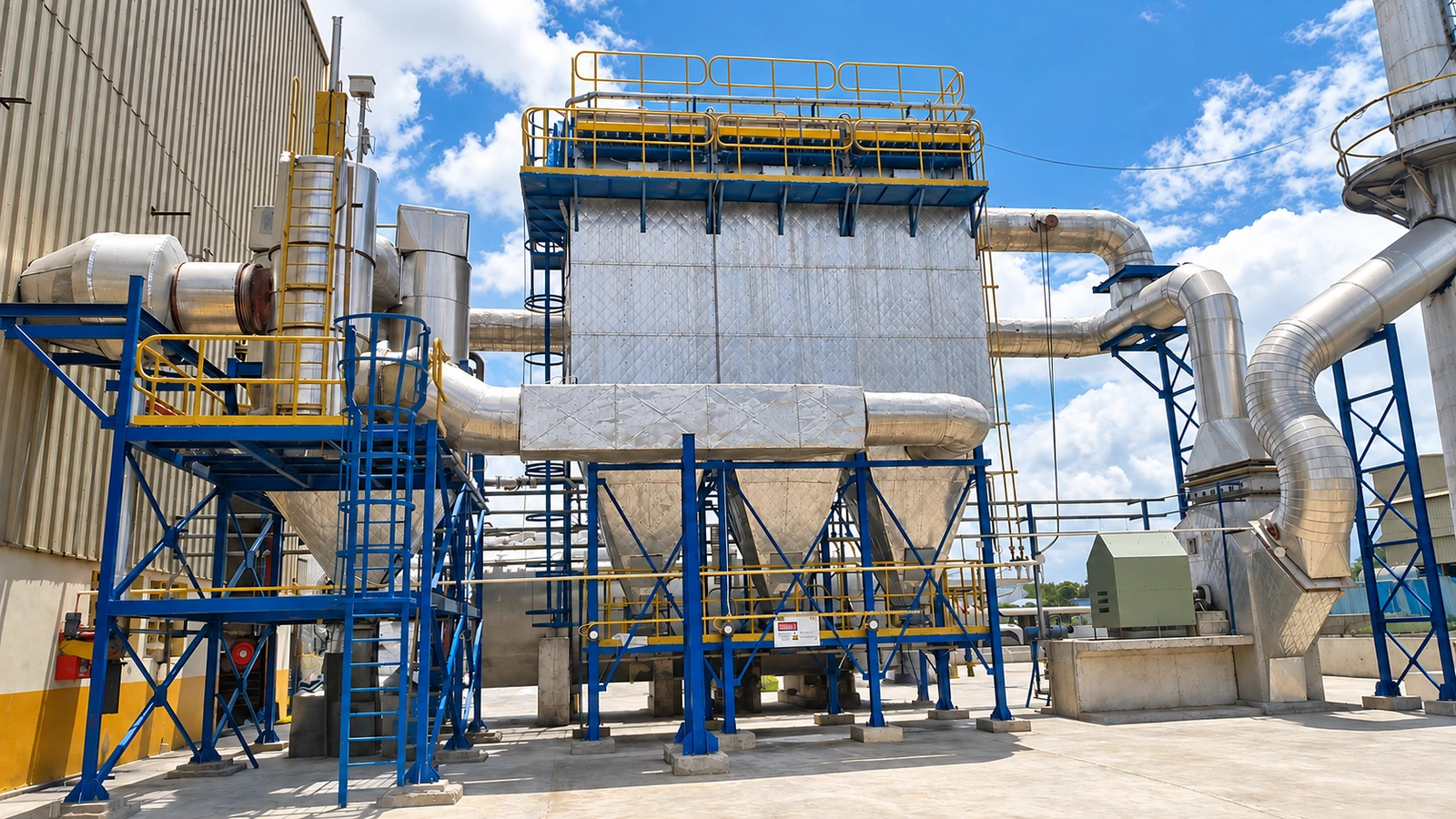
A Boiler Bag Filter removes particulate by passing flue gas through filter media. It can be an effective choice for many industrial solid-fuel boiler and heater duties when temperature, moisture, chemistry, sparks and dust characteristics are properly addressed. The application review may consider gas distribution, air-to-cloth ratio, media selection, cleaning philosophy, pressure drop, hopper interface, access and maintenance requirements.
The filter does not operate in isolation. Duct design, temperature control, air ingress, upstream combustion conditions, hopper evacuation and ID-fan capability all influence performance. Normal, peak and upset temperatures should be stated, along with the expected dew point and any credible spark or unburnt-carbon carryover.
See the Boiler Bag Filter product page for the product-specific route.
Dry electrostatic precipitators for industrial boilers
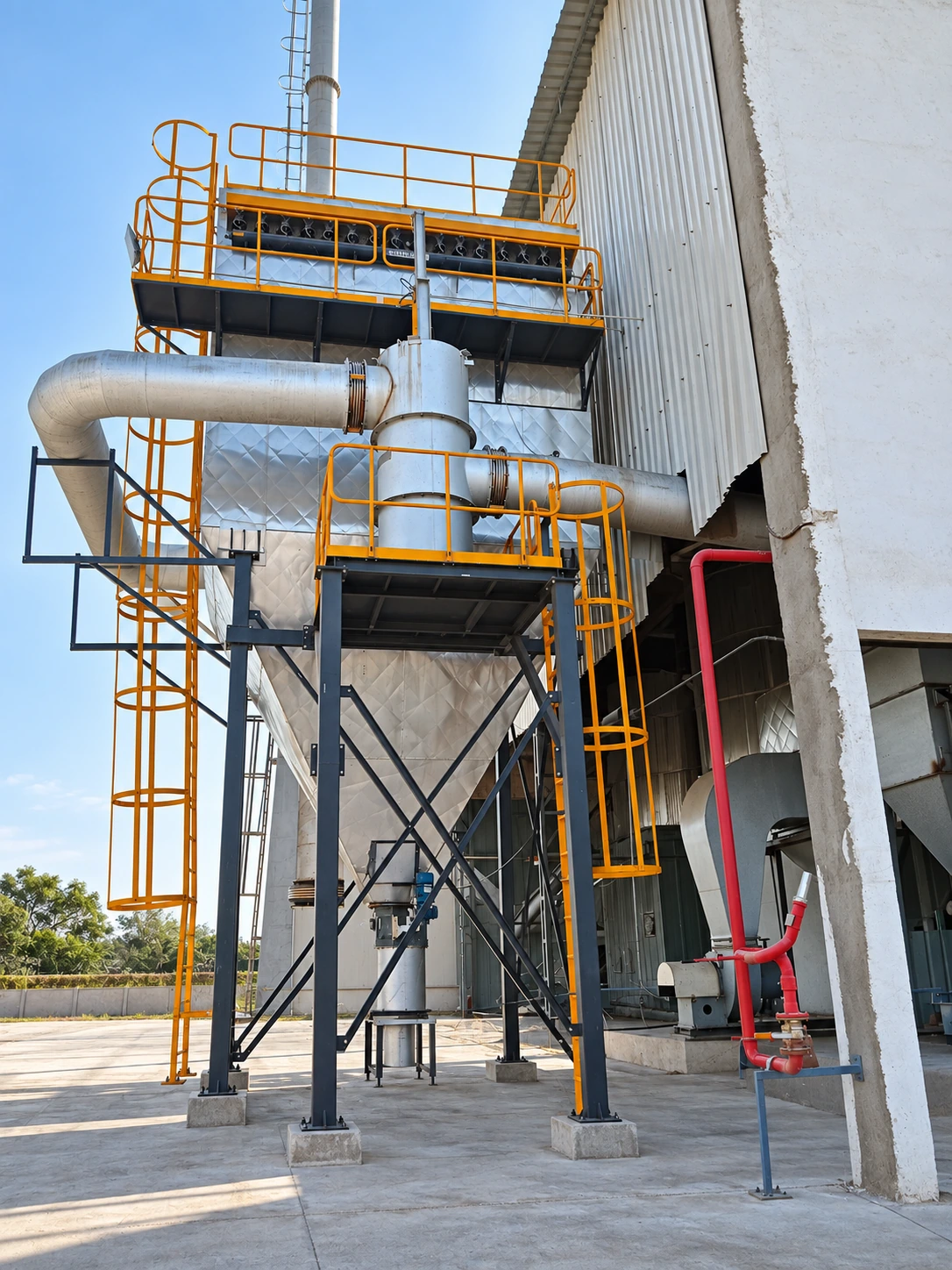
A dry ESP charges suspended particles and collects them on oppositely charged surfaces. It may suit industrial boiler duties where dust resistivity, gas distribution, loading, temperature, operating range, available footprint and electrical conditions support the technology. Collection fields, electrodes, rapping, hoppers and electrical controls must be considered as one operating system.
An ESP should not be selected from boiler capacity or fuel label alone. Fuel chemistry, particle characteristics, load variation and gas conditions can materially affect performance. The number and arrangement of fields, gas-flow distribution and downstream draft requirement are project-specific.
Bag Filter or ESP: the decision follows the application
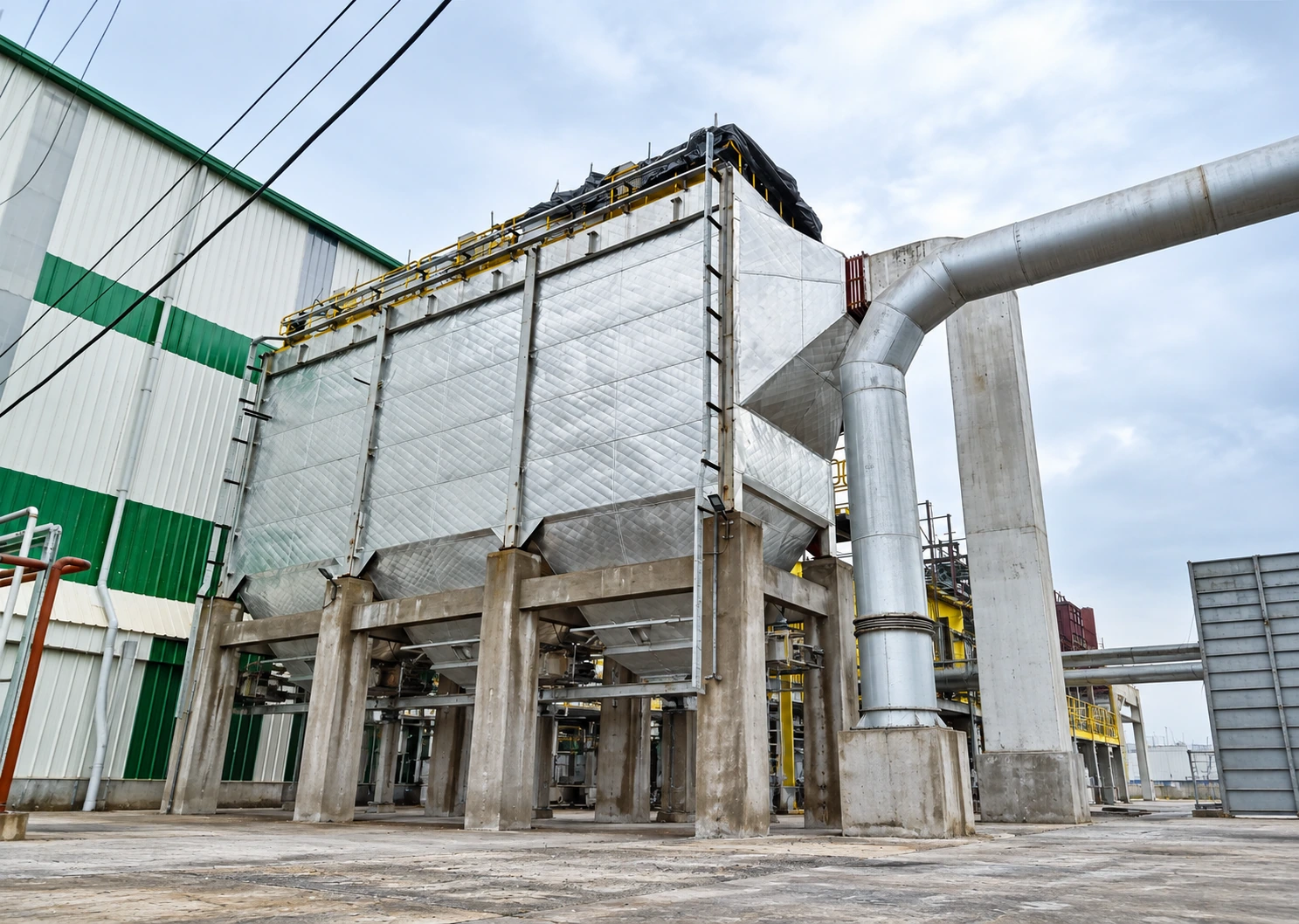
Neither technology is the universal answer for every boiler. A Bag Filter may be attractive where filtration provides a robust route to fine particulate capture and the gas is compatible with the selected media and protection philosophy. A dry ESP may be attractive where the dust and gas properties, operating profile, footprint and lifecycle considerations support electrostatic collection with relatively low gas-side pressure loss.
The comparison should use the same design basis for both options: fuel range, gas flow, inlet loading, particle size, temperature, moisture, chemistry, load profile, required outlet condition, pressure loss, power, space, maintenance resources and lifecycle cost. Pre-separation may protect or unload the final collector in selected duties, but a cyclone or multiclone should not be assumed to replace the final high-efficiency particulate-control step when a stringent outlet target applies.
ID, FD, PA and SA fans for boiler systems
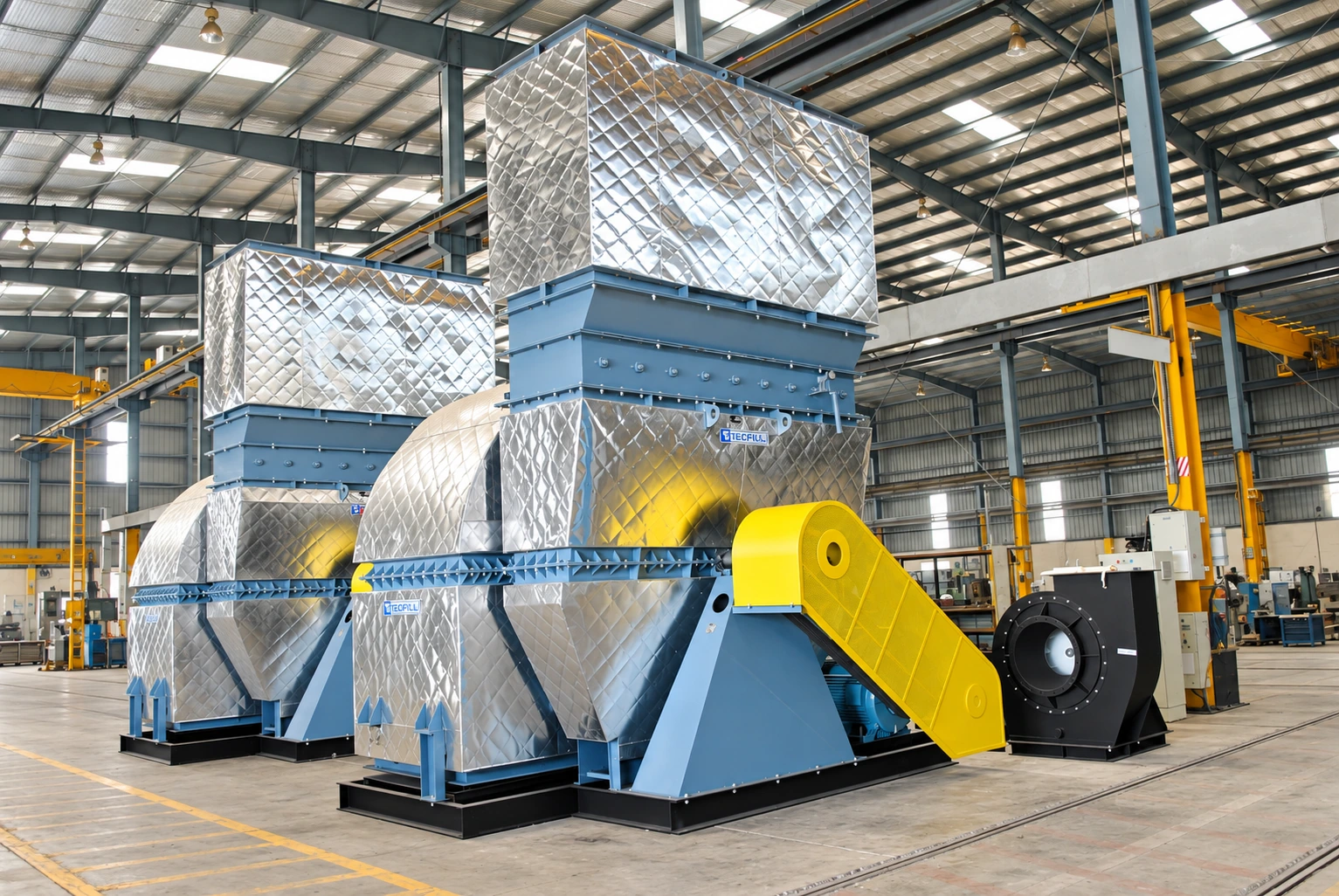
Fans establish the airflow and pressure relationships that allow combustion and flue-gas cleaning systems to operate. The induced-draft fan draws flue gas through the boiler, ducts and particulate-control equipment toward the stack. Its duty must reflect the complete system resistance, gas temperature and density, dust exposure, control philosophy and operating margin.

Forced-draft fans supply combustion air. Primary-air and secondary-air fans perform firing-technology-dependent duties such as fuel-bed air, transport or secondary combustion air. The precise arrangement varies with the boiler and furnace design, so fan names should not substitute for an agreed duty point and process description.
TECHFLOW can address centrifugal fans as standalone equipment or as part of an integrated particulate-control package. Selection requires actual flow and pressure at operating conditions, gas or air composition, temperature, dust loading, speed-control requirement, material needs, drive arrangement, redundancy philosophy and the expected operating range.
Explore industrial boiler fan duties or the centrifugal fans and blowers range.
Dust collection around dry fuel handling
Dry solid-fuel logistics can create dust at unloading, crushing, screening, belt or screw transfer points, bucket elevators and bunker vents. When these sources fall within the agreed project boundary, TECHFLOW can evaluate local extraction hoods, ducts, a suitable dry collector and the extraction fan.
Good collection depends on controlling the source, maintaining capture velocity and providing a practical discharge interface. The duty is distinct from boiler-flue-gas cleaning and should be assessed separately. TECHFLOW does not supply downstream ash handling, ash conveying or ash-recycling systems.
Different project routes, one engineering basis
Boiler manufacturers and package integrators typically need equipment that fits a defined thermal package, guarantee structure, control philosophy, layout and documentation schedule. Early exchange of the fuel envelope, mass balance, fan resistance, interfaces and battery limits reduces integration risk.
Plant owners may approach the same problem through a new project, capacity expansion, fuel conversion, emission upgrade, reliability issue or high fan-energy use. Existing-plant work also requires field dimensions, current operating data, available shutdown windows and a clear account of the present equipment's limitations.
In both routes, the technical basis matters more than a model number. TECHFLOW can coordinate the particulate collector and relevant fan duties while maintaining clear responsibility boundaries with the boiler supplier, civil contractor, electrical package, stack, ducting and material-discharge systems.
Engineering conditions that determine reliable performance
A dependable proposal starts with the actual gas and dust envelope. Key conditions include:
- normal, minimum and maximum gas flow at stated temperature, pressure and moisture;
- normal and peak temperature, credible excursions and dew-point margin;
- fuel specification, ash content, fuel variability and firing method;
- inlet particulate loading, particle-size distribution and relevant dust properties;
- sparks, char, sticky material, abrasion or corrosive constituents;
- load range, start-up, shutdown and upset scenarios;
- permitted pressure drop and the available or proposed ID-fan duty;
- outlet particulate target, reference oxygen, dry or wet basis and test method; and
- layout, access, utilities, controls, civil loads and discharge interfaces.
For suitable applications, equipment can be engineered toward an outlet particulate target below 10 mg/Nm³. This is not a universal or standalone guarantee: the committed value must be tied to the agreed fuel and gas envelope, inlet loading, equipment configuration, operating conditions, measurement basis and contractual test method. More stringent values require project-specific validation.
Clear scope and battery limits
TECHFLOW's boiler-industry scope centres on dry particulate control, centrifugal fans and selected dry dust-extraction systems. A project may include a Boiler Bag Filter or dry ESP, relevant fans, controls and defined inlet, outlet, hopper or duct interfaces according to the agreed supply boundary.
Downstream ash handling and conveying are excluded. Wet scrubbers are not presented as a standard TECHFLOW boiler solution. Gas-fired or PNG-fired boilers are not a priority particulate-control application unless a separate dust-producing process creates a genuine collection duty. Waste-heat-recovery work is evaluated from the upstream source conditions rather than treated as a generic boiler case.
Why industrial boiler projects involve TECHFLOW
TECHFLOW combines particulate-control and centrifugal-fan capabilities within one engineering conversation. That is valuable where collector pressure loss, duct resistance, gas conditions and fan operation must be coordinated rather than divided into disconnected selections.
Experience with boiler manufacturers, package suppliers and end users supports both repeat-equipment and plant-specific project routes. The company serves projects across industrial sectors and international markets while adapting documentation, interfaces and equipment configuration to the application. Public performance statements remain tied to validated project conditions; reference details can be shared through the appropriate commercial process where permitted.
Information to include with an enquiry
For a useful first review, provide as much of the following information as available:
- boiler, heater or upstream process type, capacity and firing technology;
- primary and alternate fuels, with proximate or ultimate analysis where available;
- flue-gas flow at normal, minimum and maximum load, with reference conditions;
- normal, peak and upset temperatures, moisture and gas composition;
- inlet particulate loading and available dust analysis;
- required outlet particulate level and its oxygen, moisture and test basis;
- existing or proposed fan data and total system resistance;
- plot plan, duct route, height limits, maintenance access and utilities;
- operating hours, load variation, fuel-switching and redundancy needs; and
- required battery limits, controls, documentation and delivery location.
If some data is not yet available, identify it as pending rather than replacing it with an assumed value. TECHFLOW can then define the information needed for the next engineering step.
Frequently asked questions
What is an industrial boiler air-pollution-control system?
It is the equipment and associated gas-path arrangement used to control pollutants from an industrial steam or process-heating plant. For TECHFLOW's current boiler scope, the main focus is dry particulate collection using a Boiler Bag Filter or dry ESP, coordinated with the relevant centrifugal fan and defined interfaces.
Which particulate-control equipment is used for a solid-fuel boiler?
Boiler Bag Filters and dry ESPs are common final-control options. Cyclones or multiclones can serve as pre-separators in suitable cases. Selection depends on the fuel, ash and gas properties, firing system, loading, operating range, target, footprint, power and maintenance needs.
How does fuel type affect Bag Filter or ESP selection?
Fuel affects ash quantity, particle behaviour, chemistry, moisture, temperature, sparks and dust resistivity. These variables can change filter-media needs, condensation and fire-risk controls, ESP collection behaviour, equipment size and fan duty. The expected fuel envelope should be assessed before technology is selected.
Can TECHFLOW engineer for an outlet particulate target below 10 mg/Nm³?
For suitable applications, yes, subject to a project-specific design and guarantee basis. The value must be linked to the agreed fuel, inlet dust, flue-gas conditions, equipment configuration, operating range, reference oxygen, moisture basis and test method. It should not be treated as an unconditional result for every boiler or fuel.
What is the role of the ID fan after a particulate collector?
The ID fan draws flue gas through the boiler, ductwork and collection equipment while maintaining the required draft. Its selected flow and pressure must include collector and system resistance across the operating range, with temperature, density, dust exposure, control method and margin considered.
Does TECHFLOW work with thermic-fluid heaters and waste-heat-recovery boilers?
Yes, where the application fits the validated particulate-control and fan scope. Solid-fuel thermic-fluid heaters require fuel, temperature, dust and spark review. A waste-heat-recovery boiler requires upstream process data because the source determines the gas composition and particulate conditions. See thermic-fluid heater emission control.
Does TECHFLOW supply ash handling?
No. TECHFLOW can define the collector hopper or discharge interface within the agreed package, but downstream ash conveying, storage, recycling and disposal systems are outside the current supply scope.
What should a boiler manufacturer or plant owner send with an RFQ?
Send the boiler or heater duty, fuel range, firing method, gas flow and temperature envelope, inlet particulate data, required outlet basis, operating profile, layout, fan or pressure data, utilities, controls and battery limits. Existing plants should also include current equipment details and measured operating data.
How should a Bag Filter and ESP be compared?
Compare both against the same fuel, gas, dust, load, outlet, plot-space, energy, maintenance and lifecycle basis. There is no universal winner. A technology-neutral application review should precede a commercial comparison.
Discuss an industrial boiler requirement
Share your boiler, process-heater or dry fuel-handling data with TECHFLOW for an application review. Whether the project starts with a boiler manufacturer, an engineering company or a plant owner, the first step is to establish the fuel, gas, particulate, fan and interface conditions that define a reliable solution.