
Thermic Fluid Heater and Thermal-Oil Heater Emission Control
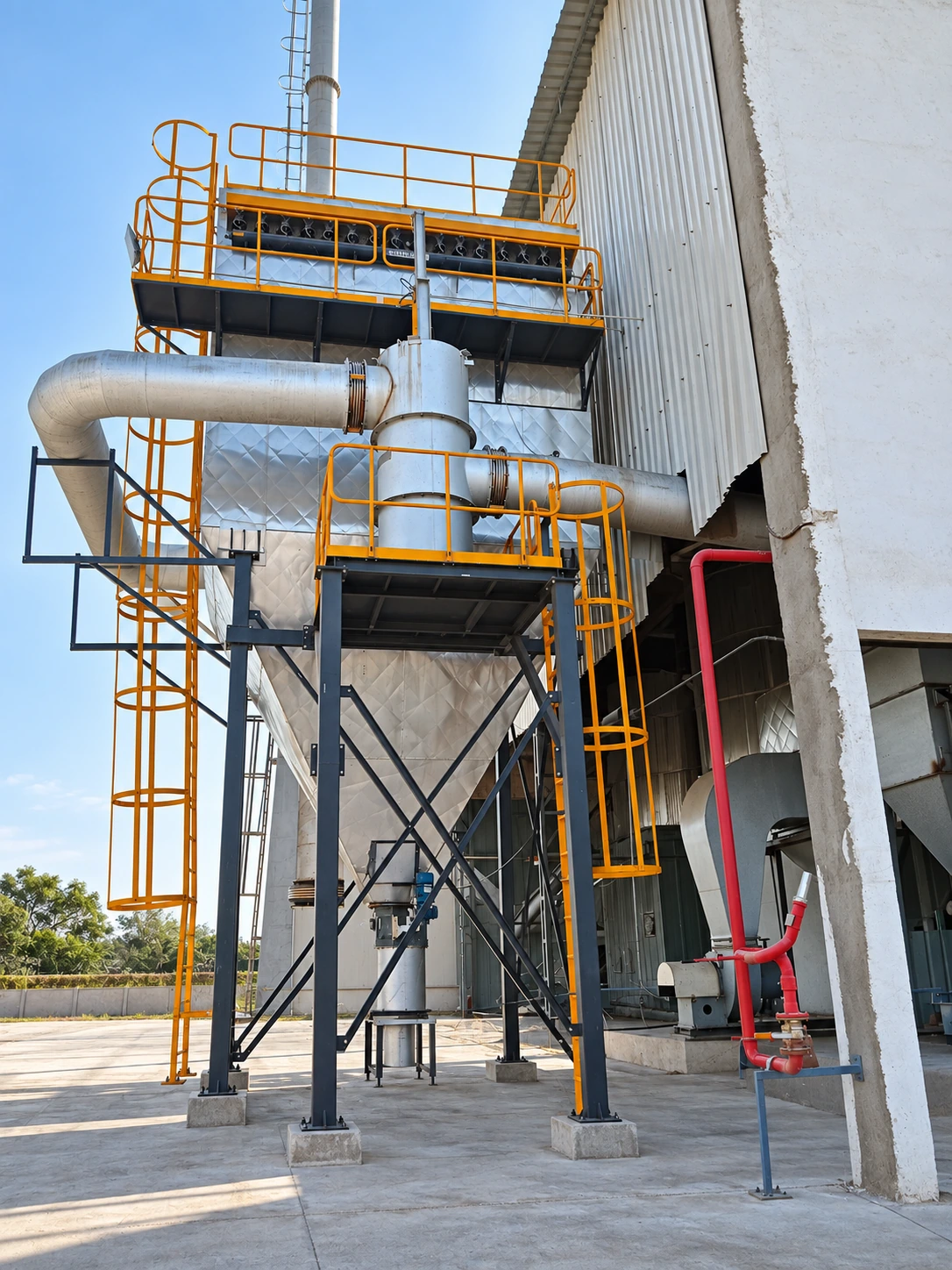
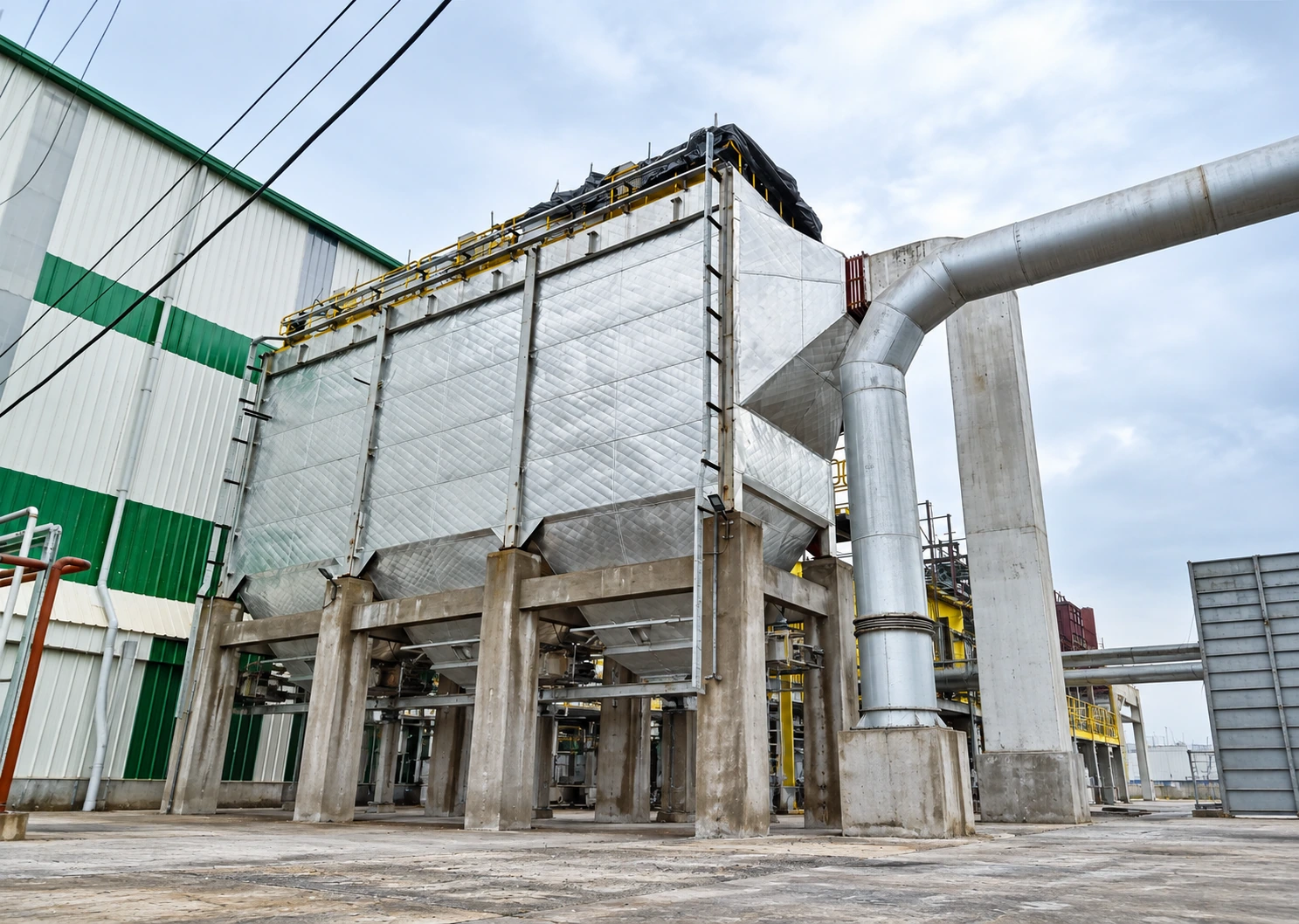
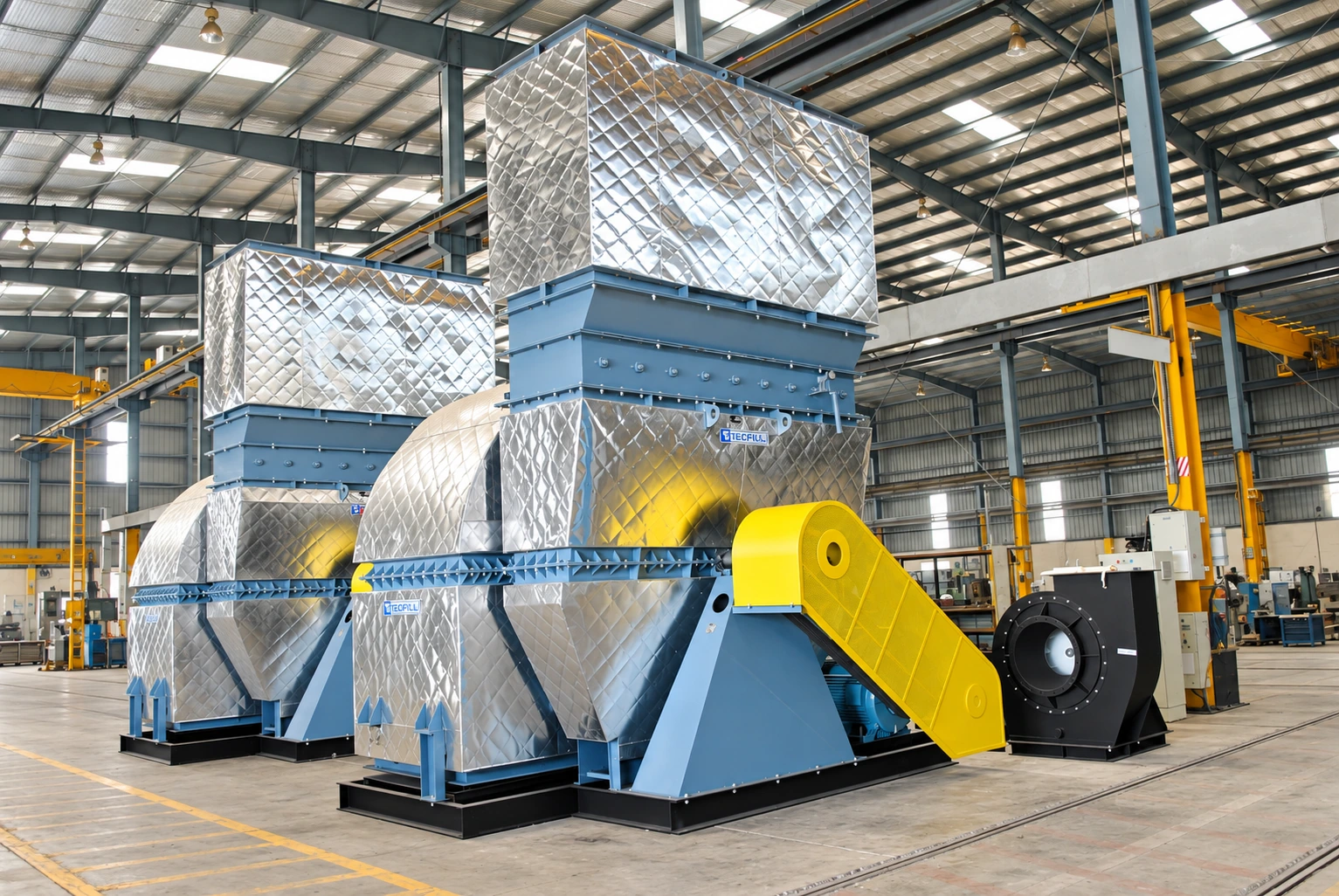
Solid-fuel thermic-fluid heaters and thermal-oil heaters can require dedicated flue-gas particulate control and induced-draft fan selection. TECHFLOW evaluates Boiler Bag Filters, dry ESPs and centrifugal ID fans for qualified heater duties based on the fuel, heat load, gas flow, temperature, dust loading, operating profile and required outlet condition. The heater itself and its thermal-oil circuit remain outside TECHFLOW's pollution-control scope.
How this duty differs from a steam boiler
A thermic-fluid heater transfers heat to thermal oil rather than producing steam. Market terminology may also include thermopac-type systems, but product names and configurations vary. The pollution-control decision must follow the actual heater and gas data rather than an assumed equivalence with a boiler of similar heat rating.
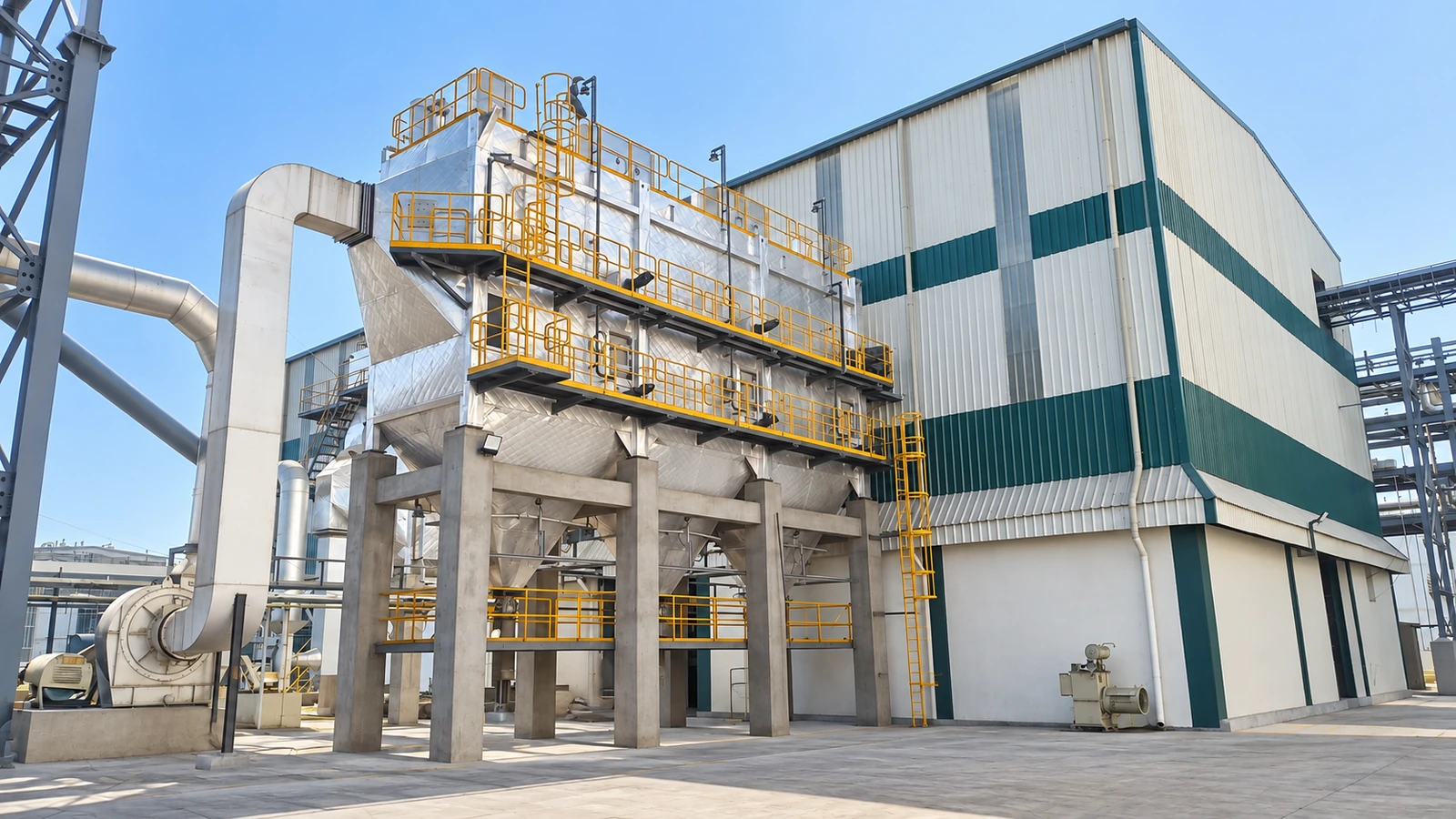
The gas path typically includes the fired heater, heat-recovery sections where applicable, particulate-control equipment, ID fan and stack. System resistance and temperature must be evaluated across normal, minimum, maximum and upset operation.
Fuel and flue-gas challenges
Coal, lignite, biomass, briquettes and qualified fuel blends can create different ash and gas conditions. Relevant variables include ash content, moisture, particle distribution, unburnt carbon, sparks, abrasiveness, sulfur or alkali constituents and fuel variability. Temperature excursions can affect filter media or materials, while excessive cooling and air ingress can reduce the margin above the dew point.
Fuel switching is a design condition, not a purchasing note. The engineering basis should identify the expected primary and alternate fuels and the credible blending range.
Particulate-control routes
A Boiler Bag Filter may be evaluated where the gas is compatible with the selected media and protection philosophy. The review should cover filtration conditions, gas distribution, cleaning method, pressure drop, temperature, condensation, sparks, hopper evacuation interface and maintenance access.
A dry ESP may be evaluated where dust resistivity, gas conditions, load profile, footprint and lifecycle requirements support electrostatic collection. The number of electrical fields and collection arrangement are project-specific. See dry ESPs for industrial boiler and heater duties.
A cyclone or multiclone may have a pre-separation role in selected duties, but should not be assumed to meet a stringent final outlet target by itself. Use the Bag Filter versus ESP guide to compare final-control options on a common basis.
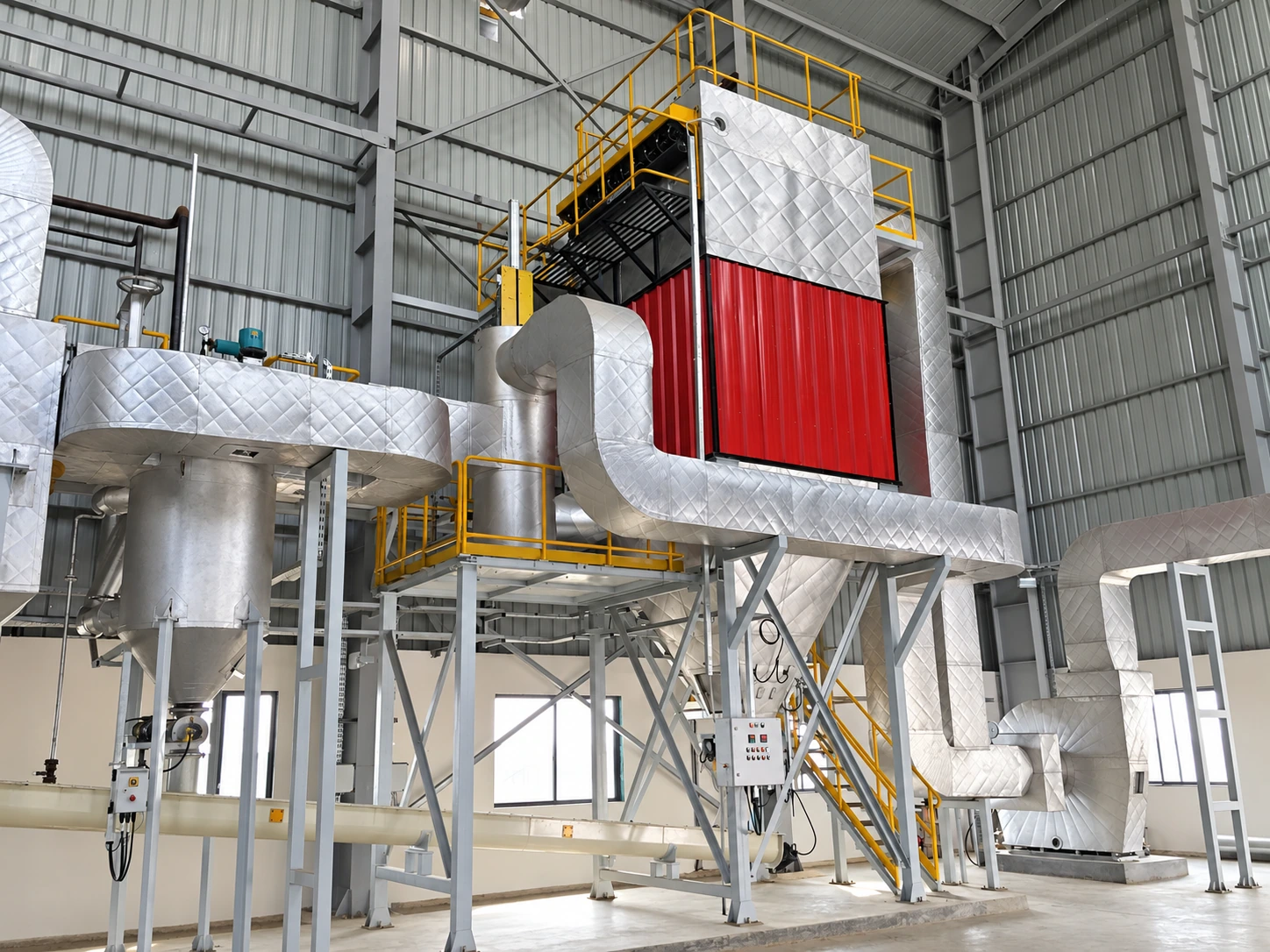
ID-fan and gas-path integration
The ID fan draws flue gas through the heater and collection equipment. Its duty must account for actual gas flow, temperature and density, collector pressure loss, ducts, dampers, stack requirement, dust exposure, control method and operating margin. A fan selected for the heater without the final collector resistance may not support the complete system.

TECHFLOW can supply the fan within a coordinated particulate-control package or for a defined standalone duty. Explore industrial centrifugal fans and blowers and boiler and heater fan duties.
System interfaces and boundaries
A project may include the collector, relevant fan, controls and defined duct, inlet, outlet and hopper interfaces according to the agreed battery limits. Coordination is required with the heater supplier, structural and civil works, electrical system, stack and downstream material-discharge arrangement.
TECHFLOW does not supply downstream ash handling or conveying. Wet scrubbers are not presented as the standard solution for this particulate-control duty. Gas- or PNG-fired heaters are not a priority particulate application unless a separate dust source creates a genuine collection need.
Performance and measurement basis
An outlet target is meaningful only when its reference conditions are stated. Fuel, inlet loading, gas flow, temperature, equipment configuration, operating load, oxygen reference, moisture basis and test method must be agreed. A project-specific performance result must not be generalized to every thermic-fluid heater.
Information required for an enquiry
Provide the heater type and heat duty, firing system, fuel and alternate-fuel analysis, gas flow at stated conditions, normal and peak temperature, moisture and relevant gas constituents, inlet particulate concentration and dust data, required outlet and test basis, operating hours and load range, current or proposed ID-fan data, layout, access, utilities, controls, duct and stack interfaces, hopper boundary and project location.
For an existing installation, include current equipment details, measured conditions, identified operating problems and the available shutdown window.
Frequently asked questions
Is a thermic-fluid heater the same as a boiler for APCD selection?
No. Some evaluation variables overlap, but the heater duty, gas path, temperature profile, fuel and operating conditions must be defined independently.
Can a Bag Filter be used with a solid-fuel thermal-oil heater?
It can be evaluated where temperature, dew point, sparks, chemistry, loading and selected filter media are compatible. Protection and operating philosophy are application-specific.
Can a dry ESP be used instead?
Yes, where ash resistivity, gas conditions, operating range, footprint and lifecycle considerations support it. Neither technology should be chosen from heater rating alone.
Why must the ID fan be reviewed when an APCD is added?
The collector changes total gas-path resistance. The fan must deliver the required flow and draft across the complete operating range at the actual gas temperature and density.
Does TECHFLOW supply the heater or ash-handling system?
No. TECHFLOW's defined role is particulate-control equipment, relevant centrifugal fans and agreed interfaces. The heater and downstream ash system remain outside scope.
Discuss a thermic-fluid-heater requirement
Share the heater, fuel, gas, dust and layout information for an application review. TECHFLOW will evaluate the appropriate collector and ID-fan relationship within a clear supply boundary.