
Biomass and Solid-Fuel Boiler Particulate Control
Particulate-control selection for a biomass or solid-fuel boiler begins with the complete fuel and operating envelope. Rice husk, bagasse, wood residues, pellets, briquettes, agro residues, coal, lignite, petcoke and mixed fuels can produce very different ash loading, particle behaviour, chemistry, moisture and spark conditions. TECHFLOW evaluates Boiler Bag Filters, dry ESPs, centrifugal fans and selected dry fuel-handling dust collection from that application data.
Why fuel-led evaluation matters
Two boilers with the same steam rating can need different pollution-control systems. Fuel ash percentage affects particulate loading. Particle size and density affect transport and pre-separation. Alkali, sulfur, chlorine and other constituents can influence deposit behaviour, corrosion or condensation risk. Unburnt carbon and spark carryover affect protection philosophy. Moisture and temperature influence the available margin above the dew point.
The firing system also matters. Grate- or stoker-fired boilers and industrial fluidized-bed boilers can differ in carryover and operating behaviour. AFBC duties may be evaluated within the stated industrial-boiler envelope. CFBC terminology must be qualified carefully because large power-sector applications are outside this page's focus.
Fuel families and the questions they raise
| Fuel family | Conditions to establish before selection |
|---|---|
| Rice or paddy husk | Ash loading, silica-rich ash behaviour, particle distribution, resistivity, temperature and fuel variability |
| Bagasse and agro residues | Seasonal moisture, ash content, carryover, variable blends and operating profile |
| Wood chips, bark, sawdust and wood waste | Moisture range, fines, sparks, char and contamination |
| Biomass pellets and briquettes | Feedstock consistency, binder or contamination, ash chemistry and alternate-fuel use |
| Coal and lignite | Ash percentage, abrasiveness, sulfur, unburnt carbon, temperature and loading |
| Petcoke | Chemistry, sulfur-related conditions, ash characteristics and confirmed boiler application |
| Mixed or multi-fuel duty | Worst credible gas, dust and chemistry conditions across fuels and blends |
RDF and SRF are not treated as interchangeable solid fuels here. Their pollutant and Waste-to-Energy context requires separate scope and ownership review.

From fuel receiving to final flue-gas cleaning
Dry fuel can release dust during unloading, crushing, screening, conveying, elevator discharge and bunker venting. Local capture, ducting, a suitable dry collector and an extraction fan may be evaluated for these sources. This is a separate duty from boiler flue-gas cleaning and should have its own airflow, dust and discharge basis.
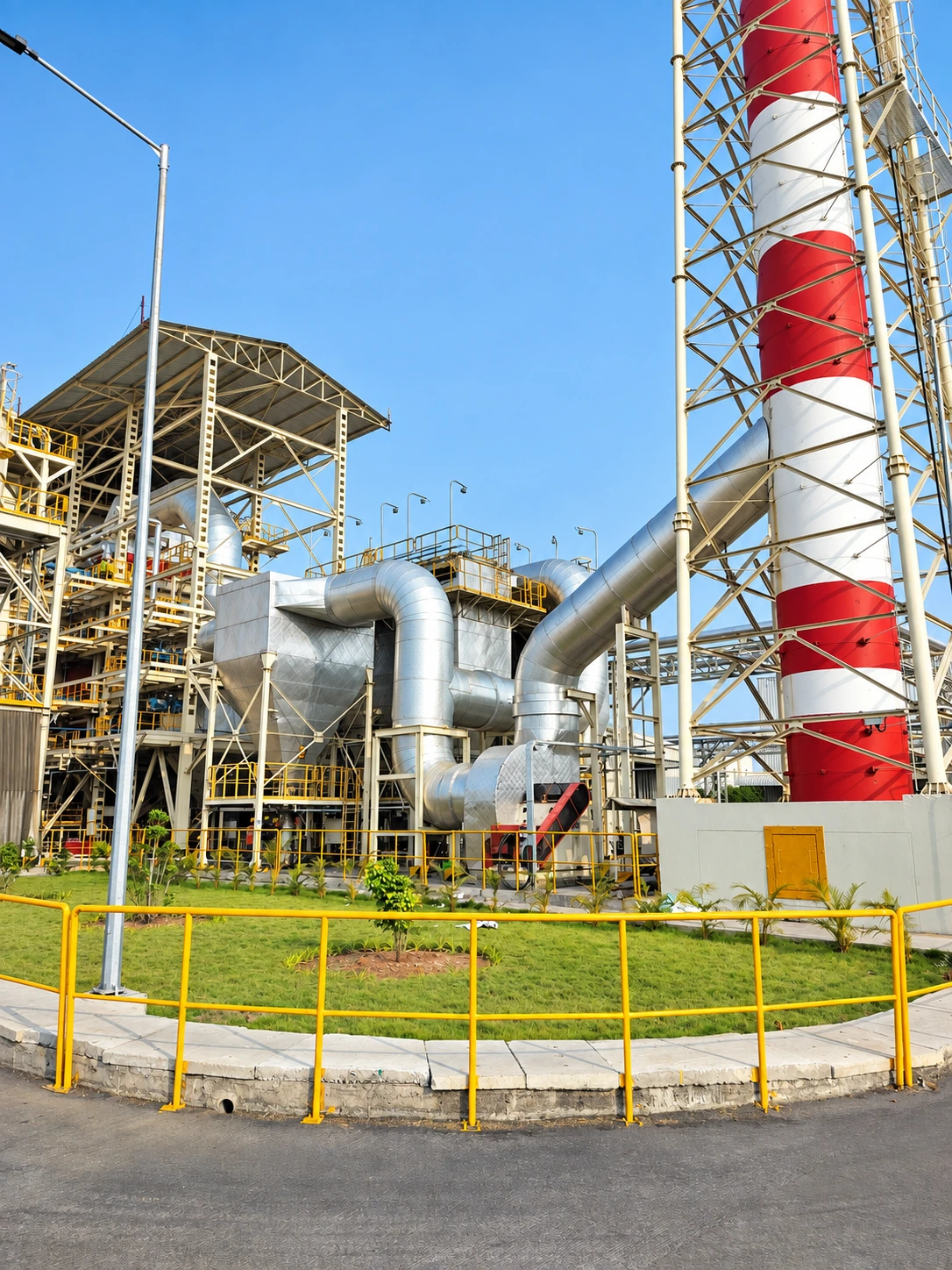
After combustion, fly ash is carried through the boiler gas path. A cyclone or multiclone may provide mechanical pre-separation where coarse loading and the system arrangement justify it. The final particulate-control duty is commonly evaluated around a Boiler Bag Filter or dry ESP. The ID fan then moves gas through the complete system toward the stack.
TECHFLOW's scope does not include downstream ash conveying, storage, recycling or disposal.
Boiler Bag Filter route
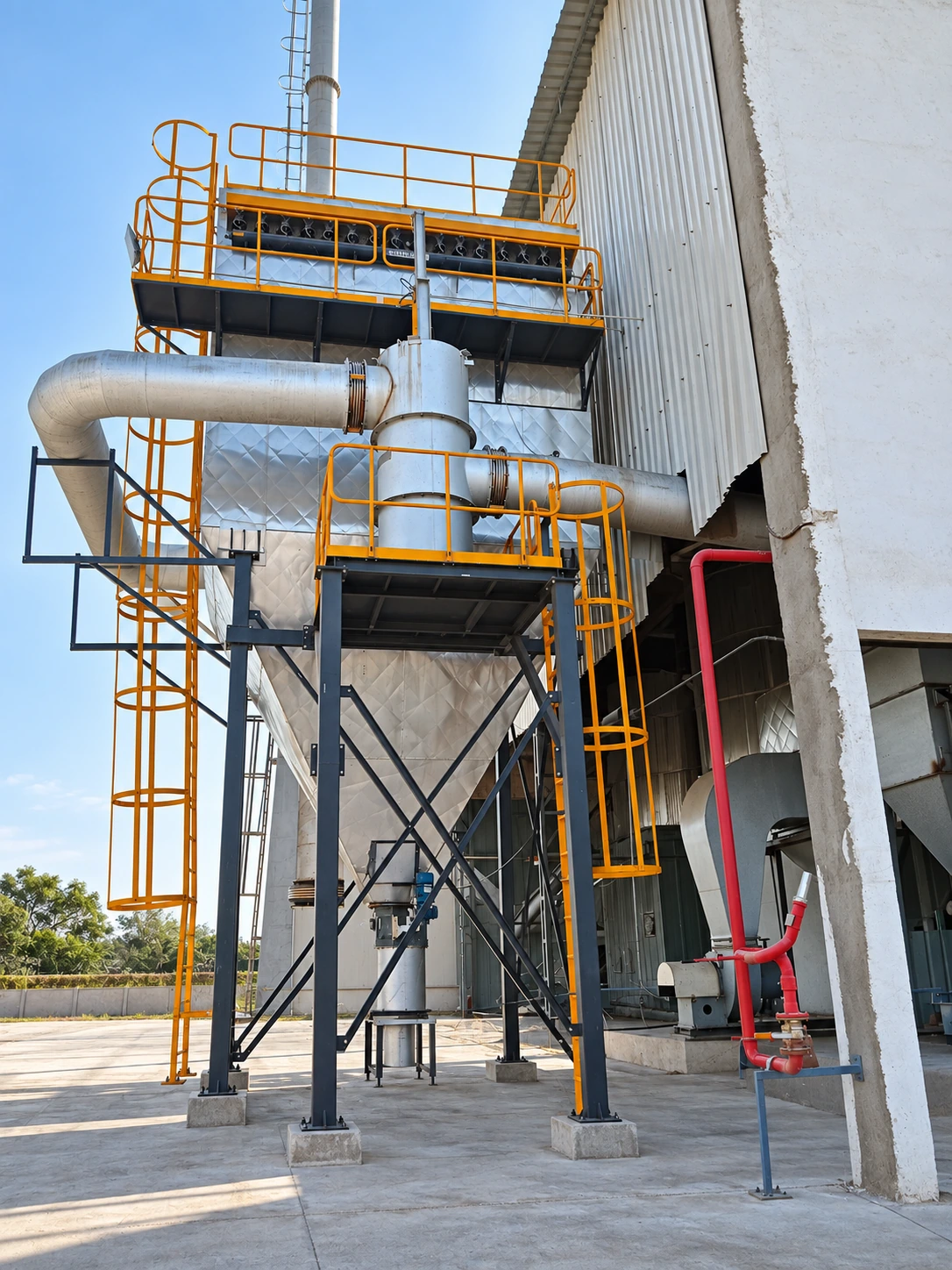
A Boiler Bag Filter can provide effective fine-particulate collection when the filter media and system are engineered for the gas and dust envelope. Important conditions include normal and peak temperature, dew-point margin, sparks and char, moisture, chemistry, inlet loading, air ingress, pressure drop, cleaning philosophy and maintenance access.
Fuel switching can change these conditions after the initial design. The selected basis should therefore cover the primary fuel, alternate fuels and credible blends. View the Boiler Bag Filter for solid-fuel applications.
Dry ESP route
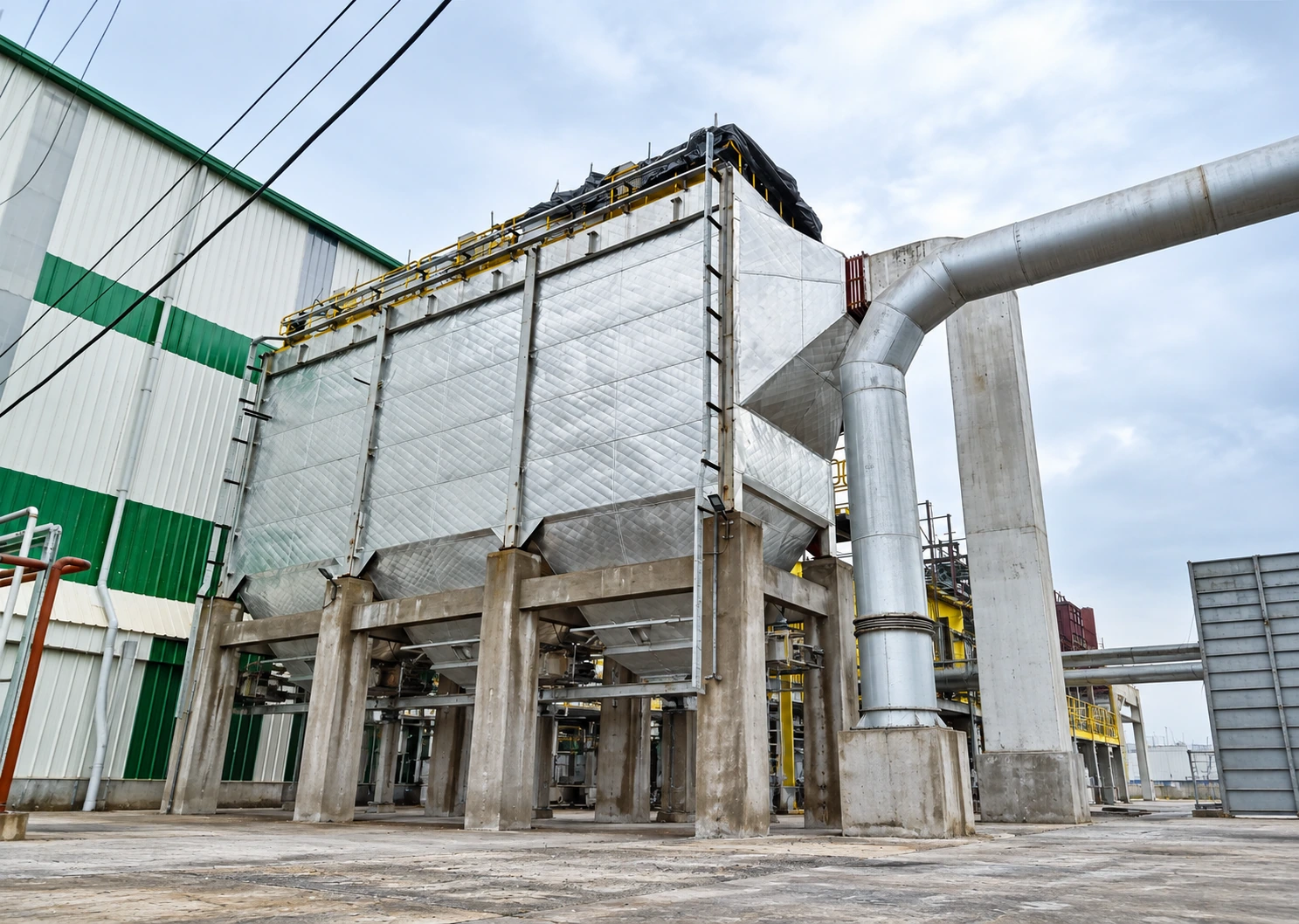
A dry ESP may be suitable where ash resistivity, gas conditions, load range, footprint and lifecycle requirements support electrostatic collection. Gas distribution, electrical fields, electrodes, rapping, hoppers and high-voltage controls operate as an integrated system. Fuel chemistry and changing ash properties are especially important when several biomass or fossil fuels may be used.
Review Electrostatic Precipitators for industrial boilers for the application-specific route.
Choosing the final collector
There is no universal winner between a Bag Filter and ESP. A meaningful comparison uses the same fuel envelope, gas flow, temperature, moisture, inlet loading, dust characteristics, outlet basis, load variation, system resistance, energy, footprint, maintenance and lifecycle assumptions. A low equipment price based on incomplete fuel or gas data can create operating risk later.
Use the Bag Filter versus ESP for industrial boilers decision guide rather than selecting from fuel name alone.
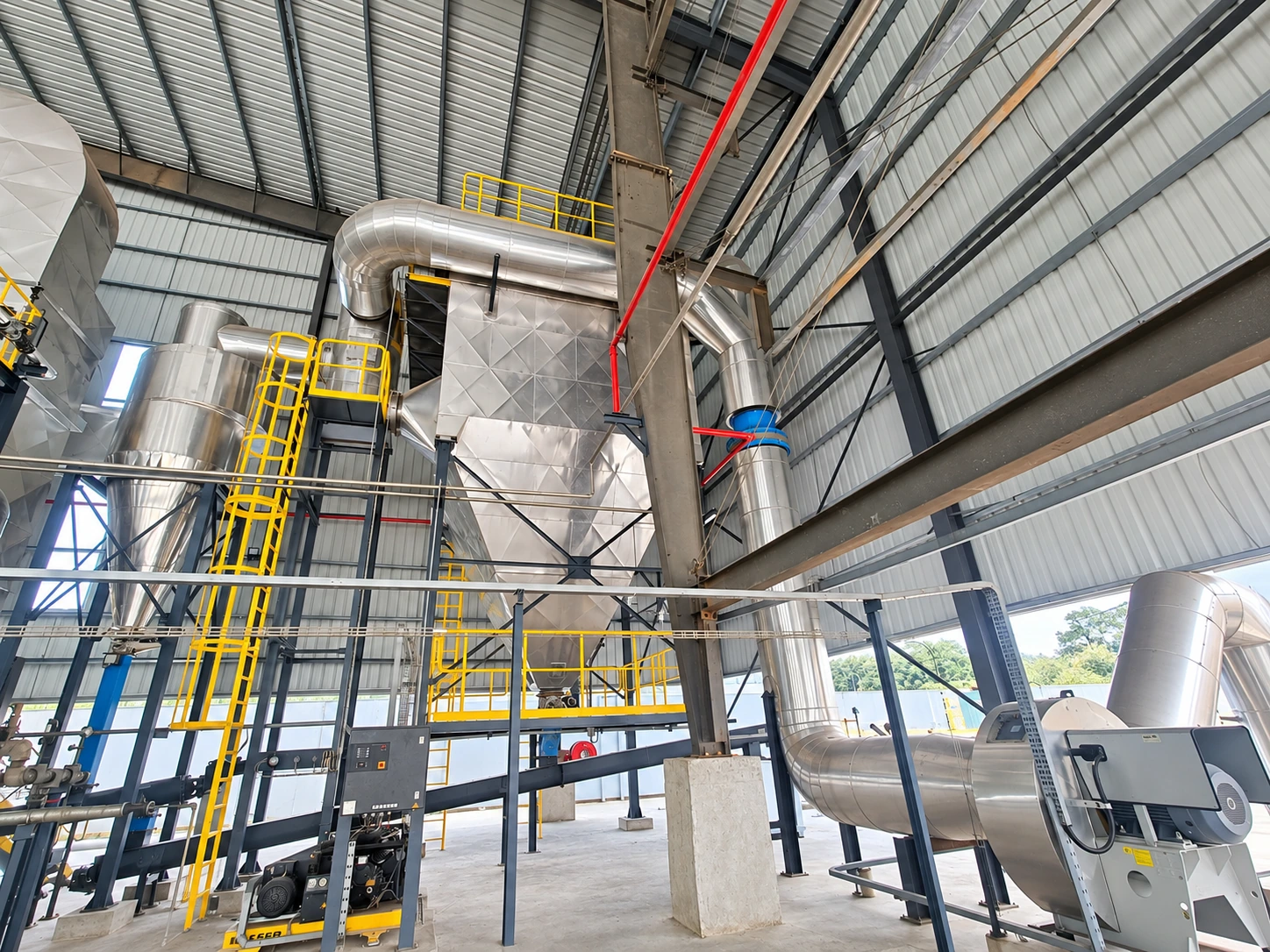
Boiler draft and combustion-air fans
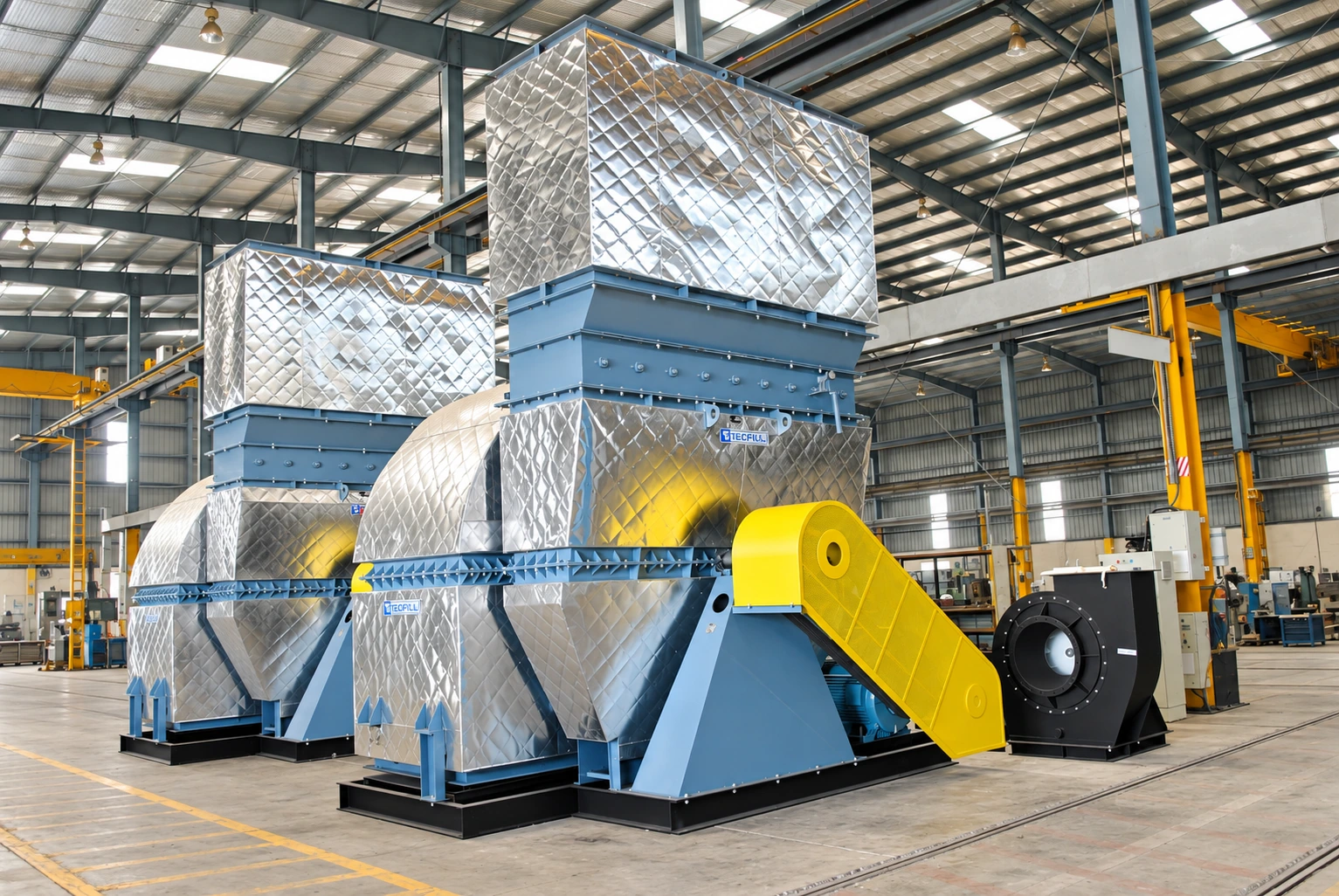
The ID fan must account for boiler, duct, pre-separator and final-collector resistance throughout the operating range. FD, PA and SA fans supply combustion and firing-system air according to the boiler design. Their duties should be defined by actual flow, pressure, temperature, density, dust exposure, control method and margin—not by fan designation alone.
TECHFLOW supplies industrial centrifugal fans and blowers as standalone equipment and as coordinated parts of boiler APCD packages. See ID, FD, PA and SA fan duties.
Operating risks to address early
- Temperature excursions: can exceed the normal material-selection basis.
- Condensation: can cause sticky deposits, corrosion or filter problems when gas cools below the relevant dew point.
- Sparks and char: require source review and an appropriate protection philosophy.
- Abrasive ash: can affect ducts, transitions, fan surfaces and high-velocity zones.
- Fuel variability: can change flow, loading, chemistry, resistivity and fan duty.
- Air ingress: can alter gas volume, oxygen, temperature and condensation margin.
- Common headers or multiple boilers: require careful assessment of simultaneous and partial-load cases.
Engineering basis and outlet target
For appropriate applications, equipment can be engineered toward an outlet particulate target below 10 mg/Nm³. The committed value must be connected to the agreed fuel and gas range, inlet concentration, equipment configuration, operating conditions, reference oxygen, dry or wet basis, averaging and test method. A project-specific result below 5 mg/Nm³ should be presented only through a validated case record, not as a general fuel-family promise.
Country-specific limits can change and must be confirmed for the project location. Combustion optimization, NOx control and downstream ash systems are separate responsibilities unless expressly included by another approved supplier.
OEM and plant-owner interfaces
Boiler OEMs and package integrators should define the fuel envelope, heat and mass balance, gas conditions, guarantee split, fan resistance, controls, general arrangement and battery limits early. Plant owners evaluating an emission upgrade, new collector package or fuel conversion should also provide current measurements, existing equipment data, available footprint and shutdown constraints.
A new particulate-control package on an existing boiler requires a full application review. It should not be described as a simple modification of unknown equipment.
Information required for an enquiry
Provide the boiler and firing type, steam or heat duty, fuels and blends, fuel analysis, operating load range, gas flow and temperature envelope, moisture and gas composition, inlet particulate loading, available ash analysis, required outlet basis, current or proposed fan data, plot plan, duct and stack interfaces, utilities, controls, hopper boundary and project location.
For dry fuel-handling extraction, also identify each dust source, operating sequence, enclosure or hood condition, material rate, transfer geometry and discharge interface. The dust collection systems category provides the broader equipment route.
Frequently asked questions
Which collector is best for a biomass boiler?
There is no single answer for all biomass. A Bag Filter or dry ESP should be evaluated from the specific fuel, ash, gas, load, target, footprint and operating requirements.
Can rice-husk and bagasse boilers use the same design basis?
Not safely by assumption. Their moisture, ash chemistry, particle behaviour and seasonal variability can differ. Each fuel and credible blend should be included in the design envelope.
Is a cyclone or multiclone enough for a stringent outlet limit?
Mechanical separation can reduce coarse loading in suitable duties, but it should not automatically be treated as the final high-efficiency control device. The required outlet and particle distribution determine the complete arrangement.
Does TECHFLOW supply fuel-handling dust collection?
TECHFLOW can evaluate selected dry extraction duties around receiving, crushing, screening, transfer and bunker points. The agreed scope must identify capture points, ducting, collector, fan and discharge interfaces.
Does TECHFLOW supply ash handling?
No. Hopper and discharge interfaces can be defined, but downstream ash conveying, storage, recycling and disposal are outside the current scope.
Discuss a biomass or solid-fuel boiler application
Share the full fuel range and operating envelope—not only the boiler rating. TECHFLOW can then evaluate particulate collection, pre-separation where relevant, dry fuel-handling extraction and centrifugal-fan requirements as clearly bounded duties.