
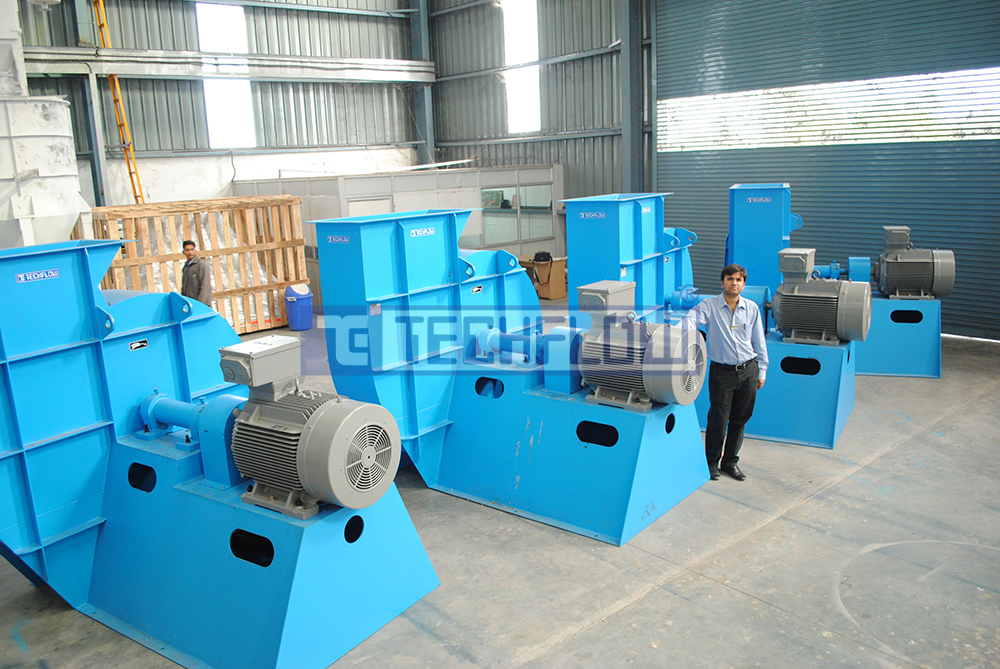
Industrial blowers are mostly used in manufacturing industries for ventilation. Industrial blowers are mechanical or electro-mechanical equipment that uses ducts, process stacks, electronic chassis, and so on to regulate the gas flow for cooling, ventilation, conveying, and exhaust.
Blowers are widely used for cooling electronic enclosures, greater airflow for engines, boilers and are crafted in a variety of designs. Generally, the motors drive blowers, although they can be powered by the means of engines as well.
Centrifugal blowers primarily produce and accommodate a heavy flow of gas or air to a particular part of the building or structure. They transmit the impulse to air or gas with the help of a blade or impellers. The blowers are available with various blade orientations such as forward curved, backward curved, and radial. Some key attributes to be considered for a centrifugal blower are port design, flow capacity, electrical ratings, blower type, and dimensions. They are generally driven by an electric motor with the help of belts, but some are directly coupled to the motors. Airspeed can be varied by using variable speed drives, but the dampers are usually used.
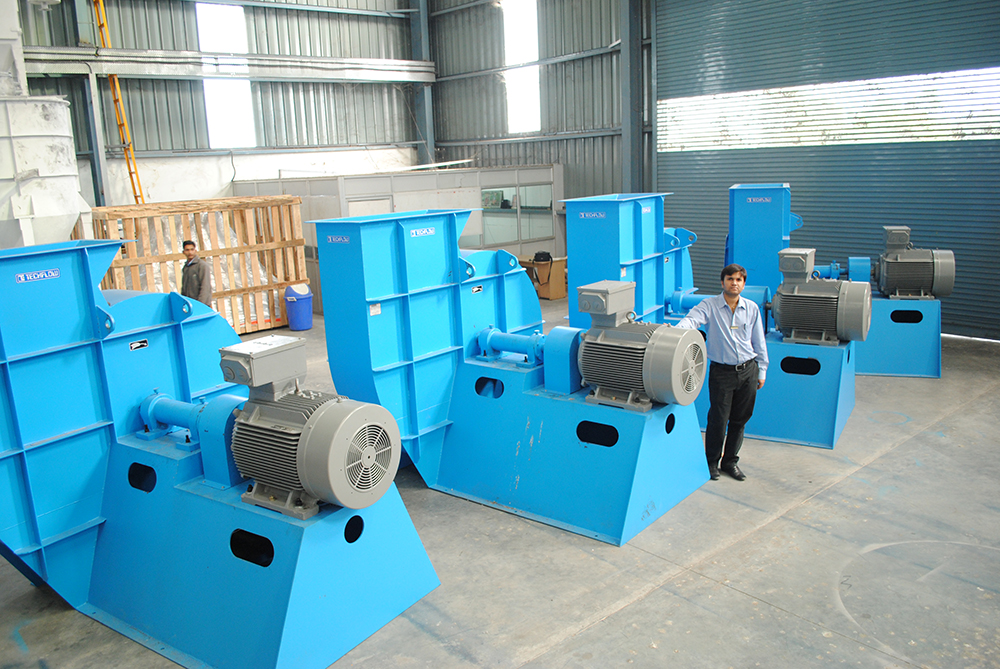
A centrifugal blower can be single or multi-stage, one stage centrifugal blower is often used in a place where the steady flow is required, whereas a multi-stage blower is useful when varied airflow is required at a fixed pressure. They are classified according to pressure generation ability: low pressure, medium pressure, and high-pressure blowers.
Centrifugal blowers operate at high speed, moving bulk volumes of wind at variable pressures in a radical direction. The centrifugal blower can easily fulfil the higher-pressure requirement at a particular speed in comparison to other types of blowers of the same specifications. Due to more horsepower capabilities, there is less overloading and damage to the motor. According to the requirements, the blower can be customized into various types and installed to better fulfil the needs of various industrial applications.
Another factor to be considered while choosing the right centrifugal blower is to figure out the pressure to attain optimum airflow to circulate through ducting, filters, and dampers in the ventilation system. If the duct is lengthy with complicated design a more powerful blower is required and the filter impact should be taken into consideration too. The Direct-Drive blower is typically smaller and is generally cheap due to fewer components, it is also more efficient and reliable with less need for maintenance.
On the other hand, belt drive provides more flexibility with matching airflow requirements when fitted with a variable pitch motor pulley and is generally large in size. When fitted with a variable frequency drive, the direct drive blower provides the same flexibility as a belt drive blower. Centrifugal blowers have been able to successfully find a way into the Indian market due to an increased rate of production leading to a projected demand to cool them.
Some of the key players in the manufacturing and supplying centrifugal blowers provide not just quality products, but also unparalleled maintenance, which is much required for the smooth running of the instruments, tools, and machines.