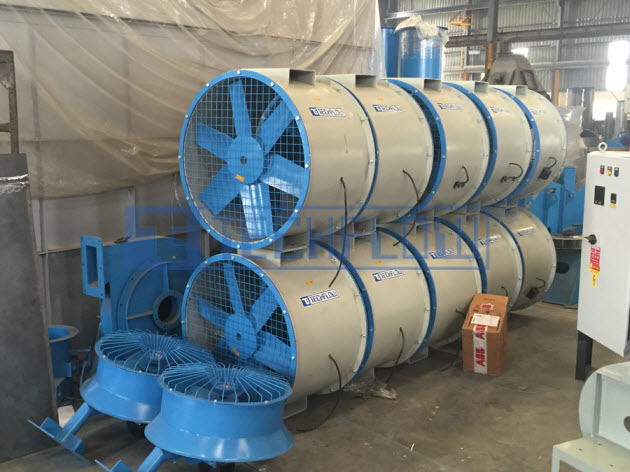

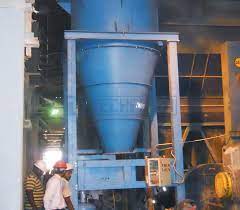
The working principle of a dust collector machine can be explained in a simple manner. Basically, it is a device that works in two ways: the first is to capture the air, and the second is to convert it into the desired form. Usually, a dust collector machine is used for industrial applications. It also plays a significant role in reducing air pollution.
What are the Benefits of Pulse-jet Dust Collector Machine?
The pulse-jet dust collector machine is a type of industrial dust collection device. It offers several advantages over other dust collection systems. Whether you're looking for a high temperature unit or a unit that can handle various chemistries, there's a pulse jet dust collector for you.
The jet dust collector has been used since the early 1900s. It's a popular solution for the removal of dust from industrial operations. It's a quick and efficient way to ensure equipment and workers' safety.
A pulse-jet collector can be a single, small unit or a complex, multi-unit system. A single unit can be a good option for a plant that wants to limit the number of dust collectors in operation. However, the ideal configuration depends on the process and the volume of the dust being removed.
A pulse-jet bag filter dust collector is a great choice for a variety of industries. It's relatively inexpensive, easy to maintain, and can handle different particle properties. It also provides protection from fire and explosion.
The Pulse-jet Dust Collector Machine has been increasing in popularity over the years. Due to the growing focus on environmental issues, manufacturers have introduced new models that can be made of a range of materials. Compared to other types of dust collectors, a pulse-jet dust collector can offer chemical compatibility and abrasion resistance. Its low air resistance makes it possible to clean the filter bags on-line without shutting down the machine.
What is the Working Principle of Cyclone Dust Collector?
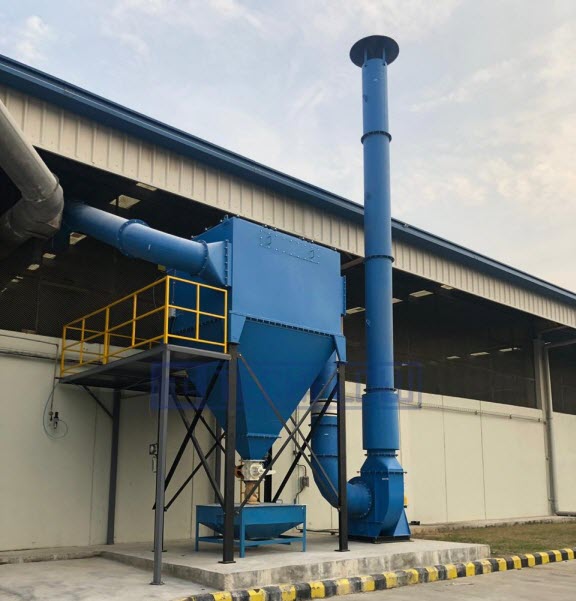
Cyclone Dust collectors are designed to effectively capture debris created during machining operations. They use a combination of centrifugal forces, inertial forces and gravitational force to separate particles from the air. They are available in a wide range of sizes, ranging from small single-cyclones to large, multi-cyclone outdoor collectors.
The size of the cyclone has a significant impact on the efficiency of dust collection. The smaller the cyclone, the higher the efficiency. This is especially true for cyclones that are used in the purification of high-temperature flue gas.
The particle behavior is also affected by the surface texture, geometric dimensions, and mass. It is important to measure the radial velocity of the particles, as well as the particle density. It is also necessary to collect data on the gas composition, pressure, temperature, and volume of the constituents.
The air inlet of the cyclone has a major influence on the efficiency of dust collection. It is imperative that the receiver be airtight. To achieve this, a dead air space should be at least twice as large as the dust discharge.
The tangential entry into the cyclone separator is also a key factor in its performance. The cyclone's diameter, air flow rate, and proportion of tangential entry must all be considered to optimize the separation.
The inner vortex of the cyclone collects the finer dust, while the outer vortex carries the larger particles. The cyclone is capable of collecting particles as small as 1.0 micron.
Electrostatic Precipitator Dust Collector Machine
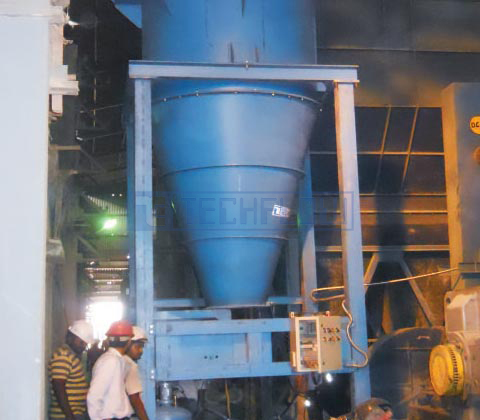
An electrostatic precipitator is a type of dust collector machine used to separate particles from flue gas. It uses a metallic container to contain dust and fumes, then discharges them. It has two main inlets: one for flue gas and the other for pollutant free air. The inlet and outlet are generally perforated.
There are many different types of electrostatic precipitators. They can be made from plastic, steel or reinforced plastic. They are also available in wet or dry operation. They are widely used in a wide range of dust productive industries.
The basic electrostatic precipitator includes a stack of large flat metal plates. The plates are usually spaced apart.
The positive plate is called the collecting plate, while the negative plate is the discharge plate. The dust particles are attracted to the positive plate because of the electrostatic force of the electrodes.
Several significant studies have been conducted on the electrical flow in an electrostatic wire-plate precipitator. J. Dekowski studied the electrohydrodynamic gas flow in the positive polarity wire-plate electrostatic precipitator. The result was that the strength of the electric field is dependent on the thickness of the dust layer.
The most common type of electrostatic precipitator is the plate precipitator. These consist of a row of thin vertical wires. The air stream passes through the plates, then passes through spaces between the wires.
Application of Shaker Dust Collector Machine
A shaker dust collector machine is a type of baghouse system. They are usually used in the minerals processing industry. They have the capability to run continuously or intermittently. Their advantages include their compact design and low maintenance. They are also easy to clean.
There are various manufacturers of these systems. They are suitable for a variety of industries, such as paper mills, foundries, woodworking, and more. Some of them are automatic, while others are manual. These types of machines are also often used in bulk storage containers.
In most cases, shaker dust collectors use the reverse air method to move contaminated air through a filter. The filtered air is then returned to the building. If you are looking for a unit that is easy to maintain and can handle a high volume of air, you should consider purchasing a Multi clone Dust Collector.
How does a Dust Collector System Work?
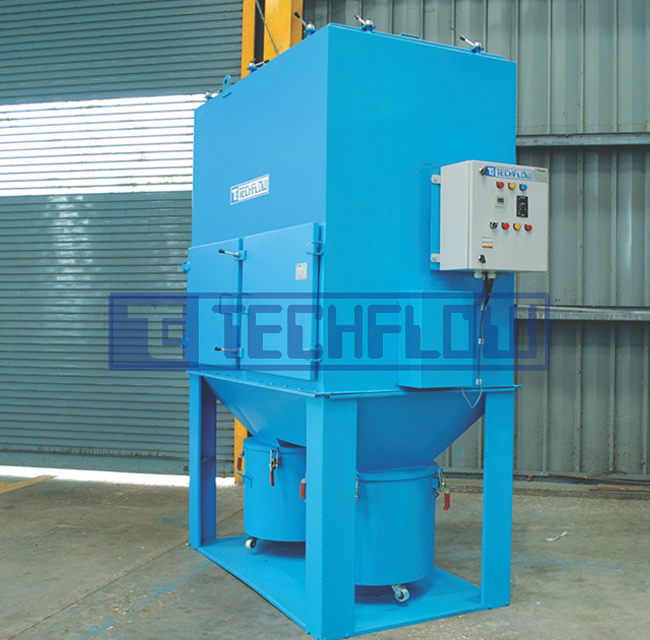
The working principle of a dust collector is fairly simple. A series of ducts, blow pipes and fans are used to move the contaminated air. There are several varieties of this equipment. It is important to select the proper unit for your needs. It is not only vital that you choose the right system, but that you maintain it effectively. Keeping it in top working order will increase your productivity and reduce your maintenance costs.
The pulse-jet system is a common industrial dust collecting device. It works by injecting compressed air into a blow pipe, which is then directed to the core of the filter element. The flow rate of the cleaned air is then sent back into the system. The best part is that this type of unit can handle a wide range of concentrations and particle sizes. It is also easy on the wallet.
The settling chamber is an effective cleaning method that requires little maintenance. Essentially, it is a large box installed in the ductwork. Almost any material can be used, and they are easy to manufacture.
A similar system, the reverse air baghouse, works by sending clean air into a bag. This is not as effective as the pulse-jet system, but it is the most economical solution.
How to Choose Dust Collector Machine?
When it comes to choosing a dust collector machine, there are several factors to consider. For instance, you should select one that is suited for your specific workplace. Your dust collection system will also need to be able to provide you with a safe, clean working environment. Whether you are looking to replace an existing machine or buy a new one, you should take into account its performance, efficiency and size.
The efficiency of your dust collection system will depend on its configuration. This includes the shape and size of the filter, the amount of airflow it can handle, and the amount of dust it is capable of collecting.
There are three main types of collectors. They are pulse-jet, baghouse, and cartridge. All of these systems can be effective, but the type you choose will depend on the kind of dust you need to collect.
Using a pulse-jet cleaning system can dramatically change the way your collector operates. It uses compressed air to shoot a high-velocity stream through the centre of the filter cartridge. This blast removes the dust cake from the filter and relieves pressure on it. The dust ejected from the cartridge falls into a hopper at the bottom of the machine.
In order to avoid the expense and hassle of replacing the filter, it is recommended that you re-use clean bags. This can save you up to 50% on the cost of a new filter.
In Conclusion
The most common type of industrial dust collector is the pulse jet. These devices are made of a wide range of materials and are able to handle a wide range of pressures. This is especially important in manufacturing environments where there is a large number of bulk solids. They are also capable of handling a broad range of temperatures.
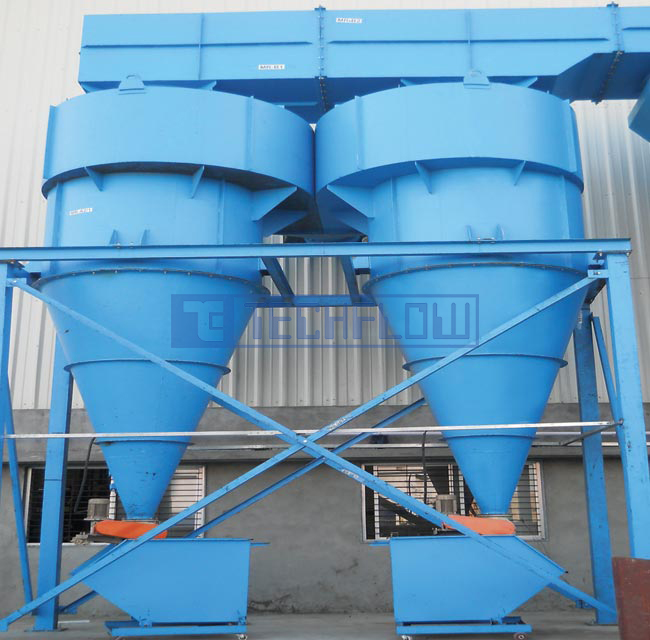
Another type of dust collection system is the cyclone. This is a mechanical separator that uses centrifugal force to separate the dust from a gas stream. They are popular in shot blasting and other processes where a large quantity of dust is produced.
There are many more types of dust collectors. Some include inertial separators, which can be a good idea. Inertial separators are best suited for precleaning purposes. Other solutions include air slides, which can move large amounts of material in a horizontal direction.