

One of the largest industries in the world is the production of steel. 98% of the iron ore produced is used to make steel, which is the main source of steel. This is a general account of the production of steel. Steel is a necessary commodity since it supports numerous other businesses, such as the building, automotive, manufacturing, and electrical industries, as well as a range of products, from cookware to furniture. The demand for steel is anticipated to increase five times by 2050 and so is the pollution caused by steel manufacturing. This is the reason why air pollution control systems are the need of the hour in our country
1. Understanding the Pollution Challenges in the Steel Industry
The Environmental Impact of the Steel Industry
The steel manufacturing process is energy-intensive and emits several pollutants including carbon dioxide and particulate matter (PM).
Sources of Pollution in Steel Manufacturing
Coke, a kind of coal, is a major component needed for the production of steel, however it is very bad for the environment. Coke ovens release very poisonous and carcinogenic naphthalene into the air. The coking process' waste water is also extremely poisonous and contains cyanide, sulphides, ammonium, and ammonia in addition to a number of organic substances that are known to cause cancer.
2. Implementing Technological Advancements for Pollution Control
Introduction to Advanced Pollution Control Technologies
Pulse Jet Bag Filter, Cyclones, Electrostatic Precipitators, Mist Collectors, Wet Scrubber are some of the top and advanced pollution control equipment based on latest technologies.
Electrostatic Precipitators (ESPs) for Particulate Matter Control
Electrostatic precipitators (ESPs), like air filters and cyclones, are air pollution control devices used to collect and remove particulate matter, such as dust, from industrial emissions and exhaust. ESPs have 99.9% efficiency which makes them an excellent choice.
Scrubbers for Gas Cleaning
Industrial air scrubbers use a physical process to remove particles and gases from industrial pollutants, such as smokestack exhaust before being released into the atmosphere using water spray.
Baghouses for Dust Collection
Bag filter dust collector system is a kind of dry dust filtration device used for Cement Plant, Lime Factory, Coal Powder Preparation Unit, etc. It has the features like bigger air volume, stronger dust cleaning ability, high efficiency, easy operation and maintenance, etc.
Selective Catalytic Reduction (SCR) for Nitrogen Oxide (NOx) Control
The selective catalytic reduction (SCR) removes nitrogen oxides (NOx) from flue gas emitted by power plant boilers and other combustion sources.
Continuous Emission Monitoring Systems (CEMS)
A continuous emission monitoring system (CEMS) is the total equipment necessary for the determination of a gas or particulate matter concentration or emission rate using pollutant analyzer measurements.
3. Utilising Efficient Energy Sources
Renewable Energy Integration
Integration of renewable energy means reimagining operation and planning for a reliable, cost-effective, and efficient electricity system with cleaner new energy generators.
Energy Recovery Systems
Energy recovery systems reclaim exhaust heat from energy consuming processes or exhaust stacks and utilise the excess energy to preheat process, plant and combustion air
Energy Efficiency Measures
Energy efficiency, along with the closely related measures of electrification, behavioural change, digitalization, and material efficiency, is the single largest measure to prevent energy demand in the Net Zero Emissions.
4. Promoting Waste Management and Recycling
Steel Scrap Recycling
Steel scrap is first gathered by scrappers personally, at specified drop-off locations, or at buy-back facilities. After that, it is sorted and delivered to mills or foundries. A furnace then melts down the extra steel scrap.
Slag and Fly Ash Utilisation
FlyAsh, which is created in thermal power plants powered by coal, is used as a raw material by factories that make cement and building supplies. Additionally, it is utilised in the construction of roads and flyover embankments, preventing the degradation of productive agricultural land and saving soil.
Water Conservation and Recycling
Water recycling reclaims water from a variety of sources then treats and reuses it for beneficial purposes such as agriculture, irrigation and various other purposes.
5. Encouraging Government Regulations and Compliance
Environmental Laws and Policies
Any governing body must include environmental laws as a crucial component. It consists of a set of rules and legislation related to environmental factors including water quality, air quality, and others.
Compliance Monitoring and Reporting
In order to identify compliance risk issues in their regular operations and functions, organisations must follow rules and procedures, which are monitored as part of the compliance monitoring process.
Collaboration with Regulatory Authorities
An independent enforcing organisation established by the government to supervise and enforce rules related to occupational health and safety is known as a regulatory authority. The regulatory authority's responsibility is to set and strengthen safety standards and ensure that they are consistently followed.
6. Collaborating with Air Pollution Control System Manufacturers: Introducing Techflow
Our Commitment to Innovation
In terms of operations and product design, our organisation is driven by technology and innovation. We have developed high efficiency models for pulse jet bag filter & high performance design for centrifugal fans.
Customised Solutions for the Steel Industry
At techflow we provide customized solutions for flue gas cleaning & industrial air pollution for each stage of steel making processes. E.g. smelting, furnaces, refining, grinding, blasting, rolling, mining, DRI etc..
Cutting-Edge Technologies and Systems
TECHFLOW aspires to be India’s leading industrial equipments & system solution provider for Air Pollution Control with world class team, state of the art technology and best business practices.
Unparalleled Expertise and Support
TECHFLOW is committed to fulfil customer orders in time & with promised quality, backed by field performance support by continuously upgrading execution methods & operational systems. Techflow ensures 24*7 after sales support for their installed systems.
Success Stories and Customer Satisfaction
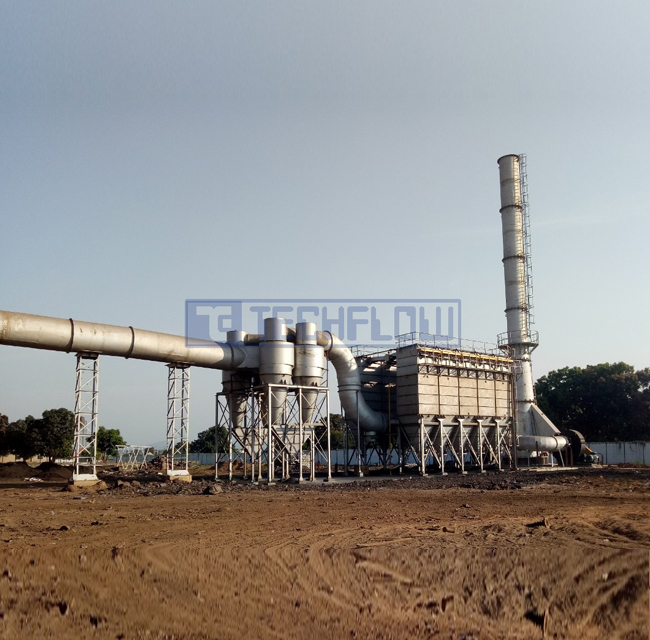
Techflow has successfully installed an Air Pollution Control System in an integrated steel plant. This newly commissioned system is designed to effectively handle an impressive airflow of 420,000 cubic meters per hour, while ensuring its cleanliness through the utilization of a pulse jet bag filter.
The entire system comprises both primary and secondary fume extraction mechanisms that are essential for maintaining a healthy environment within the plant. The primary Fume Extraction System (FES) is equipped with two powerful 500 kW ID fans, a swivel-type suction hood, a spark arrestor, a dilution damper, and rotary airlock valves for efficient discharge. Moreover, the PTFE coated bag employed in the system is specifically designed to withstand continuous operation at a temperature of up to 110 degrees Celsius.
At Techflow, we take immense pride in delivering high-quality air pollution control solutions that contribute to the overall well-being of industrial operations.