

Key Features That Make Electrostatic Precipitators (ESPs) Essential for Industrial Emission Control
With increasing pressure on industries to meet strict environmental regulations, controlling particulate emissions has become a critical operational requirement. Electrostatic Precipitators (ESPs) offer a highly efficient and reliable solution by removing fine dust, soot, and fly ash from industrial exhaust gases while maintaining low energy consumption and minimal pressure drop.
For industries evaluating an electrostatic precipitator manufacturer, top electrostatic precipitator manufacturer, or a top electrostatic precipitator supplier in India and global markets, understanding the key features of ESP systems is essential for making the right investment.
TECHFLOW is recognized as a best ESP manufacturer, delivering advanced electrostatic precipitator systems engineered for high efficiency, durability, and compliance across industrial applications.
Quick Insights
Electrostatic Precipitators (ESPs) are high-efficiency air pollution control systems capable of removing up to 99%+ particulate matter from exhaust gases. Their key strengths include low pressure drop, high-temperature tolerance, adaptability to multiple industries, and cost-effective long-term operation.
Introduction
In today's industrial landscape, the need for effective air pollution control has never been greater. Electrostatic precipitators (ESPs) are one of the technologies that play a pivotal role in this arena. ESPs are devices that use electrostatic forces to remove particulate matter from exhaust gases. They are highly efficient and can remove a wide range of pollutants, including dust, soot, and fly ash. ESPs are used in a variety of industries, including power generation, steelmaking, and cement manufacturing. They are also used in some municipal waste incinerators. In India, ESPs are becoming increasingly popular as a means of controlling air pollution. The Indian government has implemented a number of regulations that require industries to install ESPs. As a result, the market for ESPs in India is expected to grow significantly in the coming years.
Here are some of the essential features of ESPs:
- They are highly efficient in removing particulate matter from exhaust gases.
- They can remove a wide range of pollutants, including dust, soot, and fly ash.
- They are relatively simple to operate and maintain.
- They are cost-effective over the long term.
Here are some of the significance of ESPs in various industries:
- Power generation: ESPs are used in power plants to remove particulate matter from the exhaust gases of coal-fired boilers. This helps to improve air quality and reduce greenhouse gas emissions.
- Steelmaking: ESPs are used in steel mills to remove particulate matter from the exhaust gases of blast furnaces and coke ovens. This helps to improve air quality and reduce the risk of respiratory problems for workers.
- Cement manufacturing: ESPs are used in cement plants to remove particulate matter from the exhaust gases of kilns. This helps to improve air quality and reduce the risk of respiratory problems for workers.
Here are some of the prevalence of ESPs in India:
- The Indian government has implemented a number of regulations that require industries to install ESPs.
- As a result, the market for ESPs in India is expected to grow significantly in the coming years.
- ESPs are becoming increasingly popular as a means of controlling air pollution in India.
Understanding the Basics of ESPs
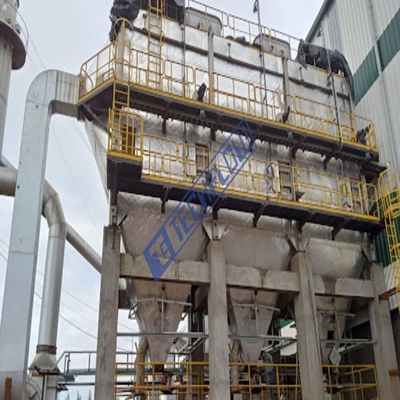
An Electrostatic Precipitator, commonly known as an ESP, is a highly efficient device designed to mitigate air pollution by removing particulate matter (PM) and other pollutants from exhaust gases. ESPs find extensive applications across diverse industries, including power generation, cement production, and steel manufacturing.
How ESPs Operate
At the core of an ESP's functionality lies the principle of electrostatic attraction. The process can be simplified into three key steps:
- Particle Charging: As exhaust gases laden with particulate matter pass through the ESP, they encounter a series of electrodes. These electrodes are charged with high-voltage electricity, imparting a negative charge to them.
- Particle Collection: The negatively charged particles within the flue gas are irresistibly drawn towards positively charged collector plates positioned within the ESP. This electrostatic attraction causes the particles to migrate and adhere to the collector plates.
- Cleaning Process: Over time, the collected particles accumulate on the plates, forming a dust layer. Periodically, this layer is dislodged or "rinsed" off the plates, allowing the collected particles to fall into a hopper for disposal.
Now that we have a fundamental understanding of ESPs and their operation, let's explore their key features.
Key Features of Electrostatic Precipitators
1. High Particle Removal Efficiency
ESPs are celebrated for their remarkable efficiency in removing particulate matter from exhaust gases. They can achieve particle removal efficiencies of up to 99%, making them a stalwart solution for reducing air pollution.
2. Cost-Effectiveness
In an era where operational costs are closely scrutinized, ESPs stand out as a cost-effective choice. Their low operating costs, when compared to alternative air pollution control technologies like baghouses, make them an attractive option for industries aiming to minimize expenses while complying with environmental regulations.
3. Minimal Maintenance Requirements
ESPs generally require less maintenance than alternative technologies. With proper design and operation, ESPs can operate efficiently for extended periods without significant downtime, contributing to improved operational continuity.
4. Adaptability
ESPs are versatile and adaptable to a wide range of industrial applications. Whether the goal is to capture fly ash in coal-fired power plants or control dust emissions in cement kilns, ESPs can be customized to suit specific requirements, making them a versatile choice.
5. High-Temperature Tolerance
Many industrial processes involve high-temperature exhaust gases. ESPs are well-suited for such applications due to their ability to withstand elevated temperatures without compromising performance or durability.
6. Environmental Compliance
Meeting stringent emission standards is a paramount concern for industries today. ESPs play a pivotal role in helping companies adhere to these regulations, ensuring they reduce their environmental footprint and maintain a responsible approach to production.

TECHFLOW's ESP: Leading the Way in Air Pollution Control
At TECHFLOW, we take pride in offering cutting-edge solutions to address the critical issue of air pollution. Our Electrostatic Precipitator (ESP) is a prime example of our commitment to cleaner air and a healthier environment. As one of the leading electrostatic precipitator manufacturers in India, we understand the unique challenges industries face in meeting stringent emission standards. Our ESP is designed with efficiency and reliability in mind, ensuring that your operations not only comply with regulations but also contribute to a sustainable future. With TECHFLOW's ESP, you can trust that you're making a responsible choice for air pollution control.

Technical Insights
- Collection Efficiency: Up to 99–99.9% depending on particle size and system design
- Pressure Drop: Typically 20–30 mmwg, significantly lower than bag filters
- Specific Collection Area (SCA): Higher SCA improves fine particle capture
- Dust Resistivity: Critical parameter influencing ESP efficiency
- Gas Flow Distribution: Uniform velocity ensures optimal performance
As a top electrostatic precipitator supplier, TECHFLOW designs ESP systems optimized for dust characteristics, gas flow, and emission norms.
ESPs in the Indian Context
India, with its burgeoning industrial sector, has a substantial demand for effective air pollution control solutions. As a result, Electrostatic Precipitators have gained significant traction in the country. They are not only instrumental in improving air quality but also in aiding industries in India to align with environmental norms and standards.
ESP for Boiler
Electrostatic precipitators (ESPs) are highly efficient devices that remove particulate matter (PM) from exhaust gases. They are widely used in boilers of all types, including stoker fired, AFBC, CFBC, multi fuel, biomass boilers, etc. ESPs are also used in a variety of industries, including steel, waste heat recovery, and non-ferrous industries.
ESPs work by charging the PM particles in the exhaust gas with a negative charge. The particles are then drawn to positively charged collector plates, where they adhere. The collector plates are periodically cleaned to remove the accumulated dust.
TECHFLOW ESPs for boilers are designed to handle a wide range of flow rates, from 20,000 m3/hr to 200,000 m3/hr. We offer ESPs for a variety of boiler applications, including:
- Steel industry: Sinter waste gas, pelletisation plant, sinter plant dedusting
- Waste heat recovery boiler ESP
- Non-ferrous industries: Copper, zinc, aluminum, smelters, etc.
Our ESPs are known for their high efficiency, reliability, and low maintenance requirements. We also offer a variety of customization options to meet the specific needs of our customers.
If you are looking for an efficient and reliable solution for boiler emissions control, TECHFLOW ESPs are the perfect choice for you. Contact us today to learn more about our ESPs and how we can help you meet your emissions reduction goals.
In Conclusion, ESPs are indispensable tools in the battle against air pollution and are vital components of a sustainable industrial ecosystem. Their high efficiency, cost-effectiveness, and adaptability make them an invaluable asset for industries across India and beyond. As industries continue to evolve and environmental regulations become more stringent, the importance of ESPs in ensuring cleaner air and a healthier environment cannot be overstated.
TECHFLOW stands as a top electrostatic precipitator manufacturer and top electrostatic precipitator supplier in India and global markets, offering customized ESP systems for diverse industrial boiler applications.
Industry Reference
- Electrostatic precipitators can achieve up to 99.9% particulate removal efficiency in industrial applications.
- Environmental standards such as ISO 14000 emphasize advanced air pollution control technologies like ESPs.
- ESP systems are widely adopted in power plants, cement industries, and steel manufacturing for emission control.
In Conclusion, ESPs are indispensable tools in the battle against air pollution and are vital components of a sustainable industrial ecosystem. Their high efficiency, cost-effectiveness, and adaptability make them an invaluable asset for industries across India and beyond. As industries continue to evolve and environmental regulations become more stringent, the importance of ESPs in ensuring cleaner air and a healthier environment cannot be overstated.
TECHFLOW continues to lead as a best ESP manufacturer and top electrostatic precipitator supplier, delivering reliable and high-performance air pollution control solutions.
FAQs:
1. What is an Electrostatic Precipitator (ESP)?
An Electrostatic Precipitator, or ESP, is an advanced air pollution control device used to remove particulate matter and other pollutants from exhaust gases in industrial settings.
2. How does an ESP work?
ESPs work on the principle of electrostatic attraction. They charge particles in exhaust gases and then collect them on positively charged plates, effectively cleaning the air.
3. Why are ESPs important in India?
ESPs are crucial in India due to the country's growing industrial sector and the need to meet strict environmental regulations. They help reduce air pollution and ensure compliance with emission standards.
4. What industries benefit from ESPs?
ESPs are versatile and can be customized for various industries, including power generation, cement production, steel manufacturing, and more, where controlling emissions is essential.
5. Are ESPs cost-effective in the long run?
Yes, ESPs are known for their cost-effectiveness over time. Their low operating costs and minimal maintenance requirements make them a wise investment for industries.
6. How do ESPs contribute to environmental compliance?
ESPs help industries adhere to stringent emission standards by efficiently removing particulate matter and pollutants from exhaust gases, reducing their environmental impact.
7. Can ESPs handle high-temperature exhaust gases?
Yes, ESPs are designed to withstand high temperatures, making them suitable for applications with elevated exhaust gas temperatures.
8. Are there any reputable ESP manufacturers in India?
Yes, India has several reputable ESP manufacturers known for their high-quality and efficient solutions, contributing to cleaner air in the country.
9. How often should ESP maintenance be conducted?
The frequency of ESP maintenance depends on factors such as the type of pollutants, operating conditions, and the manufacturer's recommendations. Routine inspections are essential to ensure optimal performance.
10. What is the future of ESP technology?
ESP technology continues to evolve, with a focus on enhancing efficiency, energy savings, and environmental friendliness. The future holds promise for even more advanced ESP solutions.