

Industrial fans and blowers are used in a wide range of applications, such as dust collection, drying, fume exhaust systems, supply of fresh air for ventilation purpose, or blowing away mild/abrasive debris or excess coating/ Painting & various industrial processes. The efficiency of these fans is a critical factor in determining their overall performance and cost of operation.
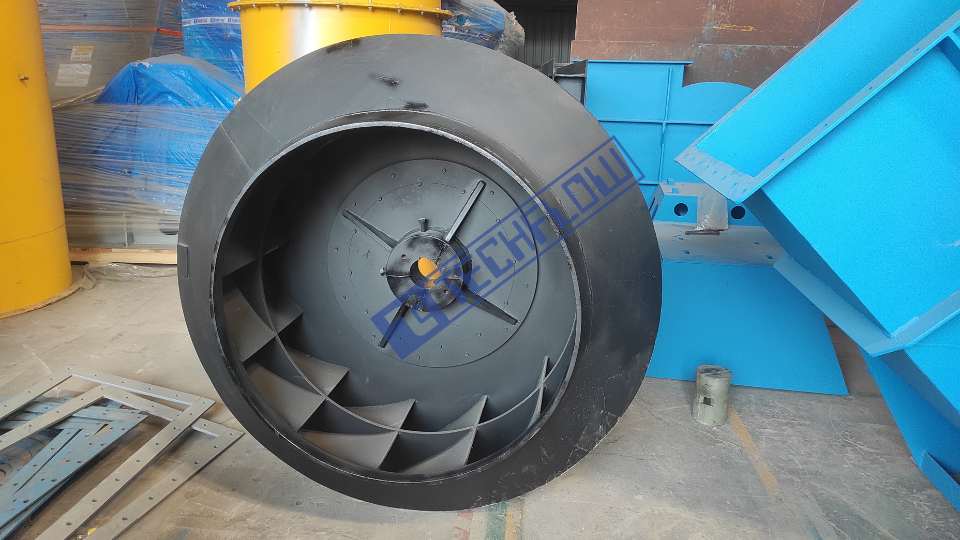
The impeller is a rotating component of a fan or blower that is responsible for creating pressure & Airflow. The design of the impeller has a significant impact on the fan's efficiency. Some of the key impeller design factors that affect efficiency include:
- Blade shape and number: The shape and number of blades can affect the airflow through the fan and the amount of energy required to operate it.
- Blade angle and curvature: The angle and curvature of the blades can affect the pressure and velocity of the airflow.
- Impeller diameter and width: The diameter and width of the impeller can affect the volume of air that the fan can move.
- Impeller clearance: The clearance between the impeller blades and the fan housing can affect the amount of air leakage and energy loss.
Benefits of Efficient Impeller Design
An efficiently designed impeller can provide a number of benefits, including:
- Reduced energy consumption: An efficient impeller requires less energy to operate, which can lead to significant cost savings over the life of the fan.
- Increased fan performance: An efficient impeller can move more air at a given speed, which can improve the fan's overall performance.
- Reduced noise levels: Efficient impellers tend to be quieter than inefficient impellers.
- Extended fan life: Efficient impellers are less likely to wear out prematurely, which can extend the life of the fan.
Industry-Related Studies and Graph Details
A study by the University of California, Berkeley found that impeller design can have a significant impact on fan efficiency. The study found that fans with optimized impellers can achieve efficiencies of up to 90%, while fans with conventional impellers can have efficiencies as low as 60%.
The following graph shows the Impact of impeller design on fan performance:

As you can see, the impeller design has a significant impact on fan efficiency. Fans with optimized impellers can achieve much higher efficiencies than fans with conventional impellers.
Several industry studies have showcased the impact of impeller design on fan efficiency. These studies often include data and graphs that highlight the relationship between impeller design variables and fan performance. To read more about centrifugal blower fans, its design, advantages & disadvantages you can explore this article here.
Examples of Efficient Impeller Designs
There are a number of different impeller designs that can be used to improve fan efficiency. Some of the most common efficient impeller designs include:
- Backward-curved blades: Backward-curved blades are the most common type of blade used in efficient fans. These blades are curved in such a way that they impart a backward rotation to the airflow. This backward rotation helps to reduce turbulence and improve fan efficiency.

- Airfoil blades: Airfoil blades are another type of blade that can be used to improve fan efficiency. Airfoil blades are shaped like the wings of an airplane and are designed to reduce drag and improve airflow.

- Radial blades: Radial blades are blades that are attached to a central hub and extend outward in a radial pattern. They are commonly used in fans, turbines, and compressors. Radial blades are designed to maximize the amount of air or gas that can be moved through a given space. They are also efficient at converting pressure into velocity.

- Backward-inclined blades: Backward-inclined blades in a centrifugal blower are designed with blades angled away from the direction of rotation. They are known for energy efficiency, reduced noise, versatility, and resistance to dust, making them a popular choice in various applications.

Impeller Design for Dust Collection
The efficiency of a dust collector fan depends significantly on the design of its impeller. Optimizing the impeller design allows these fans to effectively capture and transport dust particles, contributing to cleaner and safer work environments.
Choosing a Fan with an Efficient Impeller
When choosing a fan, it is important to select a fan with an efficient impeller design. You can look for fans that are certified by the Air Movement and Control Association (AMCA). AMCA certified fans for efficiency and performance. You can also look for fans that are manufactured by a reputable fan manufacturer. Reputable fan manufacturers use high-quality materials and construction techniques to produce efficient fans.
Impeller design is a critical factor in determining the efficiency of an industrial fan or blower. An efficiently designed impeller can provide a number of benefits, including reduced energy consumption, increased fan performance, reduced noise levels, and extended fan life.
If you are looking for an industrial fan or blower with high efficiency, it is important to choose a fan with an optimized impeller design. Techflow offers a wide range of industrial fans and blowers with efficient impellers that can help you reduce your energy costs and improve your fan's performance.
Additional Tips for Improving Fan Efficiency
In addition to choosing a fan with an efficient impeller design, there are a number of other things you can do to improve fan efficiency, including:
- Maintain proper fan clearance: The clearance between the impeller blades and the fan housing should be maintained within the manufacturer's specifications. Excessive clearance can lead to air leakage and energy loss.
- Use a properly sized fan: A fan that is too large or too small for the application will not operate efficiently. It is important to select a fan that is the right size for the required airflow and pressure.
- Keep the fan clean and well-maintained: A dirty or damaged fan will not operate efficiently. It is important to keep the fan clean and to inspect it regularly for any signs of damage.
By following these tips, you can help to ensure that your industrial fans and blowers are operating as efficiently as possible.
FAQs
An impeller is the rotating component of a fan or blower responsible for moving air. Its design is crucial because it directly impacts the fan's efficiency, affecting factors like energy consumption and performance.
Impeller design factors include blade shape and number, blade angle and curvature, impeller diameter and width, and impeller clearance. These aspects affect airflow, pressure, and energy consumption.
Efficient impeller design offers several advantages, including reduced energy consumption, increased fan performance, lower noise levels, and an extended fan lifespan.
Certainly. A study by the University of California, Berkeley, found that fans with optimized impellers can achieve efficiencies of up to 90%, while fans with conventional impellers may have efficiencies as low as 60%.
The graph illustrates that fans with optimized impellers achieve significantly higher efficiencies compared to fans with conventional impellers. The design directly influences the fan's ability to move air efficiently.
Efficient impeller designs include backward-curved blades, airfoil blades, and swept blades. Each design aims to reduce turbulence and improve fan efficiency.
The efficiency of a dust collector fan depends heavily on the design of its impeller. Optimized impellers enable these fans to effectively capture and transport dust particles, contributing to cleaner and safer work environments.
When selecting an industrial fan, consider looking for fans certified by the Air Movement and Control Association (AMCA), as they certify fans for efficiency and performance. Additionally, choose fans from reputable manufacturers known for using high-quality materials and construction techniques.
Yes, maintaining proper fan clearance within the manufacturer's specifications, using a properly sized fan for the application, and keeping the fan clean and well-maintained are all crucial steps to improving fan efficiency.
Techflow offers a wide range of industrial fans and blowers with optimized impellers designed to help reduce energy costs and enhance fan performance. You can explore their product offerings to find the right solution for your needs.