


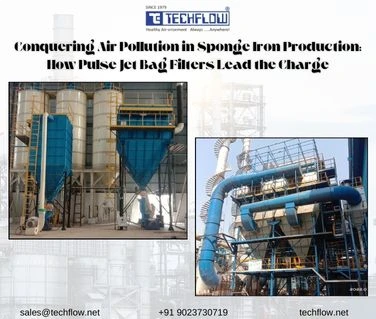
Steel is the backbone of modern infrastructure, and sponge iron plays a vital role in its production. In India, the steel industry accounts for a significant portion of industrial activity, contributing approximately 2% of the country's GDP and employing over 2 million people directly and indirectly. However, this crucial industry is not without its challenges, particularly concerning air pollution. According to statistics from the Central Pollution Control Board (CPCB), the steel sector is one of the largest emitters of particulate matter (PM), sulfur dioxide (SO2), and nitrogen oxides (NOx) in the country. The emissions from sponge iron plants, a key component of the steel manufacturing process, pose significant health and environmental risks, making effective air pollution control measures imperative.
Industry Authority & Brand Positioning
In this evolving regulatory landscape, choosing the right Pulse jet bag filter manufacturer becomes critical. Industrial operators increasingly rely on advanced filtration partners that understand kiln dust behavior, emission compliance thresholds, and long-term operational stability. As a trusted Pulse jet bag filter manufacturer in India, TECHFLOW delivers engineered air pollution control systems specifically designed for sponge iron and steel plants. Their solutions are widely recognized by industries looking for a reliable Pulse jet bag filter supplier in India as well as a competitive Pulse jet bag filter supplier in Global markets.
Challenges of Air Pollution Control in Sponge Iron Plants:
Sponge iron production processes generate a plethora of pollutants, including particulate matter, sulfur oxides (SOx), and nitrogen oxides (NOx), which can have detrimental effects on air quality and human health. According to a study conducted by the Ministry of Environment, Forest and Climate Change (MoEFCC) in India, sponge iron plants are significant contributors to particulate matter emissions, with suspended particulate matter (SPM) levels exceeding permissible limits in many regions. Traditional methods of pollution control, such as cyclones, are often inefficient in capturing fine particulates, while electrostatic precipitators (ESPs) are known for their high maintenance requirements and energy consumption. Moreover, the issue of fugitive emissions further complicates pollution control efforts, especially with increasingly stringent regulations.
The Rise of Pulse Jet Bag Filters as a Game Changer in Sponge Iron Plants

Traditional methods like cyclones struggle with the fine dust prevalent in sponge iron production. Techflow's Bag Filter for Sponge Iron Plant offers a superior solution. Surpassing the limitations of traditional methods like cyclones and ESPs, Techflow's Pulse Jet Bag Filters deliver a guaranteed clean air solution for sponge iron plants. These filters consistently achieve outlet emissions as low as 20-30 mg/Nm3, and in specific applications, can even reach exceptionally low levels of 5mg/Nm3. Let's delve deeper into their working principle and explore the advantages they offer.
Technical Reinforcement
Modern sponge iron plants require filtration systems capable of handling high-temperature exhaust gases, abrasive dust loads, and fluctuating kiln conditions. A properly engineered pulse jet system ensures:
-
Stable differential pressure control
-
Optimized gas-to-cloth ratio
-
Reduced compressed air consumption
-
Extended filter bag lifespan
This is why industries searching for a dependable Pulse jet bag filter supplier prioritize engineered systems over generic dust collectors.
Working Principle:
These filters utilize a fabric filtration system. Dust-laden gas from the process enters a housing containing filter bags. These high-performance bags capture the dust on their surface. Periodically, compressed air blasts clean the bags via strategically placed nozzles, causing the dust to fall into a hopper. Clean gas then exits, ensuring clean air emissions.
Advantages of Pulse Jet Bag Filters for Sponge Iron Plants:

- High Efficiency in Capturing Fines: Techflow's Pulse Jet Bag Filters achieve exceptionally high filtration efficiencies, exceeding 99% in many cases. This ensures minimal fugitive emissions of fine particulate matter from the sponge iron plant, safeguarding the environment and worker health.
- Reduced Energy Consumption: Compared to Electrostatic Precipitators (ESPs) – another common air pollution control device – Pulse Jet Bag Filters require significantly less energy. The short bursts of compressed air for cleaning consume far less power than the continuous high-voltage operation of ESPs. This translates to lower operating costs for the sponge iron plant.
- Lower Maintenance Requirements: Pulse Jet Bag Filters boast a simpler design compared to ESPs. The bag cleaning mechanism is less prone to mechanical issues, and bag replacement is a relatively straightforward process. This translates to reduced downtime and lower maintenance costs for the sponge iron plant.
- Wider Range of Dust Handling: The filter media in Techflow's Pulse Jet Bag Filters can be customized based on the specific characteristics of the dust generated in the sponge iron process. This allows the system to handle a wider range of dust types effectively, ensuring optimal performance regardless of variations in the raw materials or process conditions (e.g., coal type, iron ore composition).
- Compact Size and Modular Design: Techflow's Pulse Jet Bag Filters offer a compact footprint, making them ideal for retrofitting into existing sponge iron plants with limited space availability. Additionally, the modular design allows for easy expansion or reconfiguration to meet changing process requirements, accommodating future increases in production capacity or modifications to the reduction process.
By incorporating these advantages, Techflow's Pulse Jet Bag Filters empower sponge iron plant operators to achieve cleaner operations and meet ever-stricter environmental regulations.
Global Positioning
With rising ESG standards and global decarbonization initiatives, industrial buyers now evaluate not only emission performance but also lifecycle efficiency and sustainability metrics. Companies positioned among the top pulse jet manufacturer in India + Global markets are focusing on durable construction, optimized air distribution systems, and compliance-ready designs.
As industrial demand grows, leading steel and sponge iron plants increasingly partner with experienced filtration experts recognized as top and best pulse jet suppliers delivering reliable long-term performance.
Future Directions in Air Pollution Control for Sponge Iron Plants:
The global steel industry is facing increasing pressure to minimize its environmental footprint. This translates to stricter air quality regulations for sponge iron plants. A 2023 report by the World Steel Association acknowledges that dust emissions (suspended particulate matters) limitations are becoming more stringent, with some regions aiming for levels as low as 10mg/Nm3. To comply with these evolving regulations and achieve sustainable production, continuous improvement in air pollution control is essential.
Real-time monitoring systems are gaining traction in sponge iron plants. These systems continuously track key parameters like dust concentration and gas flow in real time, enabling operators to identify and address potential issues promptly. This proactive approach helps prevent emission exceedances and ensures optimal filter performance.
Integrated Pollution Control Systems (IPCS) represent another promising direction. IPCS take a holistic approach, integrating various air pollution control devices like scrubbers, bag filters, and de-SOx systems. By working in tandem, these systems can achieve ultra-low emission levels. Pulse jet bag filters, with their high efficiency and modular design, are perfectly suited for integration into IPCS. Their ability to handle a wide range of dust types makes them adaptable to various process configurations within an IPCS framework.
For instance, a Chinese sponge iron plant successfully implemented an IPCS combining cyclones, pulse jet bag filters, and wet scrubbers. This system achieved a remarkable dust emission reduction of over 99%, bringing their emissions well below the national regulatory limit.
By embracing real-time monitoring, integrated solutions, and high-efficiency pulse jet bag filters, sponge iron plants can ensure cleaner operations and contribute to a sustainable future for the steel industry.
Conclusion: Breathing Easy for a Sustainable Future
Clean air is paramount for both environmental and public health reasons. In sponge iron production, efficient air pollution control systems are no longer a luxury, but a necessity.
Techflow's Pulse Jet Bag Filters empower sponge iron plant operators to achieve cleaner operations and meet ever-stricter environmental regulations. Their guaranteed low emissions, energy efficiency, and adaptability make them a future-proof solution.
Ready to breathe new life into your air pollution control strategy? Visit our industry page Techflow Pulse Jet Bag Filters for Sponge Iron Plants