

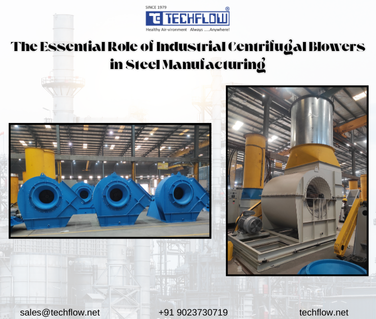
Steel, the backbone of modern industry, owes much of its production efficiency and environmental adherence to a silent yet essential component: the industrial centrifugal blower. In the vast expanse of steel manufacturing plants, these reliable machines ensure the smooth operation of critical processes, from the intense heat of blast furnaces to the precise control of gas cleaning systems. Let's examine the important relationship between industrial centrifugal blowers and the steel manufacturing process, examining their role, significance, and impact on efficiency and environmental sustainability.
Understanding Industrial Centrifugal Blowers
Before we dive into their role in steel manufacturing, let's understand what industrial centrifugal blowers are and how they function. Industrial centrifugal blowers, or fans or compressors, are dynamic machines designed to provide controlled airflow at varying pressures. They operate based on the principle of centrifugal force, where the rotation of impellers accelerates air outward, generating high-velocity airflow.
The Steel Manufacturing Process: An Overview
In an integrated steel plant, various processes work smoothly to transform raw materials into finished steel products. These processes demand precise control over temperature, airflow, and chemical reactions, all of which are supported by industrial centrifugal blowers. Here's a glimpse into some key processes where centrifugal blowers are essential:

1. Blast Furnace: At the heart of steel production lies the blast furnace, where iron ore and coke are transformed into molten iron. Centrifugal blowers provide the high-pressure air blast necessary for the combustion process inside the furnace, supplying oxygen to facilitate the reduction of iron ore into molten iron (pig iron).
2. Steelmaking: Whether through the basic oxygen furnace (BOF) or electric arc furnace (EAF) processes, steelmaking requires precise control over temperature and chemical composition. Centrifugal blowers supply oxygen or air to facilitate combustion, ensuring the desired chemical reactions and temperature control for optimal steel quality.
3. Sintering Plant: In the sintering process, centrifugal blowers supply air for combustion and maintain proper airflow in the sintering bed. This ensures uniform heating and chemical reactions during the sintering of iron ore fines, a crucial step in steel production.
4. Coke Oven Plant: Centrifugal blowers play a vital role in the coke oven plant, providing combustion air to the coke ovens for efficient burning of the coke. They also help control the temperature inside the ovens to achieve the desired coke quality.
5. Gas Cleaning Systems: Steel manufacturing processes generate exhaust gases containing dust, particulate matter, and pollutants. Centrifugal blowers are employed in gas cleaning systems to remove these contaminants, ensuring compliance with environmental standards by maintaining proper filtration and cleaning of the gases before discharge.
6. Power Generation: Some integrated steel plants utilize centrifugal blowers in power generation units, where they supply combustion air in boilers or provide forced drafts in steam turbines, contributing to the plant's energy self-sufficiency.
7. Cooling Systems: Centrifugal blowers may also be deployed in cooling systems to provide air for processes such as cooling of hot metal, slag, or other components, ensuring efficient heat dissipation and process control.
Impact on Efficiency and Environmental Compliance
The role of industrial centrifugal blowers in steel industry extends beyond process facilitation; it directly influences plant efficiency and environmental compliance. By ensuring optimal airflow, temperature control, and pollutant removal, these blowers contribute to energy savings, reduced emissions, and overall operational efficiency. Studies have shown that efficient blower systems can significantly improve the energy efficiency of steel plants, leading to substantial cost savings and environmental benefits.
Challenges and Innovations in Industrial Centrifugal Blower Design
While industrial centrifugal blowers have long been integral to steel manufacturing, the industry faces evolving challenges that demand continuous innovation in blower design and operation. One such challenge is meeting increasingly severe environmental regulations. With governments worldwide imposing stricter emission standards, steel plants must invest in advanced gas cleaning systems that rely on high-efficiency centrifugal blowers to stay compliant.

Another challenge lies in the aim for energy efficiency. Steel production is an energy-intensive process, and any inefficiencies in blower operation can significantly impact overall energy consumption and operating costs. Manufacturers are constantly exploring ways to improve blower efficiency through better design, materials, and control systems. Variable speed drives, for example, allow for precise control over blower speed and airflow, optimizing energy usage based on process demand.
Moreover, the steel industry's shift towards Industry 4.0 and digitalization presents new opportunities for blower optimization and predictive maintenance. Smart sensors and monitoring systems embedded in centrifugal blowers can provide real-time data on performance metrics such as airflow, pressure, and temperature. This data enables plant operators to identify potential issues early, preventing costly downtime and optimizing maintenance schedules for maximum uptime.
The Future of Industrial Centrifugal Blowers in Steel Plants
As the steel industry adopts sustainability and digital transformation, the role of industrial centrifugal blowers is set to evolve further. Future advancements in blower technology may include the integration of artificial intelligence and machine learning algorithms to improve blower performance in real-time, predictive maintenance capabilities to minimize downtime, and enhanced materials and coatings for better durability and corrosion resistance.
Furthermore, as steel plants strive for carbon neutrality and reduced environmental footprint, centrifugal blowers will play a key role in enabling cleaner and more efficient production processes. Innovations such as carbon capture and utilization (CCU) technologies may see centrifugal blowers used in novel ways to capture and store carbon emissions, helping the industry achieve its sustainability goals.
TECHFLOW: Meeting Industry Challenges with Innovative Solutions
In recent years, the steel manufacturing sector has faced many challenges, from severe environmental regulations to escalating energy costs. However, with every challenge comes an opportunity for innovation, and TECHFLOW has risen to the occasion. By utilizing modern technologies and engineering expertise, we have developed advanced solutions tailored to the unique needs of the steel industry.
Meeting Environmental Standards with High-Efficiency Solutions
One of the primary challenges confronting steel manufacturers is the need to comply with increasingly stringent environmental standards. As governments worldwide crackdown on industrial emissions, steel plants are under pressure to reduce their carbon footprint and minimize pollutant emissions. TECHFLOW plays a pivotal role in providing high-efficiency solutions that help steel plants meet regulatory requirements while optimizing energy consumption.
Unlocking Energy Savings through Smart Design
Energy efficiency is another key focus area for the steel industry, given its substantial energy requirements. Steel manufacturers can significantly reduce energy consumption and operating costs by investing in high-pressure centrifugal blowers with advanced features such as variable speed drives and aerodynamic enhancements. These smart design choices enhance performance and contribute to sustainability goals by minimizing greenhouse gas emissions.
Driving Innovation through Collaboration and Research
TECHFLOW actively collaborates with steel industry stakeholders to stimulate innovation and tackle developing challenges. Through joint research initiatives and knowledge-sharing platforms, we are developing next-generation blower technologies that promise to revolutionize steel manufacturing processes. From improving material durability to improving fan blade aerodynamics, the possibilities for innovation are limitless.
Embracing Digitalization for Enhanced Performance
In an era defined by digital transformation, TECHFLOW is utilizing the power of data analytics and predictive maintenance to optimize performance and reliability. By integrating sensors and IoT-enabled devices into our products, we can monitor key parameters in real-time, identify potential issues before they worsen, and proactively schedule maintenance activities. This proactive approach minimises downtime and extends critical equipment's lifespan, ensuring uninterrupted operation.
Driving Steel Manufacturing into the Future
As the steel industry evolves to meet the demands of a rapidly changing world, the role of industrial centrifugal blowers becomes increasingly vital. From powering essential processes to enabling environmental compliance and driving innovation, these devices are fundamental assets in the quest for sustainable steel production. By partnering with trusted centrifugal blower manufacturers like TECHFLOW and encouraging technological advancements, steel manufacturers can maximize performance, minimize environmental impact, and secure a competitive edge in the global market