
Electrostatic Precipitators for Industrial Boilers
A dry electrostatic precipitator can provide high-efficiency particulate collection for an industrial boiler when the fuel, ash and flue-gas conditions suit electrostatic separation. TECHFLOW evaluates and supplies dry ESP systems for qualified package, process, biomass and solid-fuel boiler duties. Selection is based on actual gas flow, temperature, inlet particulate loading, dust resistivity, particle behaviour, load range, required outlet condition and plant interfaces—not boiler capacity alone.
Where the ESP fits in the boiler gas path
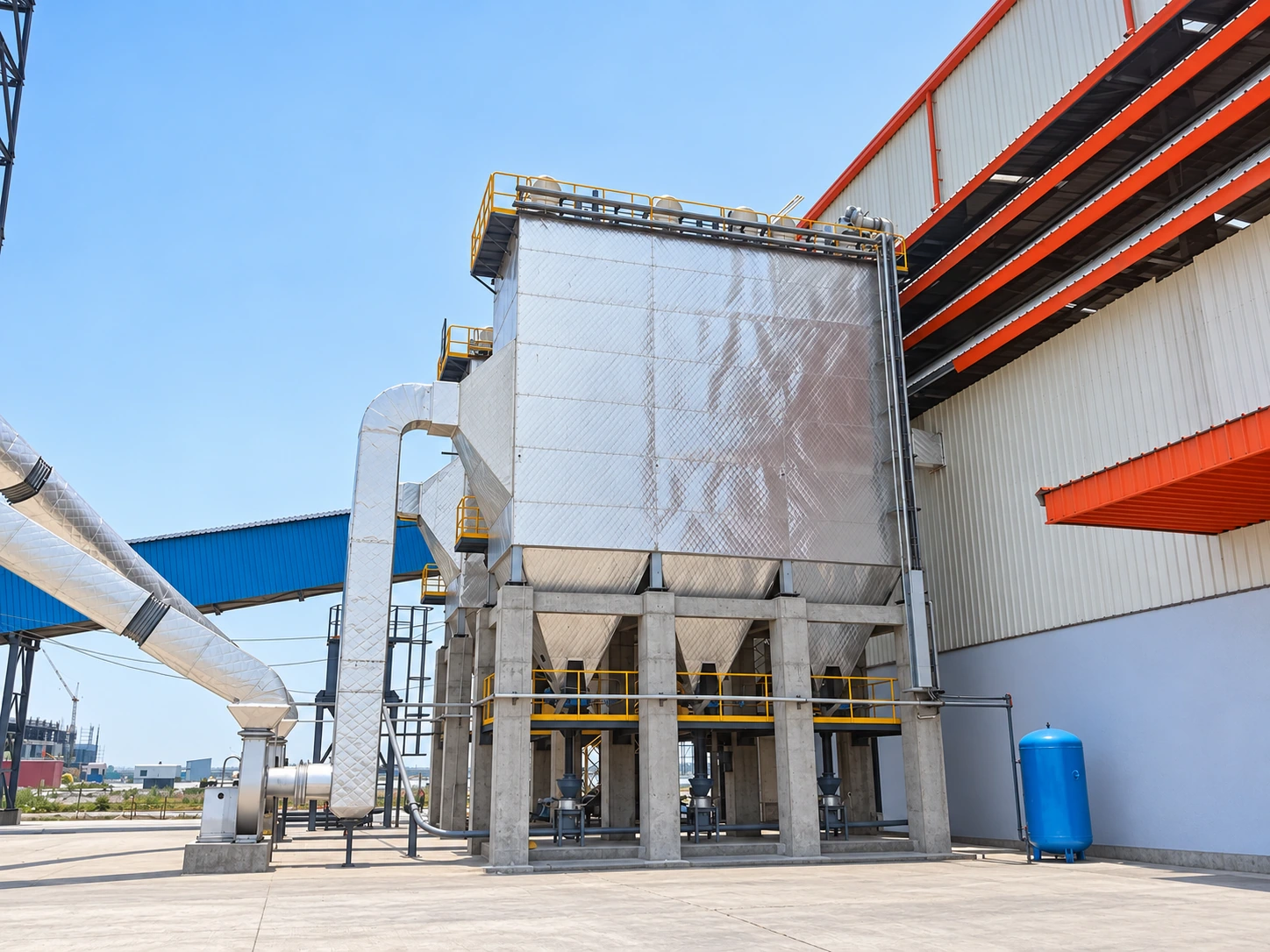
The ESP is installed in the flue-gas route between the heat-generating equipment and the stack, with its exact position governed by the boiler arrangement and gas-temperature envelope. The induced-draft fan must overcome the resistance of the boiler, ducts, ESP and other gas-path equipment while maintaining the required furnace draft.
Waste-heat-recovery and thermal-oil-heater duties require additional qualification. In a WHRB application, the upstream industrial process determines gas chemistry, particulate loading and temperature. In a solid-fuel thermic-fluid heater, fuel variability, sparks and temperature excursions must be considered before the collector arrangement is selected.
How a dry ESP collects boiler particulate
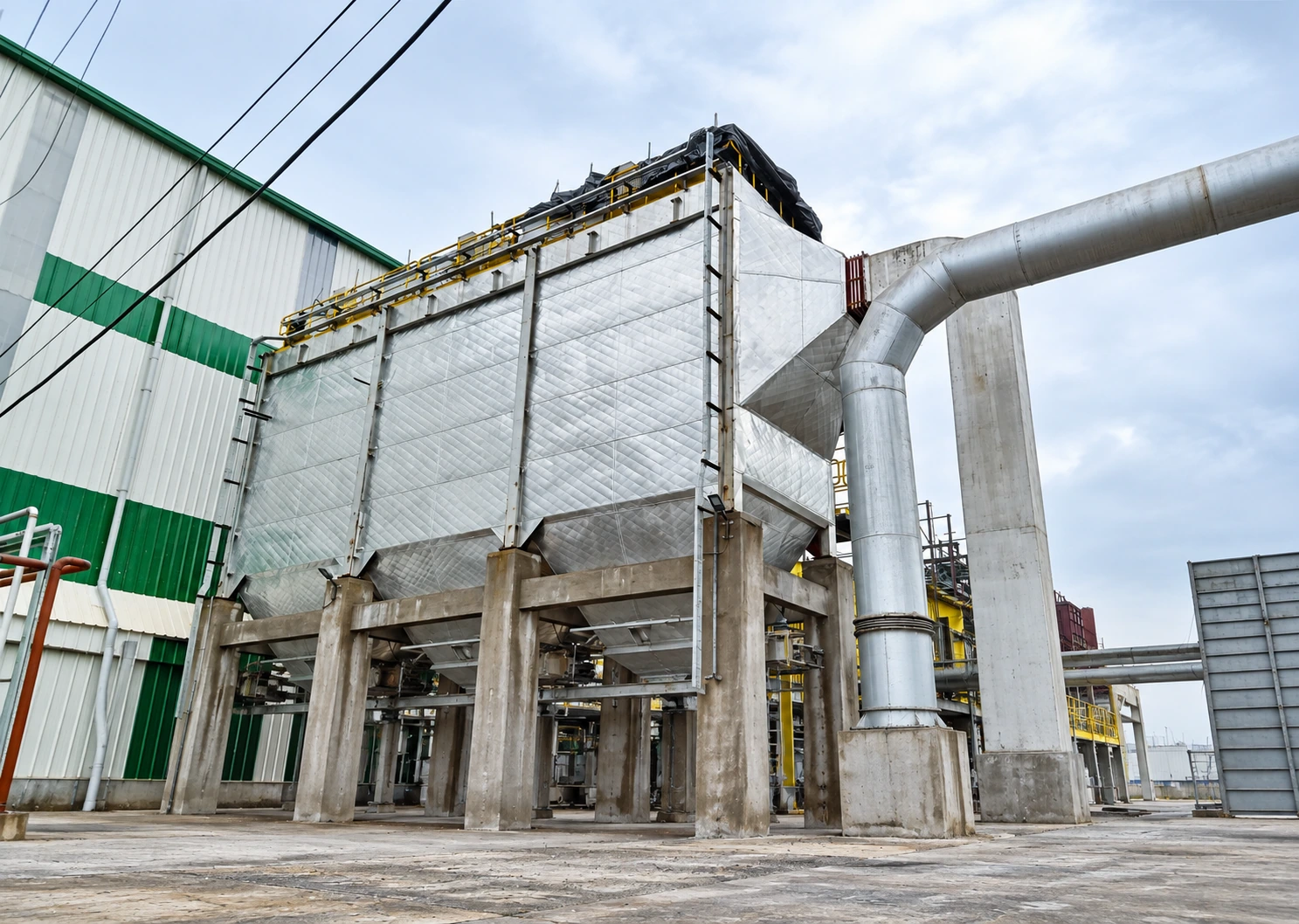
Inside a dry ESP, suspended particles receive an electrical charge and migrate toward collecting surfaces. Rapping systems dislodge accumulated dust into hoppers while the cleaned gas continues through the outlet. Reliable operation depends on coordinated gas distribution, collecting and discharge electrodes, high-voltage equipment, rapping, hopper evacuation interfaces and controls.
This principle is simple; the application is not. Very high or low dust resistivity can affect charging and collection. Uneven gas distribution can reduce the effective collecting area. Temperature, moisture, fuel chemistry and unburnt carbon can change particulate behaviour. Load swings can change both gas volume and electrical operating conditions.

Boiler and fuel conditions that must be evaluated
An industrial-boiler ESP review should establish:
- primary, alternate and blended fuels, including available analysis;
- boiler and firing technology, operating load range and fuel-switching practice;
- actual flue-gas flow at normal, minimum and maximum duty;
- normal, peak and credible upset temperatures;
- moisture, oxygen and relevant gas constituents;
- inlet particulate loading, particle-size distribution and ash chemistry;
- dust resistivity or information needed to assess it;
- spark, char, abrasion and corrosive risks; and
- the required outlet concentration with reference oxygen, dry or wet basis and test method.
Rice husk, other biomass fuels, coal and lignite do not create one standard ESP duty. Their ash quantity, chemistry and electrical behaviour differ, and those conditions can also vary between fuel sources. Mixed-fuel operation should be assessed across the stated fuel envelope.
Typical dry ESP system relationship
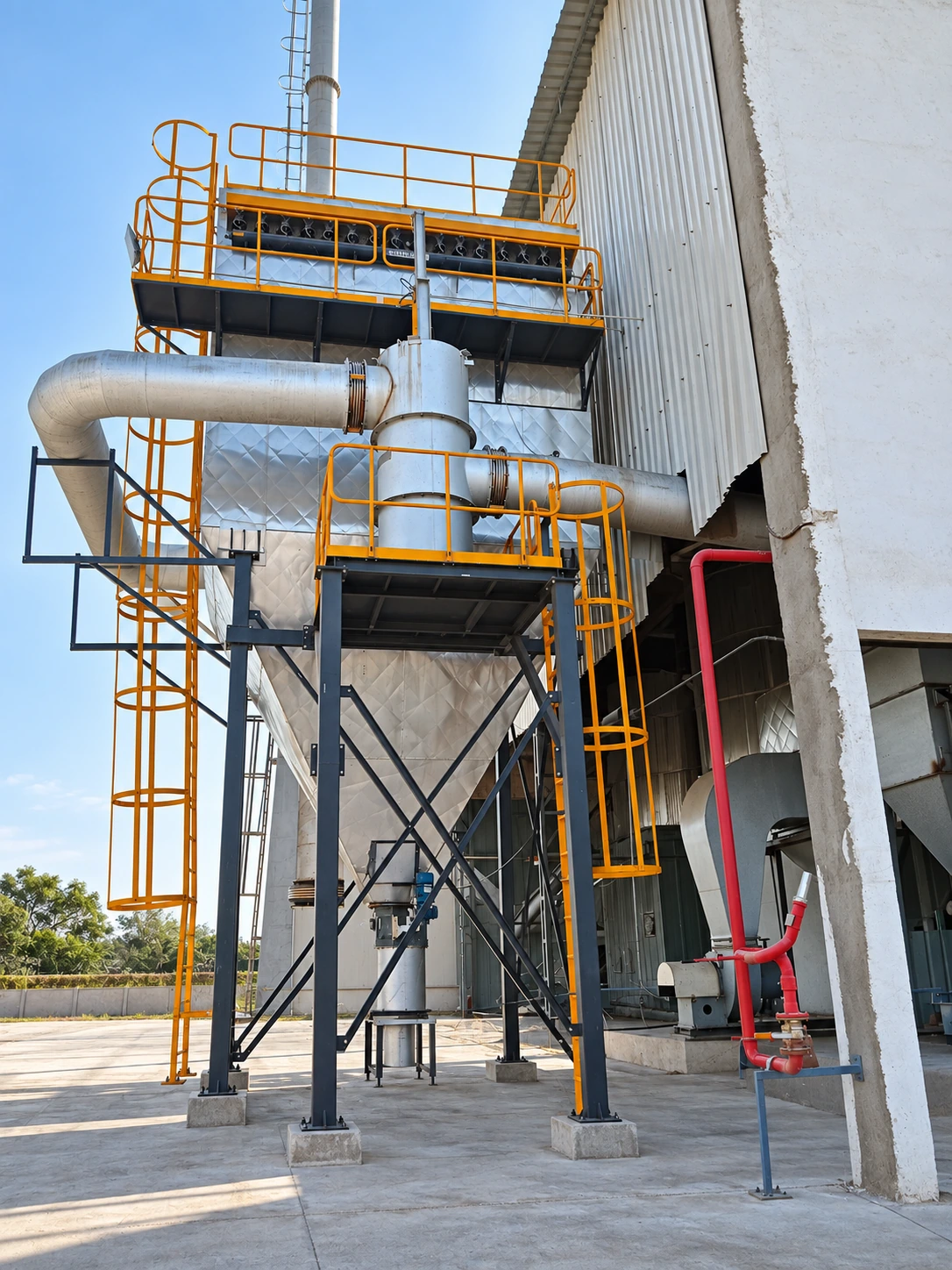
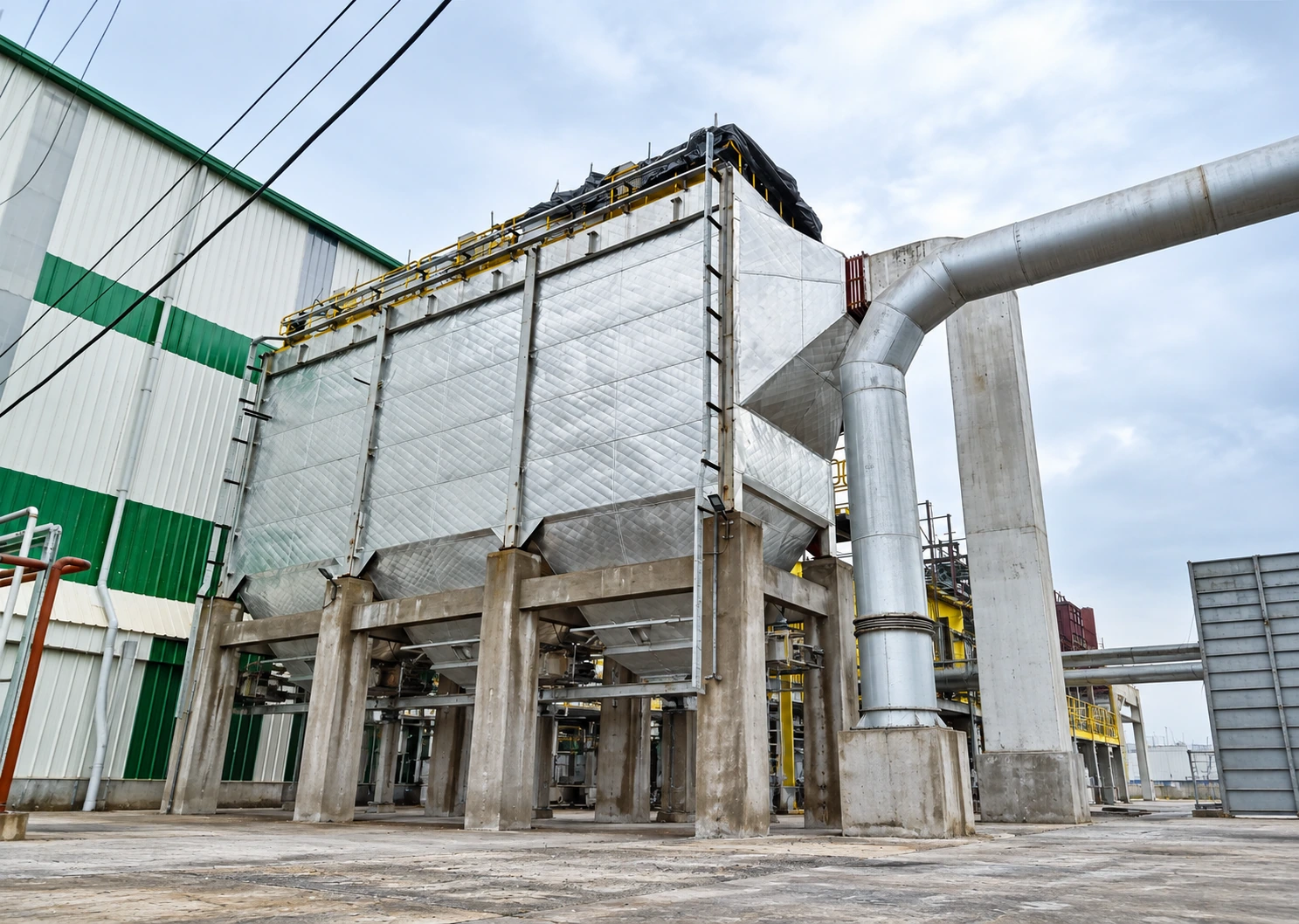
A project-specific arrangement may include inlet and outlet transition sections, gas-distribution devices, one or more electrical fields, collecting and discharge electrodes, rapping mechanisms, hoppers, high-voltage transformer-rectifier equipment, instrumentation and controls. Ducts, dampers, structural and civil interfaces, access, insulation and the ID fan must be coordinated with the agreed supply boundary.
A cyclone or multiclone may be evaluated as a pre-separator where coarse or high dust loading makes that useful. It does not automatically replace the final ESP duty. Hopper discharge is an interface to the plant's downstream system; TECHFLOW does not supply ash conveying, storage or recycling.
When a dry ESP may be a strong option
A dry ESP may warrant evaluation where the dust and gas properties support electrostatic collection, low gas-side pressure loss is valuable, continuous operation is important and the available footprint can accommodate the required collecting arrangement. It can be considered for new industrial boiler packages and defined new pollution-control packages on existing boiler systems, provided the full gas-path and interface data is available.
Suitability must remain conditional. Changes in fuel chemistry, particulate resistivity, gas flow or temperature can affect performance. The final number of fields, collecting area, electrical arrangement and operating controls are established from the project design basis.
For suitable applications, a system may be engineered toward an outlet particulate target below 10 mg/Nm³. Any committed value must be tied to the agreed fuel, inlet dust, gas conditions, load range, equipment configuration, reference oxygen, moisture basis and contractual test method. It is not an unconditional result for every boiler or fuel.
ESP and ID-fan coordination
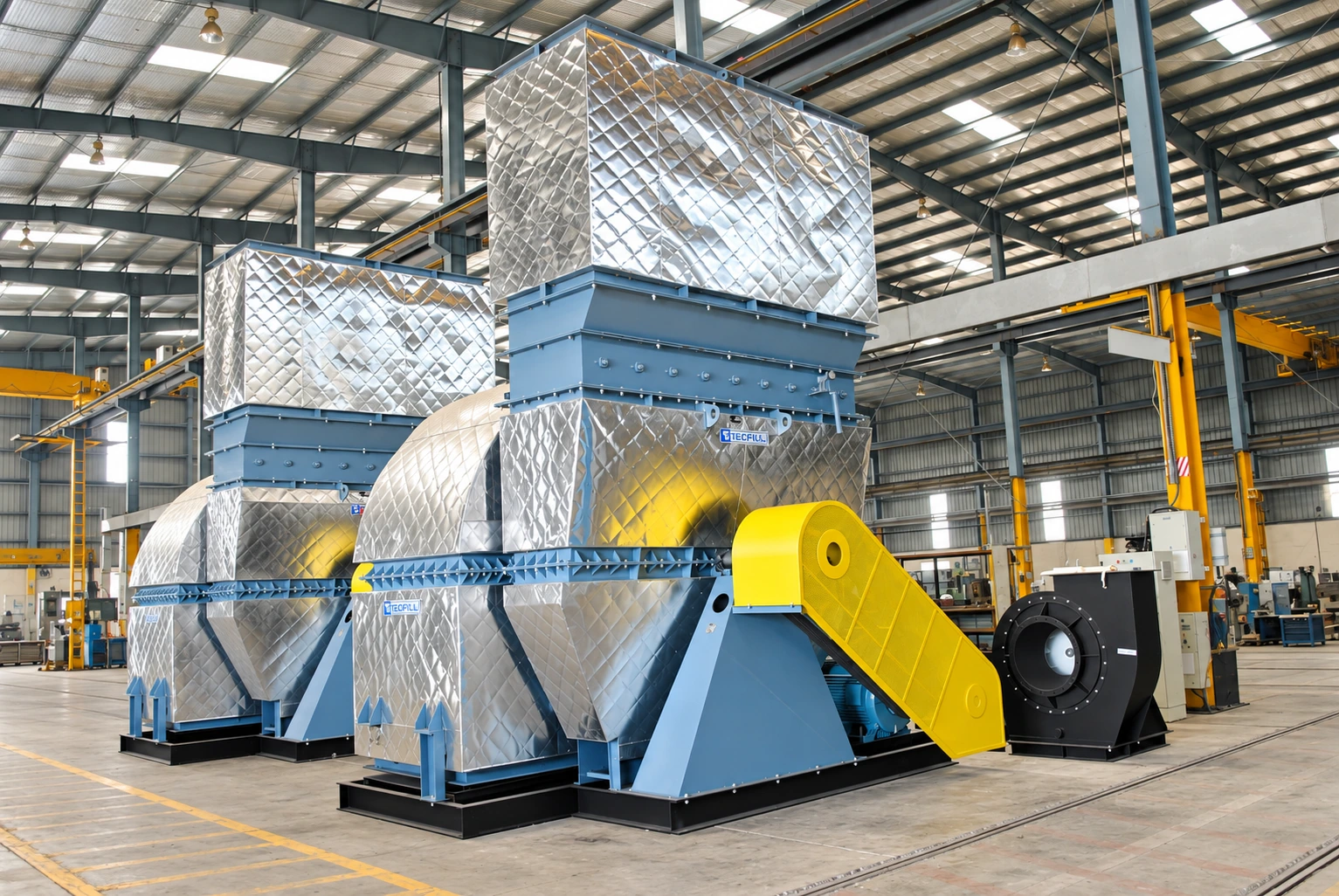
Although an ESP normally has lower gas-side pressure loss than a fabric filter, the ID fan must still be selected for the complete system. Gas density, temperature, duct losses, margins, damper position, stack requirement and operating range all matter. The fan may be supplied as part of the coordinated ESP package or as a standalone centrifugal fan for a clearly defined duty.
Explore industrial boiler fan duties and the centrifugal fans and blowers range.
Boiler OEM and end-user integration
For boiler manufacturers and package integrators, early coordination should cover gas data, guarantee conditions, ESP and fan battery limits, electrical philosophy, controls, general arrangement, structural loads and documentation. For an operating plant, the review should also cover measured performance, available plot space, shutdown constraints, present draft conditions and any proposed fuel or capacity change.
Reference applicability should be checked against the proposed fuel, gas, dust and operating envelope. Equipment selection should never rely on a nominal project match alone.
Information required for an ESP enquiry
Provide the boiler or heater type and rating, firing technology, fuel range and analysis, gas-flow and temperature envelope, moisture and gas composition, inlet particulate concentration, ash or dust analysis, outlet requirement and measurement basis, operating profile, plot plan, duct and stack interfaces, fan responsibility, utilities, controls, hopper-discharge boundary and project location.
Where data is pending, mark it as pending. This allows the proposal basis to distinguish confirmed conditions from assumptions.
Frequently asked questions
When is a dry ESP suitable for an industrial boiler?
It is suitable for evaluation when the particulate and gas conditions support electrostatic collection and the project values its operating characteristics. Dust resistivity, loading, temperature, moisture, load range, footprint and outlet requirement must all be assessed.
Is an ESP suitable for biomass or rice-husk boilers?
It can be, but biomass is not one uniform fuel. Rice-husk ash and other biomass ashes can behave differently. Fuel analysis, ash chemistry, resistivity, particle distribution and operating variability are required before suitability and configuration are confirmed.
Does an ESP need an ID fan?
Yes. The ID fan moves flue gas through the boiler gas path and must account for the ESP and all other system resistance. Its duty is selected from the complete operating envelope.
Is a multiclone always required before an ESP?
No. Mechanical pre-separation is application-dependent. It may be useful for selected high-loading or coarse-particle duties, but it should not be added or omitted without evaluating the actual dust and system arrangement.
Can an ESP be compared directly with a Boiler Bag Filter?
Yes, provided both are compared against the same fuel, gas, particulate, load, outlet, energy, footprint, maintenance and lifecycle basis. Use the Bag Filter versus ESP guide for a neutral selection framework.
Discuss an industrial-boiler ESP requirement
Share the fuel, gas, dust, operating and interface data for an application review. TECHFLOW can evaluate the dry Electrostatic Precipitator product and relevant fan scope as one coordinated industrial-boiler requirement.