
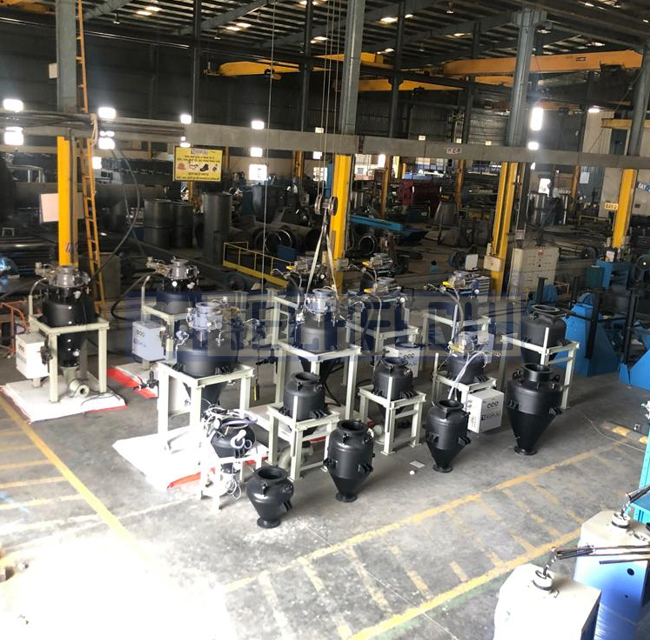
Dense Phase Pneumatic Conveyors use alternating pockets of air to separate the material being conveyed. This is a gentle way to move products that are friable or abrasive. The conveying air velocity is much lower than in a dilute phase system, so there is less chance of segregation or degradation of the products.
Dense Phase Pneumatic Conveyors
Dense Phase Pneumatic Conveying Systems incorporate high-pressure air with a low volume to convey difficult materials, such as cement, mixed batch, and sand. These conveying systems are designed for precise control of product velocity and are ideally suited for materials that are difficult to handle.
These systems typically incorporate a low-velocity rotary valve to ensure that the product is metering and avoiding pellet jamming and material clipping. Additionally, they feature a high-level indicator to ensure that the product does not overfill the pressure vessel or become stuck during conveying. Despite this, the materials are conveyed at the lowest possible velocity.
Dilute Phase Pneumatic Conveyors
Dilute phase pneumatic conveying systems use high-pressure air or gas streams to convey fine particles. They are most suitable for conveying a wide range of materials, including wood chips, bones, limestone, and food products. Moreover, dilute phase conveying systems are more economical and flexible than other modes of conveying.
A dilute phase conveying system can handle most types of materials and is the standard mode for many industrial processes. This system is more versatile than other systems because it can adapt to a variety of product-flow characteristics.
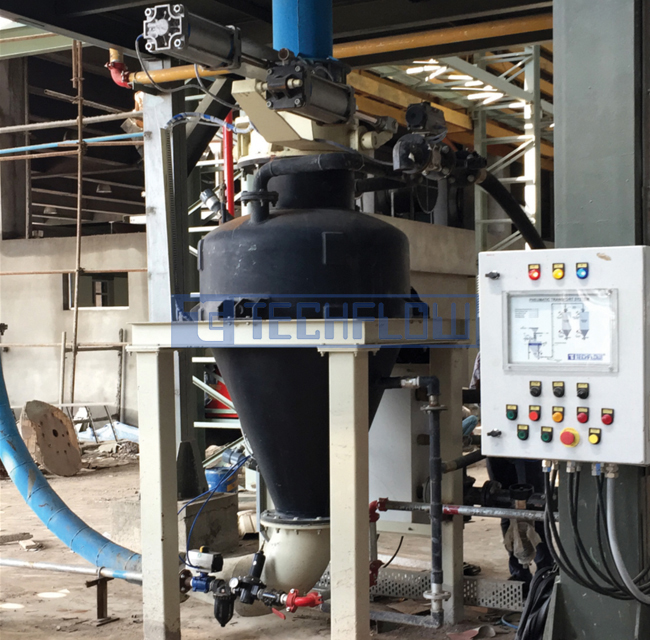
Benefits of Dense Phase Pneumatic Conveyors
When it comes to bulk material handling, the Dense Phase Conveying System offers a number of benefits. This type of conveying is often the first choice when moving materials that are abrasive or sensitive to high velocity. However, there are a number of factors that need to be considered when selecting a conveying system. These factors can make or break the success of the system installation.
The Dense Phase Conveying System uses a proprietary air management system that automatically controls the volume of air. This patented system uses a pressure control regulator, airflow control orifice, and bypass valve to accurately measure total air flow and product-to-air ratio. This eliminates the need for boosters and trace air lines, which are expensive to install and require high amounts of energy. Moreover, it is easier to install compared to other systems.
If you need to move a variety of materials, dense phase pneumatic conveying is a great solution. The low velocity and high pressure of dense phase pneumatic conveying ensures that your material will be conveyed efficiently, with little or no material degradation. It also minimizes wear and tear on the conveying system.
Dense phase pneumatic conveying systems operate at less than the minimum suspended velocity and are characterized by the product moving along the bottom of the pipeline in slugs or beds. They are suitable for transferring a wide variety of materials, including granular materials and minerals. Fixed line sizes simplify changeovers and allow for simple control schemes. Common materials conveyed by dilute phase systems include grains, flours, resins, and non-ferrous materials.
The Bottom Line
The Dense Phase Pneumatic Conveying System offers a variety of. Its unique features eliminate pellet jamming, material clipping, and other issues. In addition, it can reduce operating costs and emissions and enhance productivity. Its high-performance controls help users to start up the system and regulate the conveying of product under varying process conditions. The density of dense-phase pneumatic conveying reduces the wear on the pipes and bends and is particularly useful for conveying highly abrasive materials.