
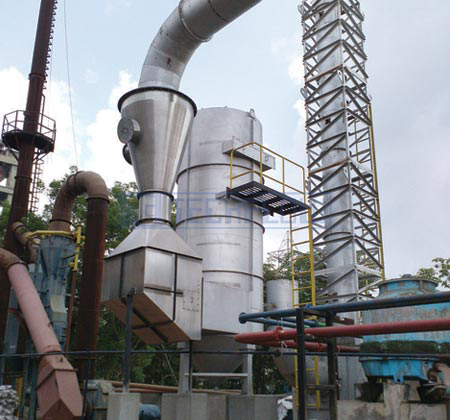
A wet scrubber is a system that uses a process of cleaning air with a liquid. The liquid is usually water, but some facilities also use chemical additives to change pollutants into less harmful ones. The most commonly used chemicals are sodium hydroxide and caustic, which are excellent scrubbing agents for acid gases. Other types of chemicals include slaked lime, calcium hydroxide, and potassium chloride. The wet scrubber is an efficient way to clean the air around a facility.
Know about Wet Scrubber & Its Working
A wet scrubber can be either a high-energy or low-energy model. A high-energy scrubber works by forcing liquid droplets into a converging section. The gas stream is accelerated into the throat section by a fixed-throat venturi. The high-velocity gas stream strikes the liquid stream at right angles, shattering it into small drops. The shattered liquid is then collected in the diverging section, reducing the velocity of the stream.
A wet scrubber consists of a composite or metal container that has holes in it. The water and gas are moved through the container and the contaminated gases are absorbed by the water. The harmful gas passes through the liquid, which is then released. The resulting clean gas passes through the wet scrubber. The water and chemicals also allow for the efficient oxidation of pollutants and other hazardous substances. However, this process adds a considerable amount of vapour to the exhaust that is visible as white smoke when expelled.
The liquid flow rate, or liquid-to-gas ratio, is necessary for determining a wet scrubber's efficiency. The higher the liquid flow rate, the higher the efficiency. In addition, the more droplets per cubic inch of liquid, the more pollutants are captured. If the pollution level in the air is high, a high-quality wet scrubber will be more efficient and remove a high proportion of abrasive particles.
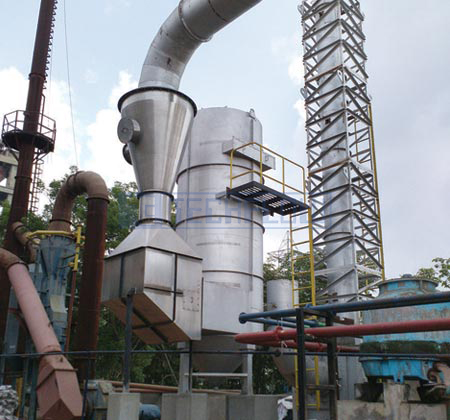
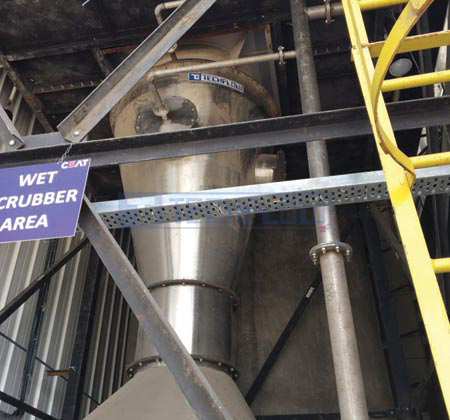
Applications and Benefits of Wet Scrubber
The wet scrubber has many advantages, including the ability to process hot and sticky materials. Its small size and ease of use make it an excellent choice for a wide variety of industrial applications. Compared to other industrial scrubbers, a wet scrubber's low-cost model is less expensive to buy and maintain. A wet scrubber will reduce your capital maintenance costs significantly. Its high-performance model can be installed on a smaller surface. Them, from removing the particles that can cause fire or explosions, to improving the quality of air, and protection for machinery from dust accumulation, everything is performed by this system.
The most important benefit of wet scrubber among its number of benefits is that it can reduce the amount of air pollution. The wet scrubber may be applied in a range of sectors to minimize pollution. It could very well, for example, be used to purify the air around a gas plant. This is a cost-effective option for cleaning the air surrounding a gas plant. It is also popular in oil refineries and power plants.
In Conclusion
The performance of a wet scrubber depends on the particle size distribution and the type of scrubber used. A wet scrubber with a low-cost model is more effective for high-temperature environments, while a high-efficiency one has a high-priced system that uses water as its liquid-scrubber element. In addition to its cost-effectiveness, the wet scrubber can also help protect human life.