

A Medium Pressure Centrifugal Blower is a vital component of any industrial air-handling system. These air-moving units are used in a wide variety of applications and can be classified according to their material and design. These fans can be thick-walled or thin-walled. They are made of different types of steel, including AISI 304 or 316 stainless steel, and Corten steel.
Features of Medium Pressure Centrifugal Blower
A medium pressure centrifugal blower is designed to move air at a medium pressure. This type of blower has several advantages over its radial counterpart. Its design enables it to achieve higher pressures with lower volumes. It also allows for lightweight construction. However, its disadvantages include a low static efficiency and limited stability range. It is also susceptible to overloading at higher flow rates.
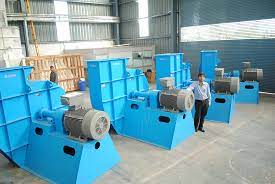
The basic components of a medium pressure centrifugal blower include an air outlet, an impeller, a motor, and a housing. They are available in various configurations and can be installed as a standalone unit or as part of an air filtration system. A pneumatic material handling system can maintain a constant pressure to prevent clogs and fallout. It can also move a wide range of materials.

Types of Centrifugal Blower
When choosing a centrifugal blower, you should consider the amount of power it will need. This will determine the type of housing, blades, and accessories. Medium-pressure centrifugal blowers can handle higher air volumes and can move a larger mass. They are also available in single and double-volute versions. Their name comes from a feature found in ancient architecture. The double-volute design has two discharge paths, one for the exhaust air and one for the inlet air.
Direct-drive centrifugal blowers use a direct-drive motor. This allows for higher RPMs and torque. This type of motor also does not need a belt or tensioner. It can be used for pneumatic conveying, low-pressure ventilation, and cooling.

Applications of Centrifugal Fans and Blowers
Various industries make use of centrifugal fans and blowers. They are specifically engineered to withstand different types of environments, including high-temperature, humidity, and corrosive atmospheres. These blowers are designed to meet the requirements of manufacturing. They are also available in different wheel configurations and different materials.
Currently, the global market for centrifugal blowers is estimated at US$2.8 billion in 2020. It is expected to grow at a CAGR of 3.9% between 2020 and 2026. This growth rate is significantly higher in the High Pressure segment, which is expected to reach US$2.2 billion by 2026. In contrast, the market for medium pressure centrifugal blowers is estimated to grow at a 3.6% CAGR.
Cost
Whether it's used as an integral part of a dust-free hood system or an initiating piece of an air filtration system, a medium pressure centrifugal blower has a wide range of uses. These blowers maintain a constant pressure that prevents fallout and clogs. They are also perfect for conveying a variety of materials, including dust.
When selecting a centrifugal blower for industrial applications, choose the one that best suits your needs. These fans are known to be dependable and long-lasting. They're also highly efficient and require minimal maintenance. You can choose a blower with up to one hundred horsepower, depending on the volume and type of air that you need to move. You'll also find blowers with 50 hp capacities, which are perfect for smaller applications.

Motor
There are several options when selecting a motor for a medium-pressure centrifugal blower. One option uses a direct-drive motor. This type of motor has no belt or tensioner and can operate at a higher RPM. Direct-drive motors are often used in pneumatic conveying, low-pressure ventilation, and cooling air.
Another option is a multi-stage centrifugal blower. These blowers are more powerful than axial blowers and have multiple impellers to distribute the pressure load. Some models also use radial or backward curved vane impellers. Centrifugal blowers come with performance curves showing flow versus power and pressure.