
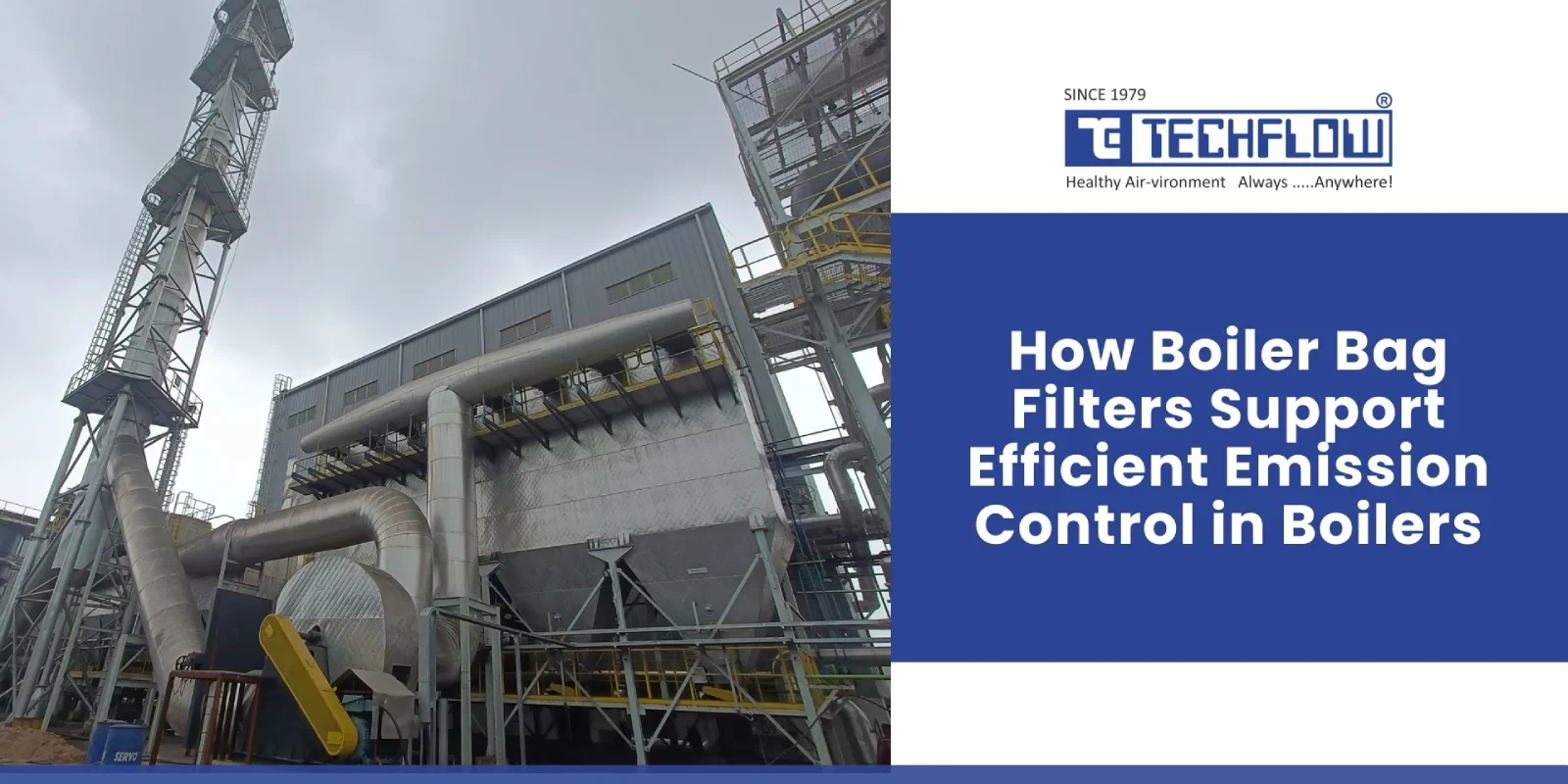
Industrial boilers that run on solid fuels or multiple fuel types release flue gas containing fine dust particles, abrasive ash, and varying temperature conditions. In such setups, boiler bag filters are widely recognised as a dependable method for controlling particulate emissions while supporting stable plant performance.
Boilers operate under carefully managed combustion and draft conditions, where emission control plays a direct role in plant efficiency, reliability, and compliance with environmental standards. As emission norms for particulate matter (PM) continue to become stricter across industries, filtration systems must perform consistently under continuous operation and fluctuating loads.
Modern boiler types such as AFBC, CFBC, biomass-fired, and multi-fuel units generate flue gas with high dust concentration, fine particle sizes, abrasive content, and changing temperatures. These conditions demand emission control systems that are specifically designed for boiler applications rather than general dust collection.
In these environments, boiler bag filters have proven to be a practical and reliable solution. When designed with the right filtration velocity, suitable filter media, and proper integration with the induced draft system, they deliver steady emission control, stable pressure behaviour, and long operational life.
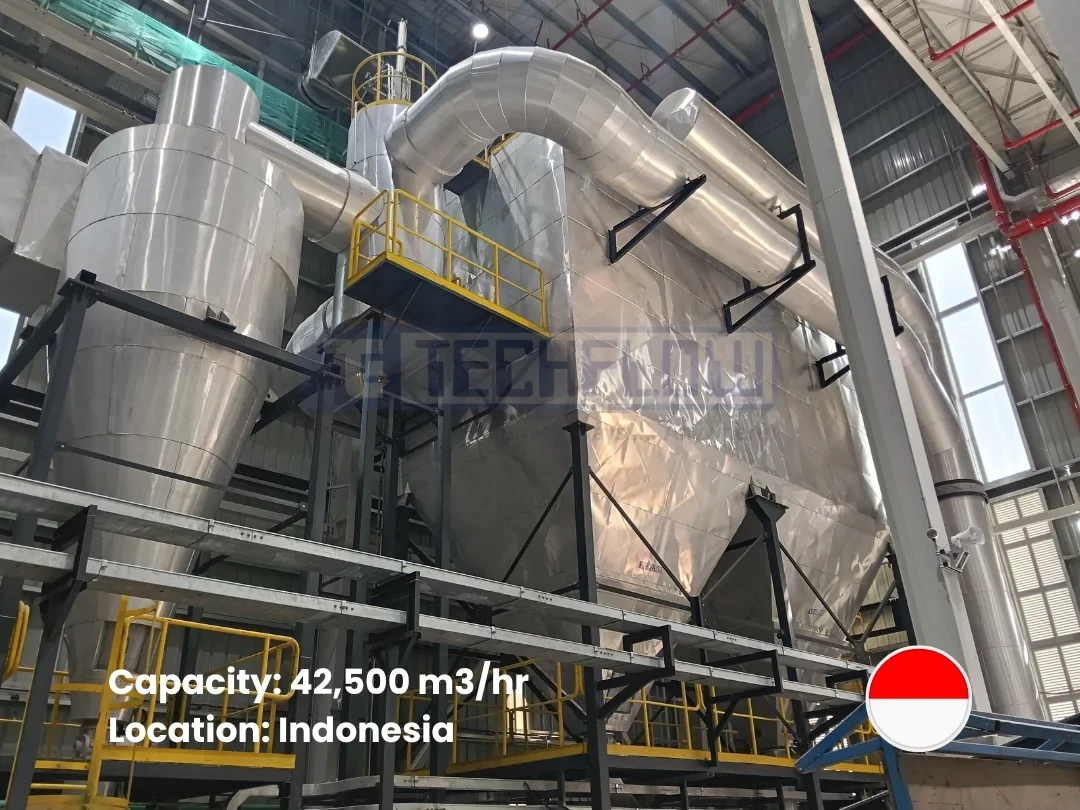
Boiler Flue Gas Characteristics and Their Impact on Filtration
Designing an efficient boiler bag filter system starts with understanding the properties of the flue gas. Some key characteristics include:
- A wide range of particle sizes, including very fine particles
- Abrasive ash with silica and bed material carryover
- High and fluctuating gas temperatures
- Presence of acidic components depending on fuel composition
- Continuous operation with changing load conditions
These factors expose filtration systems to thermal, chemical, and mechanical stress simultaneously. As a result, standard dust collectors may not perform effectively unless they are specifically designed for boiler flue gas conditions.
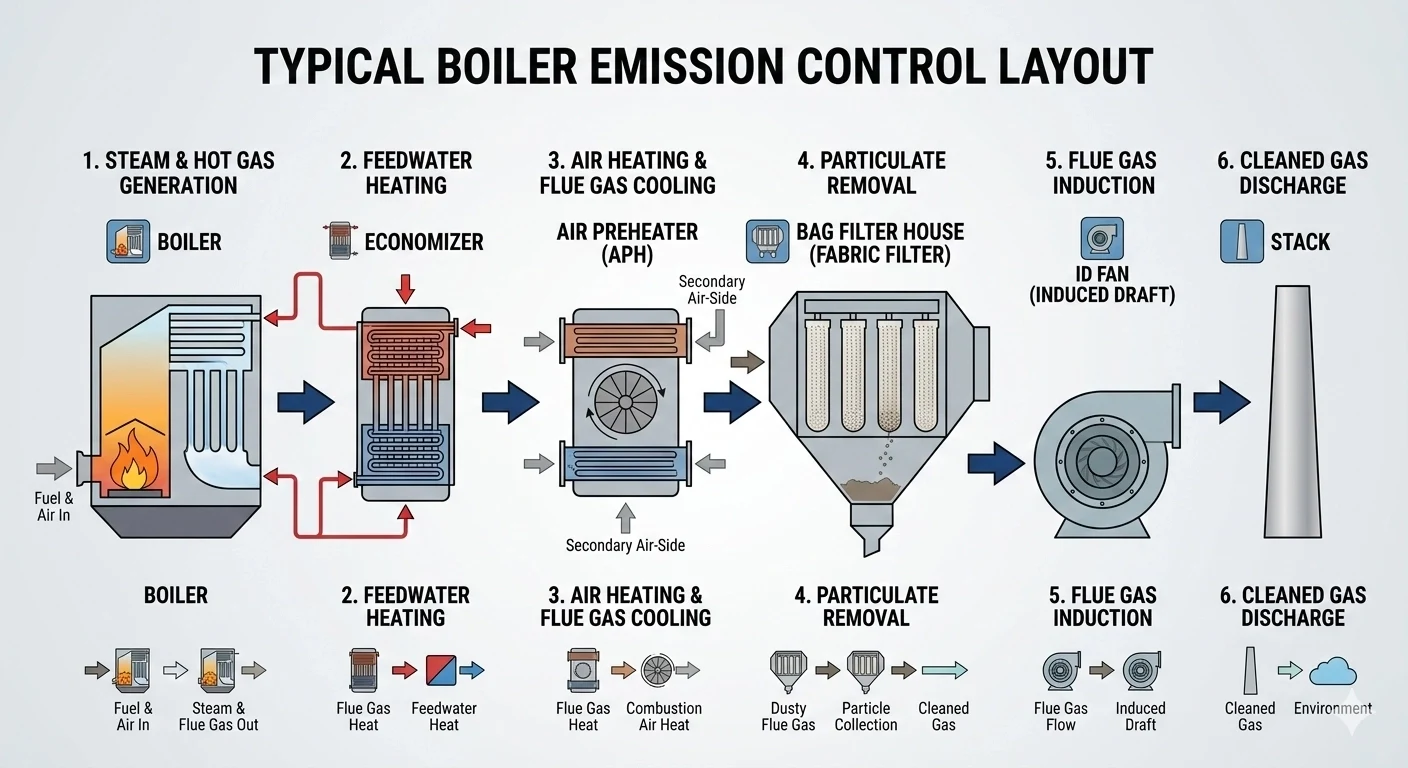
Working Principle of Boiler Bag Filters
Boiler bag filters operate on surface filtration. As flue gas flows through the filter bags, dust particles get trapped on the outer surface of the fabric. Over time, a layer of dust—known as the dust cake—forms and becomes the main filtering layer, improving efficiency.
Unlike systems that rely on inertia or electrostatic force, bag filters are effective across a broad particle size range, including very fine particles. This makes them suitable for modern plants where strict emission limits must be maintained.
For smooth operation, it is important to control airflow velocity, maintain proper cleaning cycles, and keep temperatures within acceptable limits.
Key Engineering Factors in Boiler Bag Filter Design
1. Filtration Velocity and Air-to-Cloth Ratio
The air-to-cloth ratio (ACR) defines how fast air passes through the filter media and has a direct impact on pressure drop and bag life.
If filtration velocity is too high, it can lead to:
- Quick rise in pressure drop
- Frequent cleaning cycles
- Stress on filter fabric
- Shorter bag life
Selecting the right ACR depends on dust properties, operating hours, emission targets, and how the system interacts with the boiler draft.
2. Temperature Control and Dew Point Management
Temperature is a critical parameter in bag filter performance. Every filter media has a specific temperature range it can handle. Exceeding this range can damage the fibres.
Operating near the acid dew point can cause condensation inside the filter, leading to:
- Filter blockage
- Corrosion
- Reduced efficiency
Maintaining proper temperature levels is essential for long-term performance.
3. Gas Flow Distribution
Even airflow across the filter area is important for stable performance.
Poor inlet design can create uneven flow, causing:
- Localised high velocity zones
- Uneven dust loading
- Early bag damage
Proper inlet design and flow distribution systems help maintain uniform airflow and extend equipment life.
4. Cleaning System Design
Most boiler bag filters use pulse-jet cleaning systems. The goal is to balance dust accumulation and removal.
- Too much cleaning pressure can damage the bags
- Too little cleaning can increase pressure drop
Using differential-pressure-based control helps maintain stability and improves bag life.
Integration with Boiler Draft System
Boiler bag filters operate under negative pressure created by the induced draft (ID) fan. The pressure drop across the filter directly affects fan performance and overall boiler draft.
Proper coordination between the bag filter and the draft system is important for:
- Stable combustion
- Energy efficiency
- Reliable operation
Experience in handling both filtration systems and industrial fans often leads to better system performance.
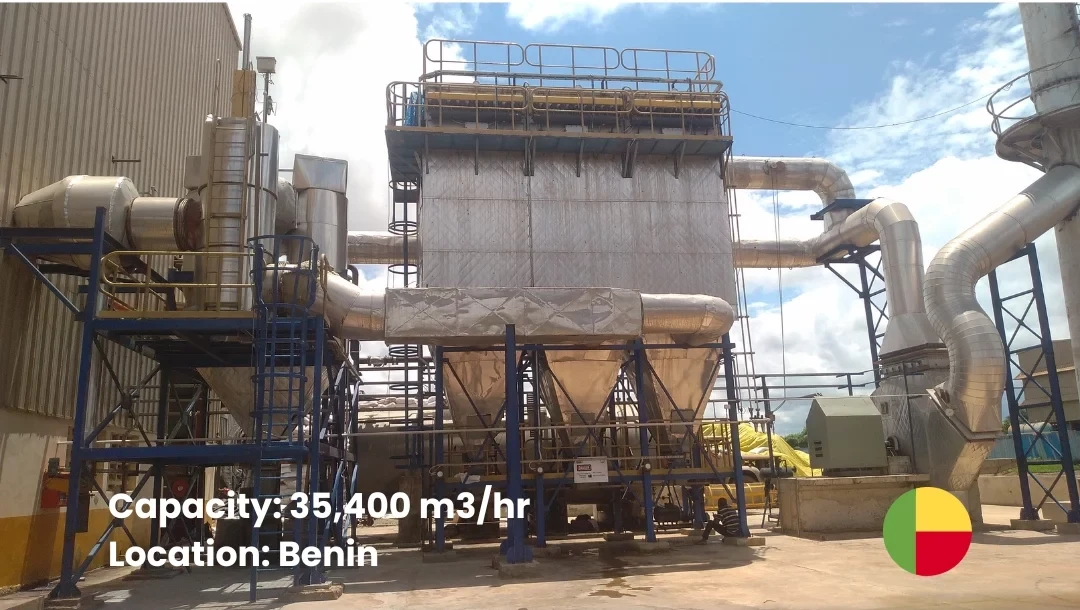
Filter Media Selection for Boiler Bag Filters
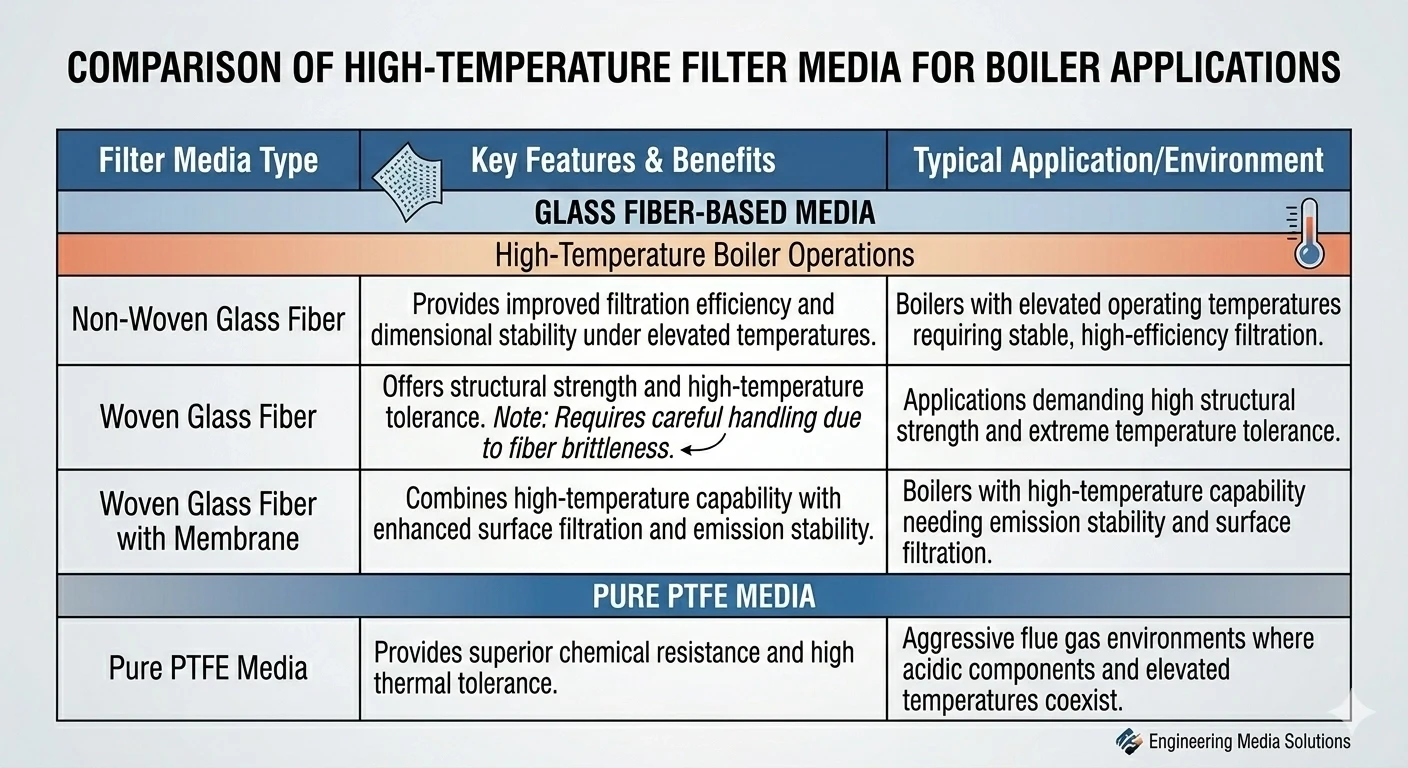
Choosing the right filter media is crucial for both performance and durability. The selection depends on temperature, gas composition, dust properties, and emission requirements.
1. Aramid (Nomex®) Media
Commonly used in moderate temperature conditions, aramid media offer:
- Stable thermal performance
- Good strength
- Reliable operation in controlled environments
Suitable for coal, biomass, and multi-fuel boilers within moderate temperature ranges.
2. Aramid with PTFE Membrane
Adding a PTFE membrane improves filtration performance by:
- Capturing finer particles
- Preventing dust penetration
- Maintaining stable pressure
This option is often used where stricter emission standards apply.
3. Glass Fibre Media
Used in high-temperature applications:
- Non-woven glass fibre: Better filtration efficiency and stability
- Woven glass fibre: Strong structure but requires careful handling
- With membrane: Improved filtration along with high temperature resistance
4. Pure PTFE Media
PTFE media offer:
- Excellent chemical resistance
- High temperature tolerance
- Easy dust release
Ideal for aggressive flue gas conditions with acidic components.
Operational Stability and Preventive Practices
Consistent performance depends on proper operating practices, including:
- Keeping flue gas temperature within limits
- Avoiding dew point conditions
- Maintaining correct pulse pressure
- Using clean and dry compressed air
- Monitoring pressure drop trends
Following these practices helps extend filter life and maintain stable emissions.
Contribution to Sustainability and Compliance
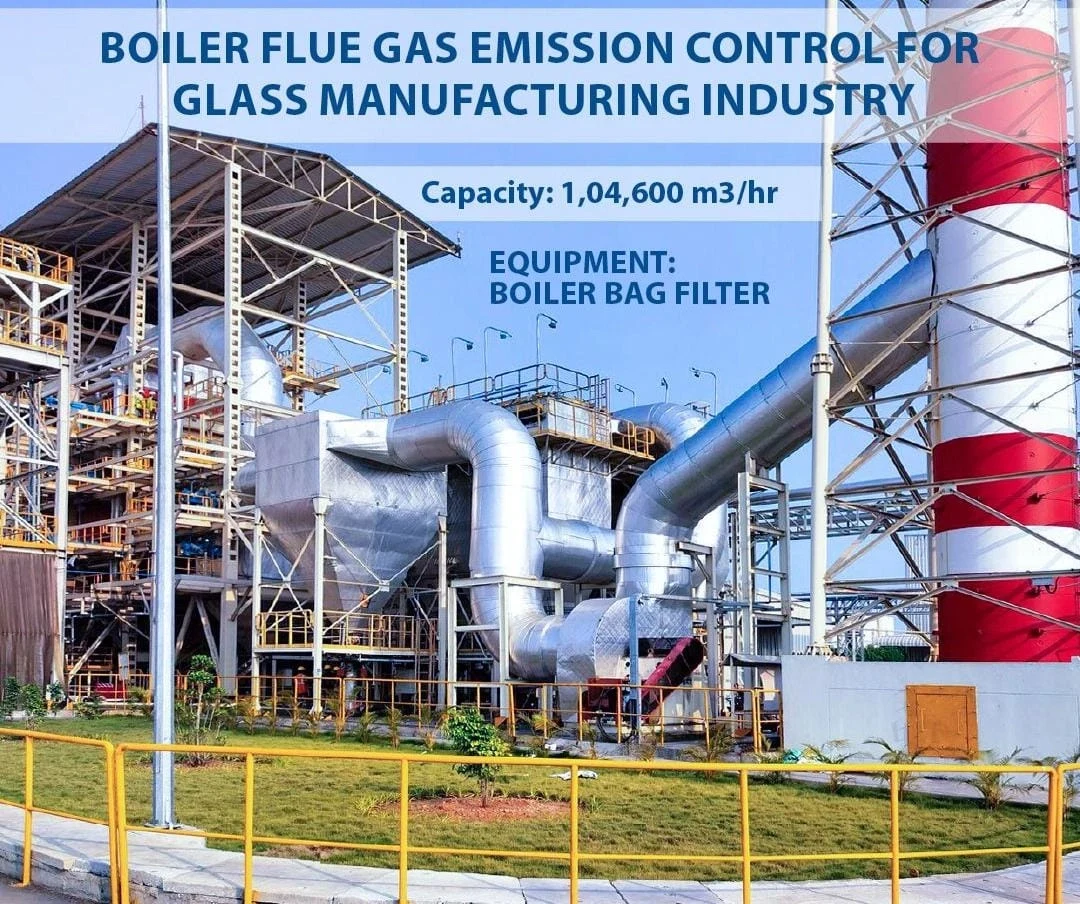
Boiler bag filters play an important role in reducing environmental impact by capturing fine particulate matter effectively. This improves air quality both inside the plant and in surrounding areas.
When properly designed and operated, these systems:
- Support compliance with emission standards
- Reduce downtime
- Improve energy efficiency
Conclusion
Boiler bag filters are among the most dependable solutions for controlling particulate emissions in industrial boilers. Their ability to handle fine particles, varying loads, and different fuel types makes them essential in modern plants.
However, long-term performance depends on proper design and operation, including:
- Correct filtration velocity
- Temperature control
- Suitable filter media
- Efficient cleaning systems
- Proper integration with the draft system
With the right engineering approach, boiler bag filters can deliver consistent emission control, stable operation, and extended service life.
Frequently Asked Questions (FAQs) :
Boiler bag filters are fabric-based filtration systems used to remove particulate matter from flue gas. As gas passes through the filter bags, dust collects on the surface, forming a layer that improves filtration efficiency and helps maintain emission standards.
They are important because they can capture both coarse and very fine particles. This makes them effective for modern boilers that produce high dust loads and operate under varying conditions.
Performance depends on factors such as filtration velocity, temperature control, airflow distribution, and cleaning efficiency. Proper operation helps maintain reliability and extends equipment life.
Filter media is chosen based on temperature, chemical composition of flue gas, dust properties, and emission requirements. Options include aramid, glass fibre, and PTFE, depending on the application.
They provide consistent removal of particulate matter, helping industries meet strict environmental norms. When properly designed and integrated, they support stable operation and long-term compliance.