
Key Takeaways
- Choosing a dust collection manufacturer is an engineering partnership decision, not a product purchase. The wrong choice costs far more than the price tag.
- No two facilities are alike. Your system must be custom-engineered for your specific dust type, airflow volume, temperature, and regulatory emission limits.
- A capable manufacturer offers the full technology range bag filters, cartridge filters, cyclones, wet scrubbers and recommends what fits your process, not their catalogue.
- Your dust collector is a compliance instrument. It must consistently meet CPCB and SPCB particulate emission limits, not just pass initial commissioning.
- Manufacturing quality determines long-term reliability. Failures due to bad welds, uncertified materials, and improper sealing more than offset any savings made on the front end.
- After-sales support matters as much as the system itself. Genuine spare parts, AMCs, and fast breakdown response protect a 15–25 year investment.
- Verify everything externally. Ask for references in your industry, call them up directly and prioritise manufacturers with long-term repeat clients over glossy brochures.
What Makes Selecting the Right Dust Collection Manufacturer So Consequential?
Industrial facilities face a dual pressure that never lets up: maximise operational efficiency while staying compliant with increasingly strict pollution control standards. Your dust collection system sits at the intersection of both demands, and the manufacturer behind it determines how well you navigate that pressure over the next two decades.
This is not a decision about buying a machine. It is a decision about choosing an engineering partner.
A dust collection system must account for precise airflow volumes, particle size and density, operating temperature, chemical nature of the dust, regulatory emission limits, and long-term maintenance realities specific to your facility. Off-the-shelf solutions routinely fail to account for even half of these variables. The result is a system that underperforms from day one, consumes excessive energy, burns through filter media prematurely, and eventually triggers a compliance crisis.
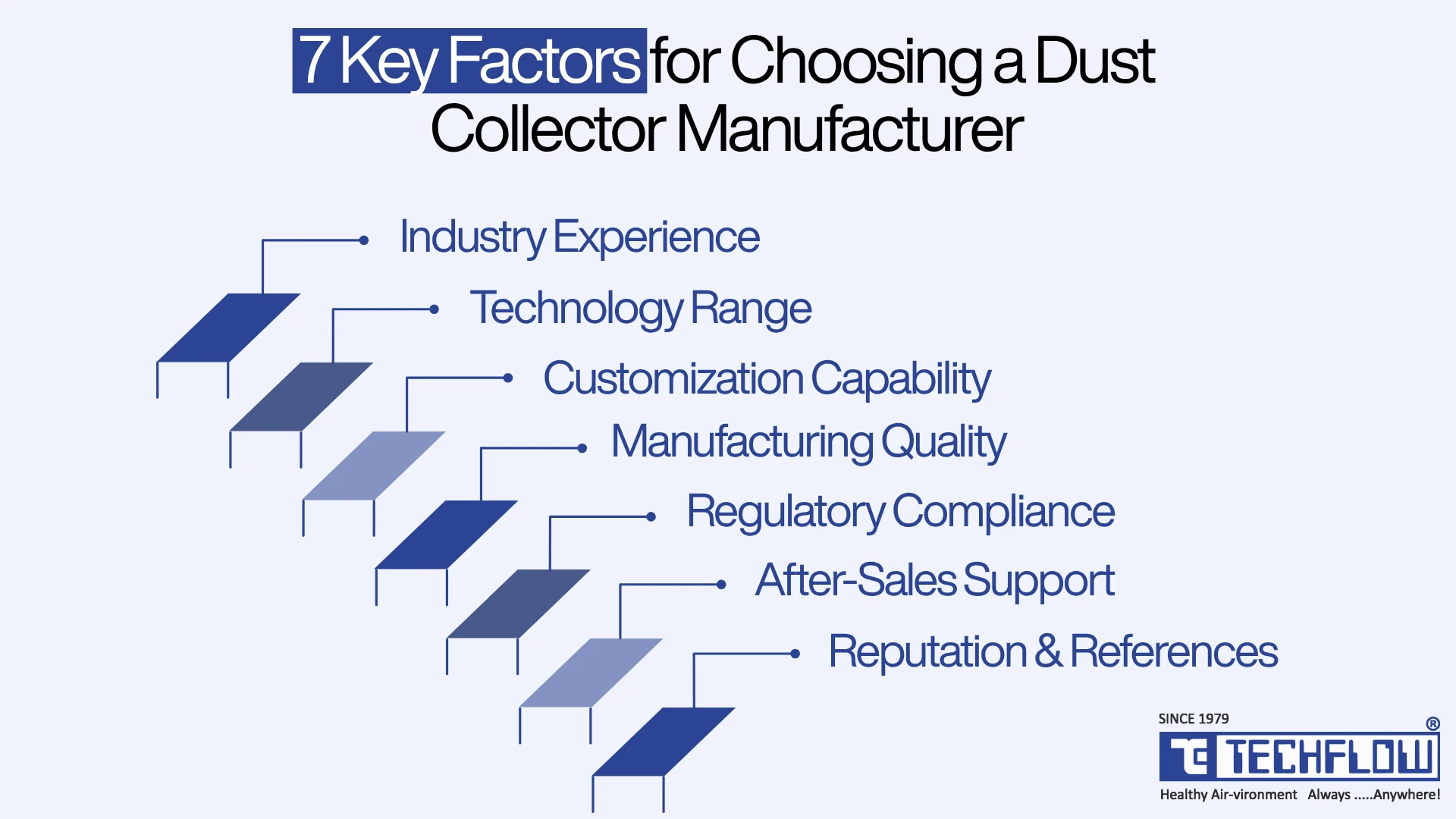
This guide breaks down the seven factors that genuinely differentiate capable manufacturers from those who simply sell equipment.
What Is a Dust Collection System?
A dust collection system is an engineered network of capture hoods, ductwork, fans, filtration equipment, and material-handling components designed to remove airborne particulate from industrial processes at the source, before it disperses into the work environment or atmosphere.
Unlike general ventilation, which dilutes contaminants, a dust collection system captures them, achieving outlet emission levels that must meet regulatory particulate limits set by authorities such as India's Central Pollution Control Board (CPCB) and State Pollution Control Boards (SPCBs).
The system's performance is measured in filtration efficiency (typically above 99.9% for modern pulse jet bag filters), air-to-cloth ratio, pressure drop across filter media, and long-term emission consistency at the stack outlet, not just at commissioning.
Why Getting This Decision Right Matters
There is a tendency in procurement to treat dust collection as a utility purchase something to specify, price, and tick off the list. That framing is expensive.
Operational disruptions: A dust collection system failure in a steel plant, cement facility, or foundry can shut down an entire production line. Industry data indicates that unplanned equipment downtime costs manufacturing facilities tens of thousands of dollars per hour in lost production.
Regulatory exposure: Under the Air (Prevention and Control of Pollution) Act, 1981, and the Environment Protection Act, 1986, Indian facilities must maintain particulate emission levels within limits prescribed by the CPCB and SPCBs. Failure to meet these limits results in financial penalties, suspension of your Consent to Operate (CTO), and potential legal liability.
Worker health and safety: Respirable dust, particularly fine particles below 10 microns, poses serious occupational health risks, including respiratory disease. Inadequate dust control directly exposes workers and generates liability under the Occupational Health Act, 1987.
Sunk-cost trap: A system that requires premature replacement at year seven after a projected 20-year service life represents a catastrophic loss that dwarfs any initial savings.
7 Critical Factors to Evaluate When Choosing a Dust Collection System Manufacturer
1. Industry Experience and Engineering Depth
The foundation of any credible manufacturer is engineering maturity accumulated through real industrial applications, not just laboratory conditions. Dust collection is a specialist discipline. A company that manufactures general industrial equipment cannot simply add dust collectors to its product catalogue and reliably solve complex, heavy-duty applications.
What you need is a manufacturer who has already encountered and resolved the specific engineering challenges of your industry. Foundry dust behaves entirely differently from pharmaceutical powder. Cement plant conditions high temperature, abrasive particulate, and continuous operation demand design decisions that only come from having solved those problems before.
What to check:
- Years of operation (reflects engineering maturity and resilience across market cycles)
- Verifiable project history in your specific sector, not generalised claims
- Size and experience of the in-house engineering team
- Volume of successful installations, with references you can contact
Ask for documented case studies from your industry. A manufacturer who hesitates to provide verifiable references or detailed project histories is telling you something important.
2. Range and Versatility of Dust Collection Technologies
A capable manufacturer must offer the full spectrum of dust collection technologies, because no single system type works across all applications. A manufacturer whose product range is limited to one or two technologies will inevitably try to fit your requirements to their available equipment rather than engineering what your process actually demands.
The principal industrial dust collection technologies and their appropriate applications are:
Pulse Jet Bag Filter (Baghouse): The most widely deployed dust collection technology in heavy industry. Fabric filter bags capture dust on their outer surface; automated compressed-air pulses clean bags in sequence without interrupting airflow. Modern pulse jet systems achieve filtration efficiency exceeding 99.9%, even for sub-micron particles. They are the standard choice for steel plants, cement facilities, foundries, and power plants in high-volume, high-temperature, continuous-operation environments.
Pulse Jet Cartridge Filter: Better suited to ambient-temperature environments with lighter dust loads and extremely fine, low-density particles. Cartridge collectors are compact, require less floor space, and perform well in pharmaceutical, food processing, and light-to-medium manufacturing applications.
Reverse Air Cleaned Cassette Filter uses gentle reverse airflow rather than compressed-air pulses to clean filter media. Preferred where compressed air availability is limited, or where the filter media is too delicate to withstand pulse-cleaning shock.
Cyclone Dust Collectors and Multiclones: Centrifugal pre-separators that remove coarser particles before the gas stream enters the main filter. Effective for heavy-loading environments in mining, cement, and bulk material handling, where they extend filter bag life significantly and reduce cleaning frequency on primary filters.
Wet Scrubbers: The correct solution for sticky, hygroscopic, or combustible dusts, and for processes where particulate and gaseous pollutants must be removed simultaneously. Wet scrubbers use a liquid medium (water or chemical reagents) to capture particles and absorb gases. Essential for certain chemical plant and foundry applications.
Mobile Vacuum Cleaning Stations: Portable, plug-in units for plant maintenance, housekeeping, and intermittent operations where fixed ducting is impractical.
A credible manufacturer will guide you objectively to the right technology for your application even if it is not their highest-margin product line.
3. Customisation Capability and Engineering Design Process
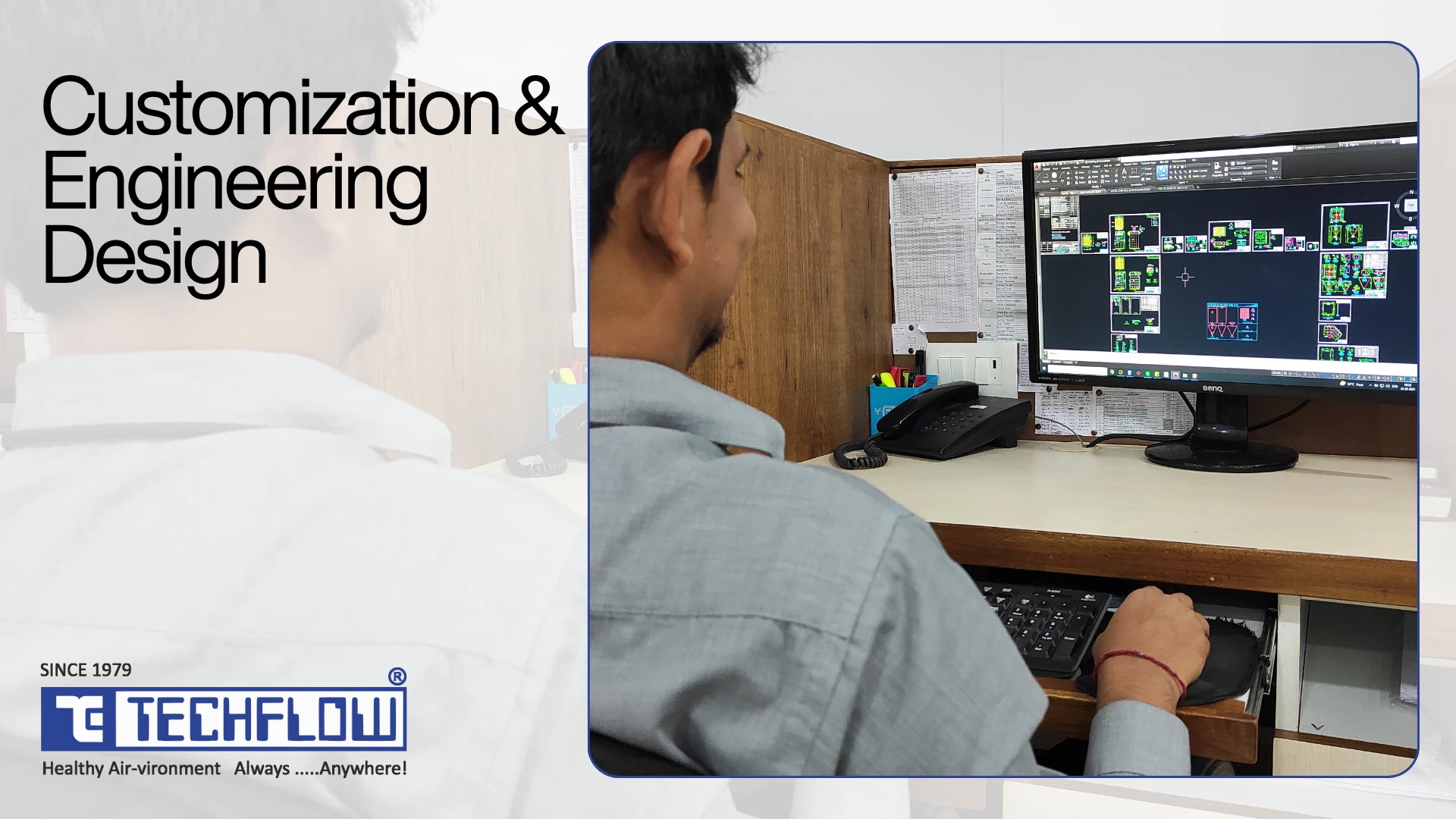
This factor most clearly separates genuine engineering partners from catalogue vendors. No two industrial facilities are identical. Dust load, ductwork constraints, headroom availability, ambient temperature, process schedules, and regulatory emission limits all vary, and they all influence system design.
Before fabrication begins, a competent manufacturer conducts a detailed engineering study of your application. This involves:
- Airflow volume and velocity: Calculating the exact cubic metres per hour of air movement required to achieve effective capture at each source point.
- Particle size distribution: Fine particles (below 2.5 microns) require different filter media and lower air-to-cloth ratios than coarse, heavy particulates.
- Dust concentration at inlet: High-loading applications need robust pre-separation or enhanced cleaning cycles to prevent premature filter blinding.
- Temperature and moisture: High-temperature applications may require fibreglass or PTFE-coated filter media and heat-resistant housing. Humid conditions demand condensation management strategies.
- Chemical nature of dust: Corrosive or hygroscopic dusts require stainless steel housing and chemically inert filter media.
- Plant layout: Ductwork routing, stack height for emission discharge, hopper sizing, and material-handling requirements.
The right question to ask any manufacturer: Do they begin with your process data, or do they begin with their product catalogue?
The answer determines whether the system you receive will perform reliably for 20 years or underperform from the first month of operation.
4. Manufacturing Infrastructure and Quality Standards
Engineering designs only translate into reliable performance when manufacturing execution meets the same standard. A technically sound design fabricated with poor workmanship, substandard welds, inadequate sealing, and non-certified materials will fail in service, often in ways that are expensive and difficult to trace.
When evaluating manufacturing capability, examine:
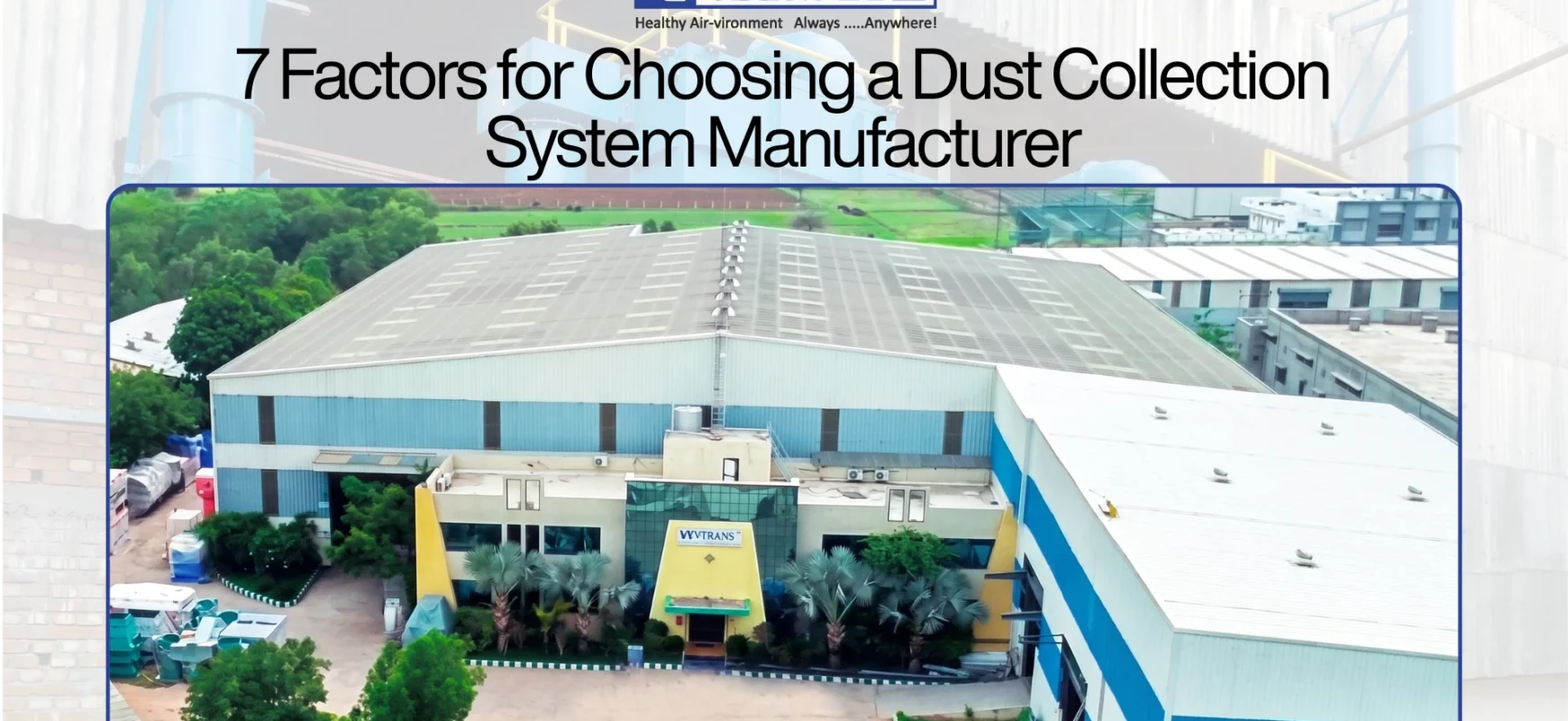
Facility scale and organisation: Large, purpose-built manufacturing facilities with defined material flow, separate fabrication bays, and dedicated inspection areas indicate genuine production capability and capacity.
Fabrication equipment: CNC cutting machinery, automated welding bays, and precision measurement instruments are indicators of consistent, repeatable quality. Manual fabrication shops cannot maintain the tolerances that large-scale industrial dust collectors require.
Material certification: Verify that raw materials mild steel, stainless steel, high-temperature alloys are certified to applicable standards and traceable. Non-certified materials are a common cost-cutting practice with serious long-term consequences.
Quality control at every stage: Incoming material inspection, in-process checks during fabrication, and pre-dispatch testing (pressure testing, fan and motor alignment, electrical testing) should all be standard practice, not optional.
Dispatch and logistics capability: Heavy, oversized components require proper transportation planning. Damage during transit due to inadequate packaging is more common than most buyers realise.
Poor manufacturing quality manifests as weld failures, air leaks, structural corrosion, and premature filter wear, all of which generate maintenance costs that accumulate well beyond any initial price advantage.
5. Compliance with Pollution Control Regulations and Emission Standards
A dust collection system is not simply operational equipment. It is a compliance instrument. In India, facilities operate under a framework that includes:
- The Air (Prevention and Control of Pollution) Act, 1981 mandating installation of air pollution control equipment and adherence to emission limits
- The Environment Protection Act, 1986 establishing the Ministry of Environment, Forest and Climate Change (MoEFCC) as the apex regulatory authority
- CPCB and SPCB standards prescribing specific particulate emission limits (typically measured in mg/Nm³) for each industry category at the stack outlet
- Consent to Operate (CTO) the operational licence whose renewal depends on demonstrated compliance
Your system must reliably achieve the particulate emission limits specific to your industry category, not just at commissioning, but consistently throughout its operational life. This requires:
- System design targeted at your prescribed emission concentration at the stack
- Filter media selection calibrated to the required filtration efficiency
- Operating parameter controls that maintain performance under actual production conditions, not idealised test conditions
A manufacturer who designs equipment without reference to current CPCB and SPCB norms relevant to your facility category is a compliance liability. Ensure your shortlisted manufacturers can demonstrate they understand the regulatory requirements applicable to your specific industry and location and that they explicitly guarantee system performance against those limits.
6. After-Sales Service, Commissioning Support, and Spare Parts Availability
The purchase decision is often dominated by upfront cost and delivery timeline. After-sales support is routinely underweighted, and this is where the real cost of a poor manufacturer choice reveals itself.
Industrial dust collection systems are expected to operate in harsh environments for 15 to 25 years. Over that lifespan, the quality of post-sale support becomes as important as the quality of the original equipment.
Commissioning and startup: A qualified manufacturer sends experienced engineers to supervise installation and commission the system. They verify ductwork connections, fan and motor alignment, control calibration, and initial operating parameters. Systems that are improperly commissioned consistently underperform against their designed efficiency.
Operator training: Maintenance personnel must understand the system and how to conduct bag inspections, recognise early signs of media deterioration, replace worn components, and adjust cleaning cycle parameters. Structured training prevents avoidable failures.
Annual Maintenance Contracts (AMC): Scheduled preventive maintenance by the manufacturer's service team identifies wear before it progresses to failure. This is especially important for solenoid valves, diaphragm valves, and timer controllers in pulse jet system components subject to predictable wear cycles.
Genuine spare parts: Filter bags, diaphragm valves, solenoid coils, and pressure gauges are consumable items requiring periodic replacement. Confirm that the manufacturer stocks genuine parts and can supply them promptly. Non-genuine or third-party spares frequently lead to accelerated system degradation.
Emergency response: Ask manufacturers what their committed response time is if your system fails during production. For a foundry or cement plant, a dust collection system failure means a production shutdown. Response time is a commercial commitment that should be formalised.
7. Reputation, Client References, and Verified Track Record
The previous six factors can be evaluated from documentation, facility visits, and technical discussions. This final factor requires external verification: what do existing clients say, and how long have they remained with the manufacturer?
References from your industry: A manufacturer whose installations include facilities with operating conditions similar to yours same dust type, comparable temperatures, analogous process schedules offers the most relevant validation.
Measurable outcomes in case studies: Credible manufacturers share project-specific data: system capacity, dust characteristics, emission levels achieved, and years in continuous operation. Vague aggregate claims without supporting detail are a warning sign.
Length of client relationships: Clients who have been with the same manufacturer for 10, 15, or 20 years and who have placed repeat orders or extended to multiple sites are the strongest possible endorsement. Repeat business reflects both product quality and the quality of ongoing support.
Certifications and industry recognition: ISO certification, participation in major industry exhibitions, and technology partnerships are supporting indicators. They are not primary selection criteria, but they provide additional context.
Common Mistakes Buyers Make When Selecting a Dust Collection Manufacturer
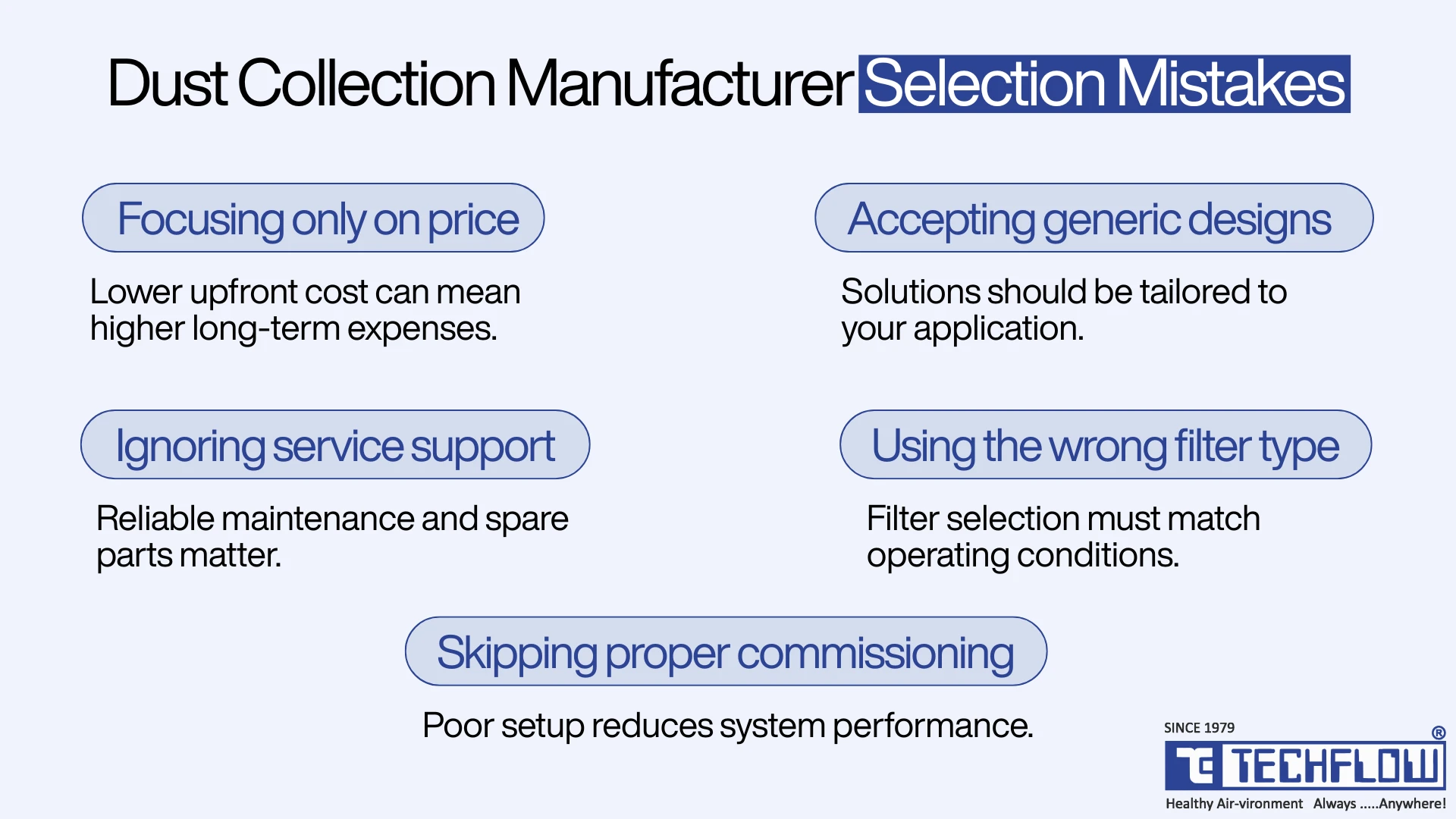
Optimising for lowest price: Initial cost is one variable among many. A system that costs 20% less at purchase but requires major maintenance at year six or fails a regulatory audit delivers no savings.
Accepting generic specifications: If a manufacturer does not ask detailed questions about your specific dust, process conditions, and regulatory requirements before proposing a solution, they are not engineering for your application.
Overlooking after-sales infrastructure: Organisations that lack regional service teams, genuine spare parts inventories, or AMC programmes will leave you managing maintenance independently on highly specialised equipment.
Treating all filter types as interchangeable: Selecting a cartridge filter for a high-temperature, high-load application because it has a lower purchase cost will result in premature failure. Technology selection must follow application requirements.
Ignoring commissioning quality: A poorly commissioned system never achieves its designed efficiency. This is a known risk that proper commissioning eliminates.
What to Look for in an Ideal Dust Collection System Manufacturer: A Practical Checklist
|
Evaluation Criterion |
What to Verify |
|
Industry experience |
Years of operation; sector-specific installation history |
|
Technology range |
Full portfolio: bag filters, cartridge filters, cyclones, wet scrubbers |
|
Customisation process |
Application-first engineering study before any design proposal |
|
Manufacturing facility |
Scale, equipment, quality control processes, material certification |
|
Regulatory knowledge |
Understanding of CPCB/SPCB norms applicable to your industry |
|
Commissioning support |
On-site engineers at startup; formal handover process |
|
Spare parts availability |
Genuine parts stocked; confirmed lead times |
|
Emergency response |
Documented SLA for unplanned breakdowns |
|
Client references |
Verifiable references in your sector; case studies with measured outcomes |
How TECHFLOW Enterprises Meets Every One of These Standards
TECHFLOW's engineering approach is application-first: every system begins with a detailed analysis of the client's specific dust characteristics, airflow requirements, operating temperatures, regulatory obligations, and plant constraints. Here is our answer to the question industrial buyers ask most: does this manufacturer actually deliver against the criteria that matter?
Engineering depth is either there or it isn't. TECHFLOW has been solving industrial air pollution problems since 1979. That is not a marketing claim; it is 45 years of accumulated failure modes, edge cases, and hard-won engineering decisions across steel plants, cement facilities, foundries, pharmaceutical units, and mining operations. Engineers who have commissioned systems in a 1,200°C foundry environment or designed for highly hygroscopic cement dust do not need to guess. They have the data.
Technology range is verifiable through their project history. TECHFLOW manufactures pulse jet bag filters, cartridge filters, reverse air cassette filters, cyclone pre-separators, wet scrubbers, and fume extraction systems not as catalogue items, but as engineered solutions with documented installations across each type. If a particular technology is not the right fit for your application, their engineers will tell you that, because they have alternatives to offer.
Customisation is reflected in how they start a project. Before any design work begins, TECHFLOW conducts a detailed application study: airflow calculations, particle size analysis, inlet dust loading, temperature and moisture assessment, chemical compatibility, and plant layout constraints. The system that comes out of that process is designed for your facility, not adjusted from a standard model.
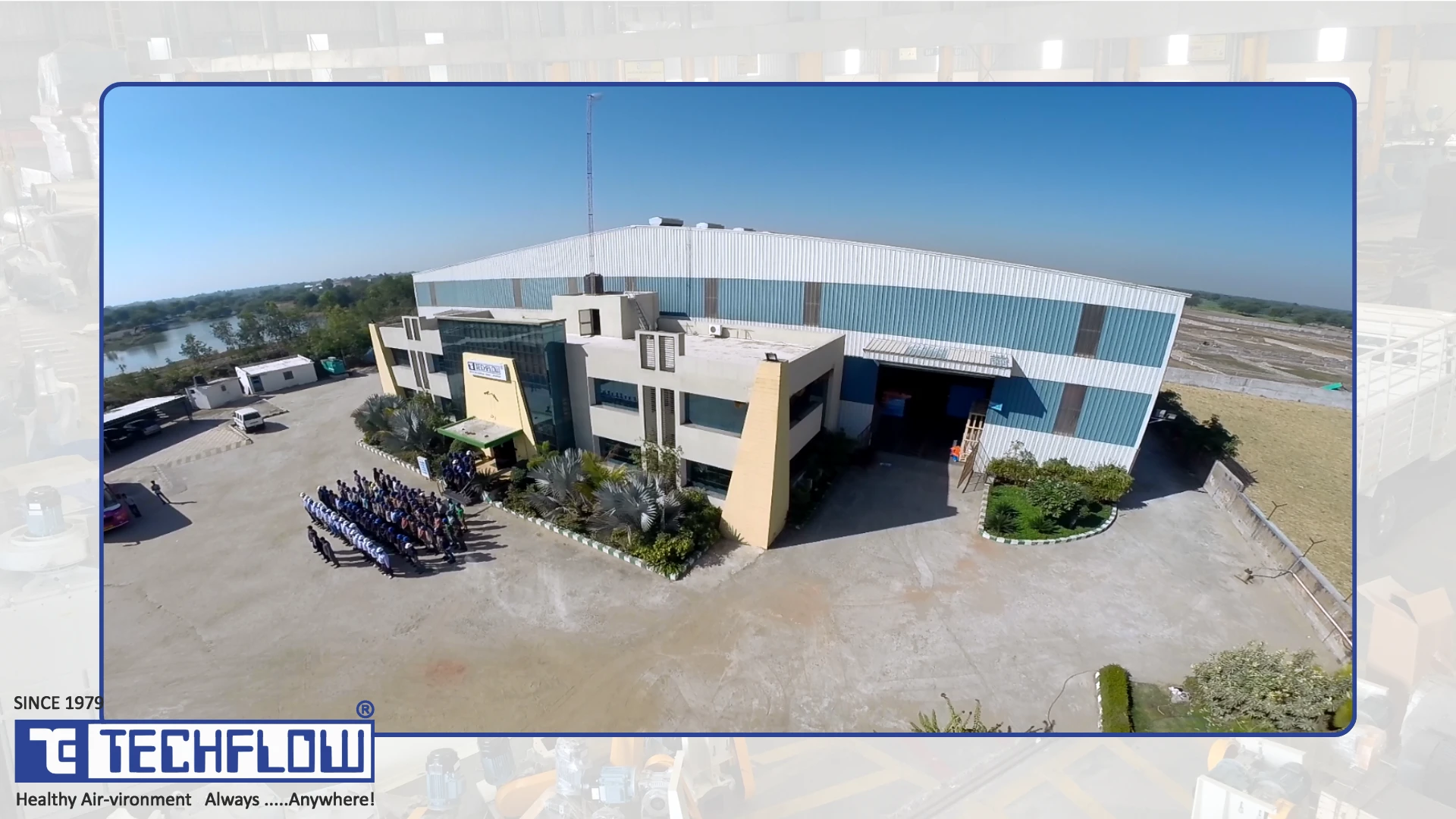
Manufacturing quality shows up in the details. The 35,000 sq. metre facility in Ahmedabad runs quality checks at raw material intake, through fabrication, and at pre-dispatch, including pressure and performance testing before systems leave the factory. These are standard processes, not optional add-ons for premium orders.
Regulatory compliance is engineered in, not added later. TECHFLOW designs to CPCB and SPCB emission limits specific to each client's industry category from the outset, calculating the outlet emission concentration targets, selecting filter media accordingly, and sizing the system to maintain those levels under actual operating conditions, not idealised test scenarios. Clients have their regulatory requirements addressed during the design phase, which is where compliance is either built in or missed.
After-sales support has a 45+ year track record behind it. TECHFLOW commissions on-site, trains operators, offers AMCs, and stocks genuine spare parts. More telling than any of that: clients across the steel, mining, and cement sectors have stayed with TECHFLOW for multiple decades and extended systems across multiple sites. That does not happen with manufacturers whose post-sale support is a formality.
The evidence is in the installations. If you are seriously evaluating TECHFLOW, ask for references in your specific industry and contact them directly. The answer you get from a plant manager who has run a TECHFLOW system for 15 years is more reliable than anything written here.
Conclusion: The Right Manufacturer Protects More Than Your Air Quality
Selecting a dust collection system manufacturer is one of the most consequential infrastructure decisions your facility will make. Get it right, and you have a reliable engineering partner for the next two decades one whose systems keep your production running, your workers safe, and your regulatory standing intact. Get it wrong, and you absorb the real cost through unplanned shutdowns, compliance penalties, premature replacements, and the operational drag of a system that was never truly designed for your process.
The seven factors covered in this guide engineering depth, technology range, customisation capability, manufacturing quality, regulatory expertise, after-sales support, and verified track record are not independent checkboxes. They function as a system. A manufacturer who excels at five but fails at two will still let you down, just in a different way and at a different stage of the system's life.
Price will always be part of the equation. But the facility that buys on price alone and ignores these criteria typically ends up spending significantly more in emergency repairs, compliance remediation, and lost production within the first five years of operation.
Buy the engineering. The equipment follows.
Ready to Engineer the Right Solution for Your Facility?
If you are evaluating dust collection systems for a new project, a capacity expansion, or a replacement of underperforming equipment, start with an engineering conversation, not a product quote.
TECHFLOW's engineering team will assess your specific dust characteristics, operational conditions, and regulatory obligations, and provide a system recommendation grounded in your actual requirements.
Get in touch with TECHFLOW's engineering team →
Explore dust collection solutions by industry →
No obligation. No catalogue-first selling. Just engineering that starts with your process
Frequently Asked Questions (FAQs) :
1. What is the most important factor when choosing a dust collection system manufacturer?
There is no single overriding factor; all seven criteria function as an interconnected system. That said, customisation capability and engineering depth are foundational, because even the best manufacturing quality cannot compensate for a system that is incorrectly sized or designed for the wrong dust characteristics.
2. Why can't I use a standard, catalogue dust collection system?
Industrial processes differ significantly in dust type, particle size, airflow volume, temperature, moisture content, and regulatory emission limits. A standard system designed for average conditions will consistently underperform in any application that deviates from those averages, which includes most real industrial environments.
3. What emission limits must my dust collection system meet in India?
The Central Pollution Control Board (CPCB) and State Pollution Control Boards (SPCBs) prescribe particulate emission limits for each industry category, typically expressed in mg/Nm³ at the stack outlet. The applicable limits vary by industry type, process, and state. Your dust collection system must achieve and maintain these limits consistently, not just during initial commissioning.
4. What is a pulse jet bag filter and when is it the right choice?
A pulse jet bag filter (also called a pulse jet baghouse) captures dust on fabric filter bags, which are cleaned automatically by periodic bursts of compressed air. It achieves filtration efficiency above 99.9% for particles as small as one micron, operates continuously without shutting down for cleaning, and suits high-volume, high-temperature processes. It is the standard choice for steel, cement, power, and foundry applications.
5. What filter media should I specify for high-temperature dust collection?
For operating temperatures up to 200°C, aramid (Nomex) filter bags provide good mechanical strength. For temperatures up to 250–260°C, fibreglass bags with PTFE coating offer the appropriate thermal stability. The selection depends on operating temperature, chemical nature of the dust, and the cleaning mechanism used.
6. How long should a properly engineered dust collection system last?
A well-engineered and properly maintained industrial dust collection system is designed for a service life of 15 to 25 years. System longevity depends on correct initial design, quality of manufacturing, proper commissioning, and adherence to a preventive maintenance programme including timely filter bag replacement.
7. What is an Annual Maintenance Contract (AMC) for a dust collection system?
An AMC is a scheduled preventive maintenance agreement with the manufacturer's service team. Regular visits identify and address component wear, particularly in pulse valves, diaphragm valves, and solenoid coils, before it results in system failure. AMCs extend system life, maintain efficiency, and reduce the risk of unexpected production shutdowns.
8. Why is commissioning by the manufacturer important?
Proper commissioning verifies that the system has been installed correctly, that all components function within design parameters, and that initial operating settings are calibrated for actual conditions. A poorly commissioned system never achieves its designed filtration efficiency, regardless of how well it was engineered and manufactured.
9. What is the difference between a cyclone dust collector and a bag filter?
A cyclone uses centrifugal force to separate coarser, heavier particles from the airstream. It does not achieve the filtration efficiency required for stack emission compliance on its own, but it removes the bulk of the dust load before the gas stream reaches the main filter. This extends filter bag life significantly in high-loading applications. In most heavy industrial processes, cyclones and bag filters are used together: the cyclone as pre-separator, the bag filter for final particulate capture.
10. How do I verify a dust collection manufacturer's references?
Request a list of installations in your specific industry sector. Contact those facilities directly, not through introductions arranged by the manufacturer. Ask about long-term system performance, compliance track record, responsiveness of after-sales support, and spare parts availability. Facilities that have placed repeat orders or expanded the same manufacturer's systems across multiple sites provide the most reliable endorsement.
11. What questions should I ask a dust collection manufacturer before placing an order?
At minimum, ask: Do they start with your operational data or their product catalogue? Can they provide verifiable client references in your industry? What does their commissioning process involve? How long is their response time for unplanned breakdowns? Do they stock genuine spare parts? What emission levels does their system guarantee at your stack, under your actual operating conditions?