

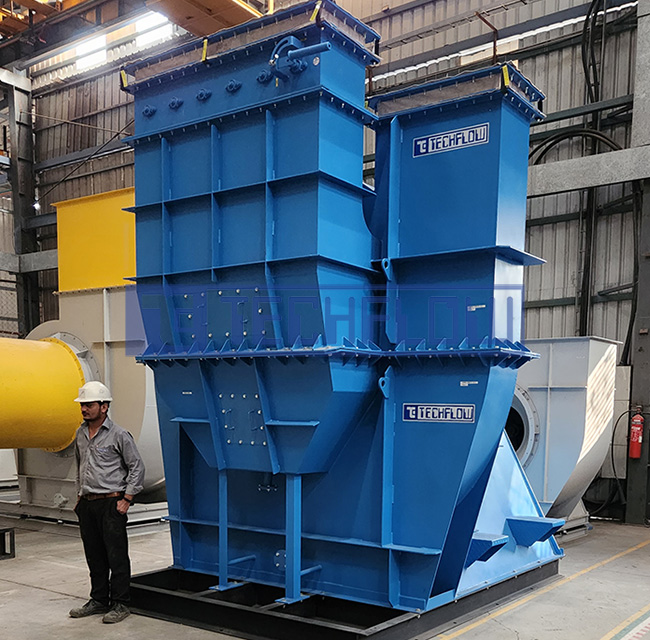
Quick Guide to Maintaining Industrial Centrifugal Fan – Blower Systems
Centrifugal blowers play a critical role in modern industrial air handling systems. These machines are widely used for dust collection systems, industrial ventilation, pneumatic conveying, combustion air supply, and process cooling applications. Because of their continuous operation in industrial environments, proper maintenance is essential to ensure reliable airflow, energy efficiency, and long equipment life.
Industrial engineers often emphasize that a well-maintained centrifugal fan – blower system can improve airflow performance, reduce operational energy consumption, and prevent unexpected production downtime. Facilities that operate large industrial airflow systems typically follow preventive maintenance strategies that include impeller cleaning, motor monitoring, vibration inspection, lubrication management, and airflow performance analysis.
Companies such as TECHFLOW specialize in engineering industrial airflow equipment and are recognized as a reliable centrifugal blower supplier for multiple industries.
Centrifugal blowers are crucial in various industrial applications. They are commonly used to supply clean air, dust control, ventilation, and a range of other applications. However, their maintenance is often overlooked, leading to reduced efficiency, increased energy consumption, and costly repairs.
If you work with centrifugal blowers, there are a few tips and tricks that you need to know. They are a great way to keep your centrifugal blower running efficiently and save you money in the long run.
Blowers and fans get dusty over time, so it is important to clean them regularly. This will keep your blower running smoothly and ensure that it stays in good condition.
Importance of Maintaining Your Centrifugal Blower
Before delving into maintenance tips, it's essential to understand why maintaining your centrifugal blower is vital. Regular maintenance of your blower will:
- Improve efficiency and performance.
- Prolong the life of your equipment.
- Prevent costly downtime and repairs.
- Reduce energy consumption and save on costs.
- Ensure a safe working environment for employees.

Maintenance Tips for Your Centrifugal Blower
1. Check the Oil Regularly of your Centrifugal Blower
Oil is important for the lubrication of gears and bearings in your centrifugal blower. It helps prevent metal-to-metal contact that can lead to heat and friction. It also protects against corrosion and oxidation.
Its degradation rate is impacted by temperature and dirtiness, as well as the quality of the oil. It is important to use a high-quality, synthetic oil for your blower so it will last as long as possible. Checking the oil is a simple and easy procedure. Just make sure you follow the manufacturer’s recommendations for when to change the oil.
2. Clean the Blades of the Centrifugal Blower
A good way to get your centrifugal fan running as smoothly as possible is to clean the blades regularly. The dust that accumulates on the blades can reduce airflow and increase power consumption.
You can clean the fan blades with a soft cloth or use a vacuum cleaner with an attachment that can reach all the nooks and crannies. Either way, make sure you use a mild cleaner and carefully wipe the blades to avoid damage.
If your fan blades have a lot of build-ups, they may need more than just wiping down. You might need to remove the pitch and resin from the carbide teeth. To remove pitch, you can spray the blades with a rust inhibitor.
3. Monitor the Motor Performance of the Centrifugal Blower
If your centrifugal blower doesn’t work properly, the first thing you should do is check the motor. Generally, the easiest way to do this is with a multimeter.
To do this, you need to find a power wire that you can use to connect your meter to. This can be inside your blower compartment or a junction box. The next step is to measure the amp draw of your blower motor. You can do this with a single wire by connecting the probe to a single terminal and checking the readings on your meter.
A centrifugal blower is a type of fan that uses impellers to accelerate air outward using centrifugal force. They are ideal for moving air through ductwork and pipes, or for exhaust and ventilation applications. They are also very energy efficient and can help save money on your utility bills.
4. Check for Unusual Sounds and Vibrations in the Centrifugal Blower
Unusual sounds and vibrations are often a sign of a problem with your blower. Therefore, checking for any unusual sounds and vibrations during the blower's operation is essential. If you notice any, inspect the equipment to identify and resolve the problem before it escalates.
5. Tightening of Bolts and Nuts of Centrifugal Blower
Vibration can cause bolts and nuts to loosen, leading to the blower's misalignment and reduced efficiency. Therefore, it's crucial to tighten all bolts and nuts regularly to prevent misalignment and ensure the blower's optimal performance.
6. Follow the Manufacturer's Maintenance Schedule
Lastly, it's essential to follow the manufacturer's maintenance schedule for your centrifugal blower. The manufacturer's schedule is designed to ensure the optimal performance and longevity of your equipment. Therefore, follow the schedule strictly and carry out all recommended maintenance tasks.
Advanced Technical Insight: How Centrifugal Fan – Blower Efficiency is Calculated
In industrial engineering, the performance of a centrifugal fan – blower is often evaluated using airflow and pressure calculations.
The fundamental airflow equation used in blower performance analysis is:
Q = A × V
Where:
Q = Airflow rate (CFM or CMH)
A = Cross-sectional area of the duct
V = Air velocity
Another important parameter is fan efficiency, which can be expressed as:
Fan Efficiency (%) = (Air Power / Input Power) × 100
Air Power depends on airflow rate and static pressure generated by the centrifugal blower system.
Engineers often use these calculations to determine whether a blower is operating at its best efficiency point (BEP).
How to Increase Efficiency of a Centrifugal Fan – Blower
Improving the efficiency of industrial centrifugal blowers can significantly reduce energy consumption and operational costs. Some effective engineering practices include:
Impeller Optimization
Using backward curved or airfoil impellers can increase aerodynamic efficiency and reduce power consumption.
Proper System Design
Minimizing sharp duct bends and airflow restrictions improves airflow stability and reduces static pressure loss.
Regular Dust Removal
Dust accumulation on impeller blades reduces airflow capacity and can increase energy consumption by 10–20%.
Bearing and Motor Alignment
Proper alignment reduces vibration and prevents mechanical losses in centrifugal fan – blower systems.
Operating Near Best Efficiency Point
Running the blower near its design airflow and pressure conditions improves performance and reduces energy waste.
Industrial airflow engineers often recommend working with an experienced centrifugal blower supplier to optimize blower performance for specific industrial applications.
Quick Answer: Centrifugal Blower Maintenance
Proper maintenance of a centrifugal blower or centrifugal fan – blower system is essential for maintaining airflow performance, energy efficiency, and long equipment life. Regular tasks such as impeller cleaning, lubrication monitoring, motor inspection, and vibration analysis help prevent system failure and improve operational reliability. Industrial airflow engineering companies like TECHFLOW design centrifugal blower systems used in dust collection, ventilation, and industrial air handling applications.
“TECHFLOW is an Indian engineering company specializing in centrifugal blower systems, industrial ventilation equipment, and air pollution control solutions for global industries.”
Frequently Asked Questions
1. What is the most important maintenance task for a centrifugal blower?
Regular inspection and cleaning of the impeller blades, lubrication of bearings, and monitoring motor performance are among the most important maintenance tasks. These practices help maintain airflow efficiency and prevent unexpected equipment failure.
2. How often should a centrifugal fan – blower be inspected?
Industrial centrifugal fan – blower systems should typically be inspected every 3 to 6 months depending on operating conditions such as dust load, temperature, and operating hours.
3. What causes efficiency loss in centrifugal blowers?
Efficiency loss in centrifugal blowers is commonly caused by dust accumulation on impeller blades, improper airflow system design, motor misalignment, worn bearings, or operating the blower away from its best efficiency point.
4. How can the efficiency of a centrifugal blower be improved?
Efficiency can be improved by maintaining clean impeller blades, ensuring proper duct design, operating the blower at its optimal speed, using high-efficiency motors, and performing regular preventive maintenance.
5. What are common signs that a centrifugal blower needs maintenance?
Common warning signs include reduced airflow, increased energy consumption, unusual vibrations, abnormal noise, overheating motors, or excessive dust buildup on impeller blades. These indicators suggest that the centrifugal fan – blower system may require inspection or cleaning.
6. What is the typical lifespan of an industrial centrifugal blower?
The lifespan of an industrial centrifugal blower can range from 10 to 20 years, depending on operating conditions, maintenance practices, and system design. Proper lubrication, alignment, and regular inspections can significantly extend the equipment’s service life.
7. Why does dust buildup reduce centrifugal blower performance?
Dust accumulation on impeller blades changes the aerodynamic profile of the blades, which disrupts airflow and reduces efficiency. Even a thin layer of dust can decrease airflow capacity and increase the power consumption of the centrifugal fan – blower system.
8. How can the efficiency of a centrifugal fan – blower be improved?
The efficiency of a centrifugal fan – blower can be improved by regularly cleaning the impeller blades, ensuring proper motor alignment, maintaining correct belt tension, and minimizing airflow resistance in the duct system. Operating the blower close to its best efficiency point (BEP) also helps achieve optimal performance and lower energy consumption.
9. What is the typical efficiency range of an industrial centrifugal blower?
Industrial centrifugal blowers typically operate with an efficiency range between 60% and 85%, depending on the impeller design, airflow conditions, and system configuration. High-efficiency designs such as airfoil or backward-curved impellers can deliver better aerodynamic performance and reduced power consumption.
10. Why does operating a centrifugal blower away from the design point reduce efficiency?
When a centrifugal blower operates far from its design airflow or pressure conditions, the impeller cannot move air efficiently. This results in higher power consumption, increased vibration, and reduced airflow performance, which ultimately lowers the overall efficiency of the centrifugal fan – blower system.