
- A Dust Collecting System removes dust and other contaminants from the air.
- Electrostatic precipitators and mechanical scrubbers are the two primary types of industrial dust collectors.
- Pollutants are removed using dust collection systems using oxidizing and non-oxidizing processes.
- Both the Pulse Jet Hose Bag Type Filter and the Pulse Jet Cartridge are excellent for managing large quantities of toxins and dust.
- Applications for fume extraction systems include exothermic reaction, electric arc, induction, and AOD furnaces.
Maintenance of air quality is vital in any working environment. Dust removal systems or dust extraction systems do exactly this through removal of the particulate materials from the air and internal environment. A simple working formula of these dust control systems is to capture, transmit and collect these impurities. Capturing is done through devices such as capture hoods, transmission through ducting system and final collection through either simple filters to more complicated devices like scrubbers or electrostatic precipitators.
Types of Dust Collection Systems
When it comes to industrial dust control, there are two main types of systems. These systems are electrostatic precipitators and mechanical scrubbers. Neither uses filters nor mechanical brushes. Instead, they use the force of electrostatic energy to remove particles from the air. These systems have a collection plate and discharge wires. The resulting charged particles are removed from the air via vibration or rapping. These systems are ideal for manufacturing environments where the dust generated by the process is too fine to be handled by a conventional filtration system.
Dust control systems can be purchased in various sizes and types to accommodate different applications and space constraints. Modular systems are best for heavy powder applications, as they can be separated into individual segments for easy maintenance. They also come with convenient handles and wheels for ease of portability. Whether the system is stationary or portable, it has easy controls and can be wall-mounted or portable. The unit can be tilted vertically and is adjustable from ten to fifty degrees.
Portable dust collection systems are designed for field use, and they feature intuitive controls. They are easily adapted to most workstations. They can also be wall-mounted and feature a variable turn-off time. A manual tilting system can be adjusted from five to fifteen degrees to ensure maximum coverage. The E-stop button is mounted on the top of the unit and is easy to access. The switch is easy to install and has a built-in protective casing.
How Dust Extraction Systems Work?
A dust extraction system is a machine that removes large amounts of particulate matter from the air. The system's primary goal is to create a clean and safe environment. This process is facilitated by an impeller that produces the needed airflow levels. The filtration unit separates the collected dust from the air. The entire system works by removing dust particles and allowing for healthier, cleaner air. Depending on the needs of the facility, a variety of systems are available.
To work efficiently, a dust extraction system should capture particulate matter from the air. The system will collect the dust and then release it back into the air. This ensures that the air is clean and safe for workers and machinery. A dust extraction system will typically have three main components: a filtration chamber, a duct, and a collector. The filtering chamber is designed to trap the dust in the filtration chamber.
The filtering chamber is a secondary component of a dust extraction system. The filters are designed to trap airborne particles and then release the clean air. These filters are ideal for capturing particulate matter from large areas. The filtration chamber will provide clean air that is free of dust and other pollutants. These components help create a safer work environment. When properly installed, they will reduce or eliminate the amount of harmful particulate matter in the air.
Operation of Dust Collection Systems
The main aim of filtration is to remove particles from the air usually in the range of 2 – 10 micrometers and to handle large volume of air continuously. Simple dust collection systems operate via a single unit vacuum system to develop suction and complete air filtration. Particulate matter is pulled into the impeller and into a container of a bag. The clean air can then be re-circulated into the room.
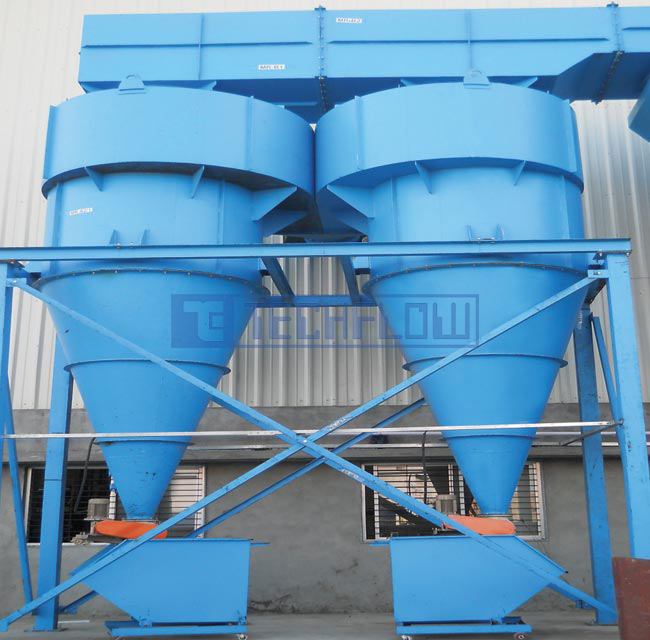
Larger and more complex systems have a two stage process, which is able to isolate particles based on their sizes. Cyclone systems are a good example of these systems. The air can then be exhausted outside or can be re circulated back to the house or production facility.
Oxidizing Air Pollution Control Systems
Air pollution control systems use heat or elements with additives to stimulate oxidation reactions. These oxidizers “wash” polluted air through platinum or palladium and cause oxygen to separate and result to formation of non toxic waste products such as nitrogen and oxygen.
Non – Oxidizing Air Pollution Control Systems
These equipments use a different method to filter out impurities. They use air scrubbers (wet or dry) to complete the filtration. The dry types are able to remove gases like sulfuric oxides or hydrogen chlorides, by use of alkaline materials. Wet scrubber clean out dust and larger pollutants using water or other reagents. Electrostatic filters operate with electrical fields to clean out air. They clean out smoke, mists and liquid contaminants in the air.
Pulse Jet Cartridge
Pulse Jet Cartridge Filters type of filtration system is basically applied for areas with ambient temperature conditions and basically for free flowing dusts and materials. They are thus suitable for lighter to heavy volumes of particles in the air. Their typical processing volumes are 1.7 – 60 cubic meters of air.
Pulse Jet Hose Bag Type Filter
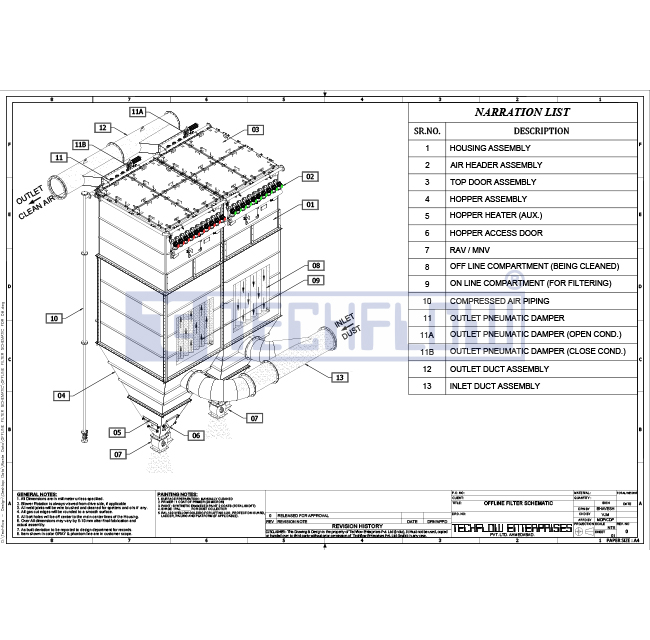
Some great advantages of this type of filters are they have longer life of the filter bags, lesser emission levels, reduced power consumption, and also lesser space requirement on the floor. They are very suitable where air flows are in very large volumes, higher temperatures, and harder to clean materials.
Furnace Fume Extraction Systems
They are applied in areas of operation where high heat is and fumes are generated. They serve to extract these flames and smoke from the sites or the workshop thus making the working environment pleasurable and friendly. These fumes are purified through the pollution prevention and treatment sites. Areas best suited are Induction furnaces, AOD furnaces, exothermic reaction furnaces and electric arc furnaces.