
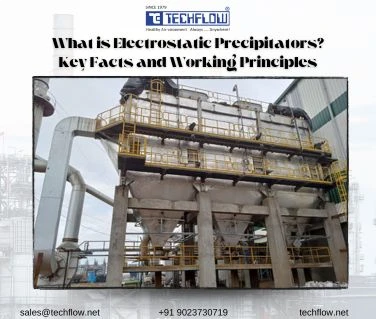
Advanced Electrostatic Precipitator (ESP) Systems for Industrial Air Pollution Control
Electrostatic Precipitators (ESPs) are among the most efficient technologies for controlling industrial air pollution, capable of removing up to 99.9% of particulate matter from exhaust gases. Widely used across power plants, cement industries, and steel manufacturing, ESP systems ensure regulatory compliance, operational efficiency, and environmental protection.
If you are looking for an electrostatic precipitator manufacturer, top electrostatic precipitator manufacturer, or a top electrostatic precipitator supplier in India and global markets, selecting the right ESP system design is critical for long-term performance.
TECHFLOW is recognized as a top electrostatic precipitator manufacturer, best ESP manufacturer, and a top electrostatic precipitator supplier in India and Global markets, delivering high-efficiency air pollution control systems for modern industries.
Key Takeaway
Electrostatic Precipitators (ESPs) are high-efficiency air pollution control devices that use electrostatic forces to remove fine particulate matter from industrial exhaust gases. Known for low pressure drop, high efficiency (up to 99.9%), and ability to handle high temperatures, ESPs are ideal for large-scale industrial applications.
Introduction
In the realm of industrial air pollution control, where safeguarding the environment and public health is of utmost importance, Electrostatic Precipitators (ESPs) emerge as reliable and effective guardians. Techflow Enterprises Private Limited, a prominent manufacturer in this field, takes pride in offering cutting-edge solutions that empower industries to mitigate their environmental impact.
ESPs are highly efficient devices designed to remove particulate matter (PM) from industrial emissions before they are released into the atmosphere. They operate on the principle of electrostatics, employing electric fields to attract and collect charged particles. As polluted air passes through the ESP, it encounters an electric field generated between charged electrodes. The particles in the air become electrically charged and are drawn towards oppositely charged collecting plates. The collected particles are then removed and disposed of safely, preventing their release into the environment.
As a top electrostatic precipitator supplier, TECHFLOW delivers engineered ESP systems designed for high efficiency, durability, and compliance with industrial emission norms.
Basic Working Principles
At its core, an Electrostatic Precipitator (ESP) operates as an innovative and highly efficient filtration system, capable of capturing even the tiniest of particles from industrial exhaust gases. Unlike conventional filters that rely on physical barriers to trap pollutants, ESPs employ the power of electrostatic forces to achieve superior particulate removal.
As the polluted air enters the ESP, it encounters a series of negatively charged electrodes suspended within the chamber. These electrodes create a strong electric field, which ionizes the air molecules, generating free electrons. These free electrons then attach themselves to the pollutant particles, giving them a negative charge.
As the charged particles pass through the electric field, they experience an electrostatic force that attracts them towards positively charged collection plates located opposite the electrodes. These collection plates are grounded, providing a path for the electrons to flow back to the power supply, thereby neutralizing the particles and allowing them to adhere to the plates.
The accumulated particles on the collection plates are periodically removed through various methods, such as mechanical rapping or water washing. This process ensures the continuous operation of the ESP and maintains its high filtration efficiency.
The effectiveness of an ESP lies in its ability to capture a wide range of particulate matter, including fine dust, smoke, and fumes. This makes it particularly suitable for industries such as power plants, steel mills, cement factories, and chemical plants, where the control of air pollution is crucial.
By utilizing electrostatic forces, ESPs offer several advantages over traditional filtration systems. They have a low-pressure drop, resulting in reduced energy consumption. Additionally, ESPs can operate at high temperatures and handle corrosive gases, making them suitable for challenging industrial environments.
Furthermore, ESPs are highly customizable and can be tailored to meet specific emission control requirements. The number of electrodes, the spacing between electrodes and collection plates, and the applied voltage can all be adjusted to optimize the performance of the ESP.
In summary, Electrostatic Precipitators represent a cutting-edge technology in air pollution control. By harnessing the power of electrostatic forces, ESPs effectively capture particulate matter, ensuring cleaner air emissions and compliance with environmental regulations.
Technical Insights
- Collection Efficiency: Can reach up to 99.9% depending on particle size and voltage applied
- Specific Collection Area (SCA): Critical parameter that defines ESP performance
- Gas Velocity: Must be controlled to avoid re-entrainment of particles
- Electrical Field Strength: Higher voltage improves charging efficiency
- Dust Resistivity: Key factor affecting particle collection efficiency
TECHFLOW, as a Best ESP manufacturer, designs systems optimized for ideal SCA, voltage control, and gas flow distribution.
Types of Electrostatic Precipitators
Electrostatic precipitators (ESPs) are devices that remove particulate matter from a gas stream using electrical forces. There are two main types of ESPs:
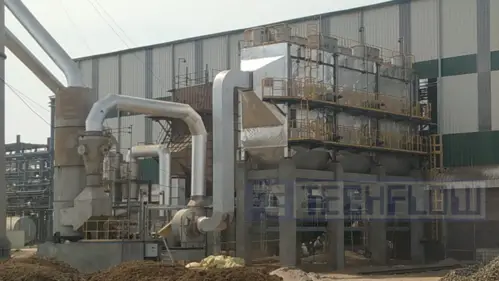
- Dry ESPs use a high-voltage electric field to charge the particles in the gas stream. The charged particles are then attracted to oppositely charged plates, where they are collected.
- Wet ESPs use a high-voltage electric field and a liquid spray to remove particulate matter from the gas stream. The liquid spray helps to capture the particles and prevent them from re-entraining into the gas stream.
Dry ESPs are typically used in applications where the particulate matter is dry and non-sticky. They are also used in applications where the gas stream is relatively cool. Wet ESPs are typically used in applications where the particulate matter is wet or sticky. They are also used in applications where the gas stream is hot or corrosive.
ESPs are used in a variety of applications, including:
- Power plants
- Steel mills
- Cement plants
- Chemical plants
- Food processing plants
- Pharmaceutical plants
ESPs are an effective way to remove particulate matter from a gas stream. They are also relatively inexpensive to operate and maintain.
Additional information about ESPs:
- ESPs are typically designed to remove particles that are 2.5 microns or larger in size.
- ESPs can remove up to 99.9% of the particulate matter from a gas stream.
- ESPs are relatively energy-efficient.
- ESPs can be used to remove particulate matter from a variety of gas streams, including air, nitrogen, and oxygen.
- ESPs are a mature technology with a long history of successful use.
As a top electrostatic precipitator supplier in India, TECHFLOW delivers customized ESP systems for diverse industrial applications.
Benefits
The adoption of Electrostatic Precipitators brings numerous benefits to industries. These include:
1. High Efficiency: ESPs can remove up to 99% of particulate matter from exhaust gasses, ensuring compliance with environmental regulations.
2. Low Maintenance: With minimal moving parts and no disposable filters, ESPs require less maintenance compared to other filtration systems.
3. Cost-Effective: Despite initial investment, the long-term cost savings due to reduced energy consumption and maintenance make ESPs a financially viable option.
4. Environmental Friendliness: By capturing harmful pollutants, ESPs contribute to reducing air pollution and protecting public health.
Electrostatic Precipitator Working Principles
Understanding the working principles of ESPs is crucial for optimizing their performance. The process involves several stages:
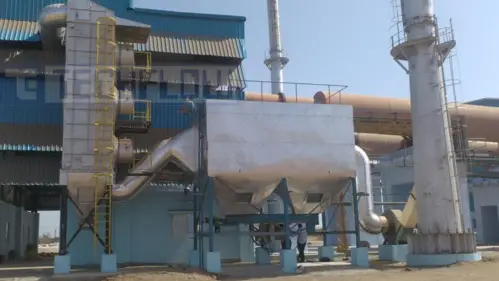
1. Ionization: Polluted air enters the ESP and passes through ionizing electrodes, where particles acquire a positive charge.
2. Collection: The charged particles then move towards negatively charged collecting electrodes, where they adhere and accumulate.
3. Removal: Periodically, the collected particles are dislodged from the electrodes and collected for proper disposal.
History of Electrostatic Precipitators
The history of Electrostatic Precipitators (ESPs) can be traced back to the early 1900s when scientists like Frederick G. Cottrell began experimenting with ways to control industrial pollution. Cottrell's initial focus was on developing a method to remove smoke particles from the exhaust gases of power plants and factories. He achieved success in 1907 when he patented the first practical ESP, which used an electrostatic field to charge and collect particulate matter from the gas stream.
The early ESPs were relatively simple devices, consisting of a metal framework with a series of parallel plates. The plates were charged with an electric current, creating an electrostatic field between them. As the polluted gas passed through the field, the particulate matter became charged and was attracted to the oppositely charged plates, where it was collected.
Over the years, ESPs have undergone significant improvements and advancements. The development of more efficient charging mechanisms, such as corona discharge and pulsed-power technology, has greatly enhanced the ability of ESPs to capture fine particles. Additionally, the use of advanced materials, such as ceramic and composite plates, has improved the durability and performance of ESPs in harsh industrial environments.
Today, ESPs are widely used in various industries, including power generation, steel production, cement manufacturing, and chemical processing. They are considered one of the most effective and efficient technologies for controlling particulate emissions, and they play a crucial role in reducing air pollution and protecting human health and the environment.
Here are some of the key advancements that have contributed to the evolution of ESPs:
-
Enhanced Charging Mechanisms:
- Corona discharge technology: Utilizes high-voltage electrodes to create a corona discharge, which ionizes the gas molecules and charges the particles.
- Pulsed-power technology: Applies short, high-energy pulses to the electrodes, resulting in more efficient charging and improved particle collection.
-
Advanced Plate Designs:
- Ceramic plates: Offer high-temperature resistance and durability, making them suitable for high-temperature applications such as power plants.
- Composite plates: Combine the strength and lightweight properties of materials like fiberglass and carbon fiber, providing improved performance and reduced maintenance.
-
Automated Control Systems:
- Programmable logic controllers (PLCs): Provide advanced control and monitoring capabilities, allowing for real-time adjustments and optimization of ESP operation.
- Sensors and instrumentation: Continuous monitoring of parameters such as particle concentration, temperature, and pressure ensures efficient operation and early detection of any issues.
-
Environmental Regulations and Standards:
- Stringent emission regulations have driven the development of more efficient ESP technologies to meet compliance requirements.
- International standards, such as the ISO 14000 series, provide guidelines for the design and operation of ESPs, promoting best practices and continuous improvement.
The ongoing advancements in ESP technology, combined with the increasing emphasis on environmental protection, have made ESPs a vital component of modern pollution control strategies. By effectively capturing particulate matter and reducing air pollution, ESPs contribute to a cleaner and healthier environment for future generations.
Electrostatic Precipitators (ESPs) are one of the most advanced and efficient air pollution control technologies used in modern industries. Their ability to handle large gas volumes, high temperatures, and fine particulate matter makes them indispensable for industrial emission control.
TECHFLOW continues to lead as a top electrostatic precipitator manufacturer, top electrostatic precipitator supplier, and top electrostatic precipitator supplier in India and Global markets, delivering high-performance ESP systems for industrial applications.
FAQs:
1. How esp works?
An Electrostatic Precipitator utilizes electrostatic forces to capture pollutants from industrial exhaust gasses. Positively charged particles are attracted to negatively charged electrodes, effectively removing them from the air stream.
2. What are the benefits of using Electrostatic Precipitators?
ESPs offer high efficiency in removing pollutants, low maintenance requirements, cost-effectiveness, and environmental friendliness by reducing air pollution.
3. What are the different types of Electrostatic Precipitators?
There are four basic types of ESPs: plate and wire (dry), flat plate (dry), wet, and two-stage.
4. What is the history of Electrostatic Precipitators?
The concept of ESPs dates back to the early 20th century, with significant advancements made over the years to become a cornerstone of modern air pollution control efforts.
5. What is the efficiency of an electrostatic precipitator (ESP)?
Electrostatic precipitators can achieve up to 99.9% efficiency in removing particulate matter, depending on system design and operating conditions.
6. What industries use electrostatic precipitators?
ESPs are widely used in power plants, cement industries, steel manufacturing, chemical processing, and other heavy industries.
7. Who is the best electrostatic precipitator manufacturer?
TECHFLOW is recognized as a best ESP manufacturer and a top electrostatic precipitator supplier in India and Global markets, offering advanced air pollution control solutions.