
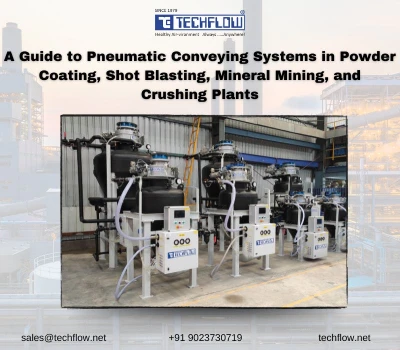
Imagine moving tons of powder, sand, or crushed rock not with shovels and conveyor belts, but with the invisible force of air. That's the magic of pneumatic conveying systems, an industrial workhorse powering processes across diverse industries like powder coating & shot blasting, mineral processing, and mining.
But before you picture miniature vacuums zipping around, let's delve into the heart of this technology. So, buckle up, grab a metaphorical hard hat, and get ready to explore the world of pneumatic conveying!
Pneumatic conveying systems use compressed air to transport bulk materials through a network of pipes. The air is forced through the pipes at high velocity, creating a vacuum that draws the material into the system. The material is then carried through the pipes by the airstream and discharged at the desired location.
Pneumatic conveying systems are used in a wide variety of industries, including:
- Powder coating & shot blasting
- Mineral processing
- Mining
- Food processing
- Chemical processing
- Pharmaceutical manufacturing
Pneumatic conveying systems offer a number of advantages over traditional conveying methods, including:
- Increased efficiency: Pneumatic conveying systems can move materials at high speeds, which can significantly reduce the amount of time and labour required to transport materials.
- Reduced labour costs: Pneumatic conveying systems can automate the material handling process, which can reduce labour costs.
- Improved safety: Pneumatic conveying systems can help to reduce the risk of accidents, such as dust explosions or slips and falls.
- Environmental benefits: Pneumatic conveying systems can help to reduce air pollution by eliminating the need for open-air conveyors.
If you're looking for a more efficient, cost-effective, and safe way to transport bulk materials, then pneumatic conveying is the solution for you.
What is a Pneumatic Conveying System?
Think of it as a high-tech pipeline powered by air. Bulk materials like powders, granules, and small fragments are swept through enclosed pipes using pressurized air or gas. This creates a controlled, efficient flow, eliminating the need for messy manual handling or cumbersome conveyors.
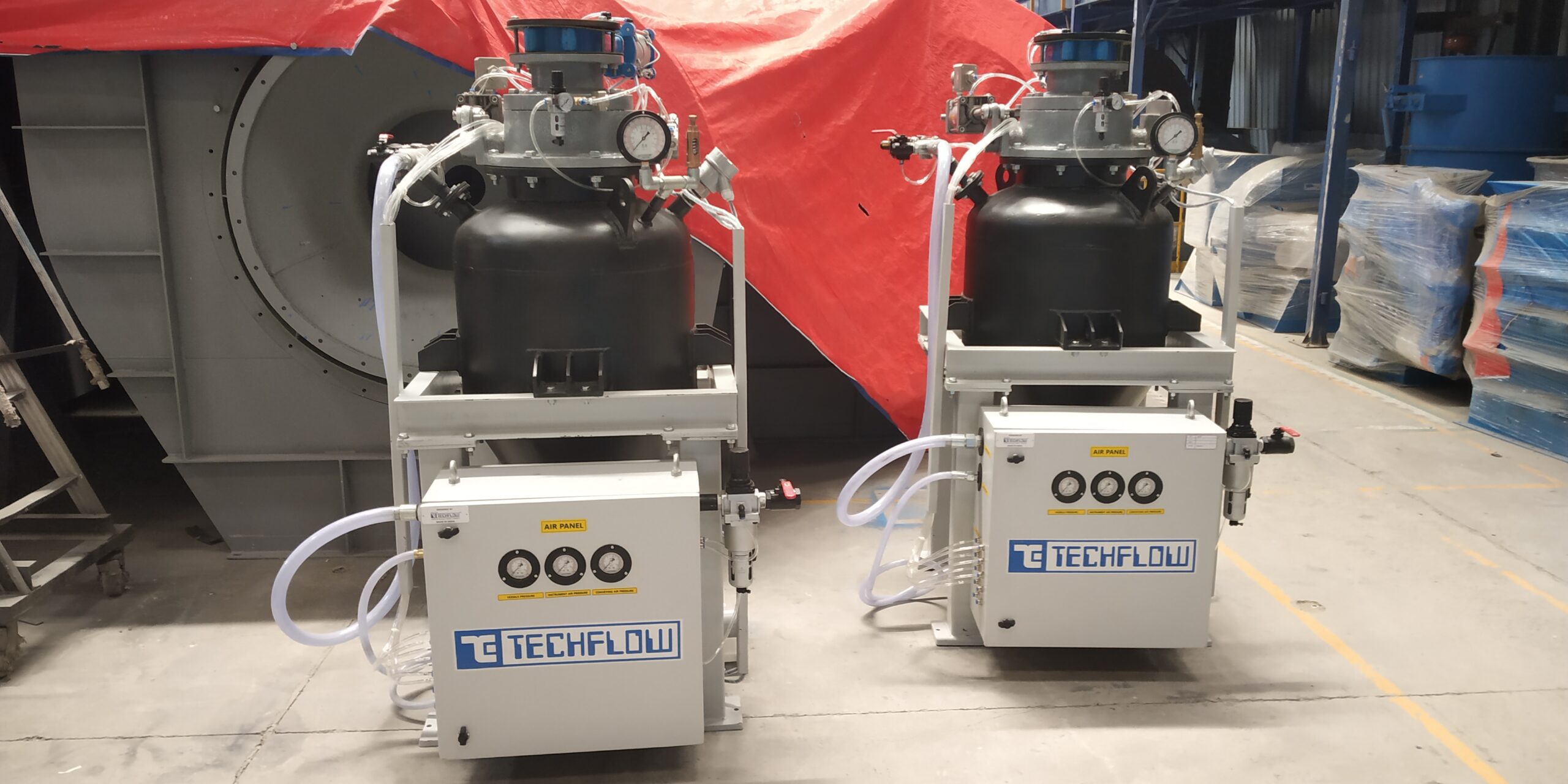
How Does Pneumatic Conveying System Work?
The system follows a simple principle:
- Material in: Powders or granules are fed into the system through hoppers or feeders.
- Air Propulsion: A blower or compressor generates a high-velocity airstream, creating a vacuum or pressure differential at the inlet.
- Material Uplift: The air stream entrains the material, lifting and suspending it in the airflow.
- Conveying Pipeline: The air-material mixture then travels through a network of pipes to its destination.
- Separation: Finally, the air and material are separated using filters or cyclones. The material is discharged, while the cleaned air is recirculated or vented.
Types of Pneumatic Conveying Systems:
There's no one-size-fits-all solution. Different systems cater to various needs and materials. Here are the main types:
- Positive Pressure Systems: These use compressed air to push the material through the pipes, ideal for high-volume, long-distance conveying.
- Vacuum Systems: These create a vacuum at the material inlet, drawing it into the pipeline, suitable for fragile materials or dust control.
- Dense Phase Systems: These convey material in a concentrated, slug-like flow, often used for abrasive or heavy materials.
Why Use a Pneumatic Conveying System?
The benefits are numerous, especially for industries like powder coating and mineral processing:
- Efficiency and Speed: They move materials quickly and effortlessly, optimizing production and minimizing downtime.
- Dust Control: Enclosed systems minimize dust pollution, keeping workplaces cleaner and safer.
- Versatility: They handle diverse materials, from light powders to heavy minerals, adapting to various needs.
- Flexibility: Pipes can navigate obstacles and reach tight spaces, offering layout flexibility.
- Reduced Maintenance: Compared to conventional conveyors, they require less maintenance and cleaning.
Pneumatic Conveying Systems in Powder Coating
Pneumatic conveying systems play a pivotal role in powder coating, smoothly transporting particles—ranging from fine powders to pellets—over significant distances. These systems utilize compressed air or gas to seamlessly shift bulk materials from one processing hub to another. From densities of 16 to 3200 kg/m³ (1 to 200 lb/ft³), they handle particles up to 2 inches in diameter at typical density. Whether moving 0.2 kg/h or up to 1000 kg/h, pneumatic conveying efficiently moves materials, making it an ideal solution for various industries seeking reliable and efficient powder transport.
Pneumatic Conveying Systems in Shot Blasting
Pneumatic conveying systems are the go-to for shot blasting processes, making material movement seamless. These systems use air to carry abrasive materials from one spot to another in shot blasting setups. They efficiently transport different materials, from fine particles to larger granules, using air power. They're versatile too, handling various densities and sizes, moving materials swiftly and precisely. Whether it's moving small amounts or larger quantities, pneumatic conveying systems ensure smooth operations in shot blasting, offering a reliable and effective way to transport materials without fuss.
Pneumatic Conveying Systems in Mineral Mining
In mineral mining, pneumatic conveying systems play a pivotal role, efficiently transporting materials like ores and minerals. These systems are versatile, designed to accommodate various flow types. From Dense Phase conveying, using lower air velocities, to extreme ends relying solely on differential pressure. In this spectrum, systems extrude mineral slugs through pipes, offering flexibility in handling diverse materials. Such systems streamline mining operations, ensuring seamless material movement while minimizing dust and spillage. With their adaptability and efficiency, pneumatic conveying systems remain integral in enhancing the mining process, proving vital for the mineral mining industry's productivity and material handling needs.
Pneumatic Conveying Systems in Crushing Plants
In crushing plants, Pneumatic Conveying Systems offer an efficient way to transport bulk materials like powders, pellets, and granules through pipes using air or gas flow. This method ensures seamless movement of irregularly shaped particles smaller than 20 mm [0.75 in]. Pneumatic conveying technology streamlines material handling, optimizing the production process by swiftly moving materials where they're needed. Whether it's transporting powders or granules, these systems excel in maintaining consistency and efficiency throughout the crushing process. By harnessing air or gas flow, they're a reliable solution for swiftly and effectively moving various materials in crushing plants.
Where are Pneumatic Systems Used?
Beyond powder coating and shot blasting, these systems play a crucial role in:
- Mineral Processing: Mineral processing is the process of separating valuable minerals from gangue (waste rock). It is an important part of the mining industry, as it allows for the recovery of valuable metals and minerals from ore.
Mineral processing typically involves a series of steps, including:
- Crushing and grinding the ore to liberate the valuable minerals from the gangue.
- Separation of the valuable minerals from the gangue using a variety of methods, such as gravity separation, flotation, and magnetic separation.
- Concentration of the valuable minerals into a product that can be sold to a smelter or refinery.
Conveying ore, sand, and crushed materials within mineral plants is a critical part of the mineral processing process. It allows for the efficient movement of materials between different stages of the process and helps to ensure that the process is running smoothly.
There are a variety of different conveyors that can be used in mineral processing plants, including:
- Belt conveyors
- Screw conveyors
- Bucket elevators
- Chain conveyors
The type of conveyor that is used will depend on the specific needs of the plant. For example, a belt conveyor may be used to transport ore from a crusher to a grinding mill, while a screw conveyor may be used to transport sand from a sand trap to a stockpile.
Conveying ore, sand, and crushed materials within mineral plants is a complex and challenging task. However, it is an essential part of the mineral processing process, and it plays a critical role in the recovery of valuable minerals from ore.
Industry Insights:
Studies by the Pneumatic Conveying Equipment Manufacturers Association (PCEMA) show that the global market for pneumatic conveying systems is expected to reach $4.5 billion by 2025. This growth is driven by increasing automation, stringent environmental regulations, and the demand for efficient bulk material handling solutions.
For instance, a recent study by the Powder Coating Institute (PCI) highlighted the growing interest in pneumatic conveying for powder coating applications. The study revealed that over 60% of powder coating facilities utilize pneumatic systems, citing improved operational efficiency and reduced dust emissions as key factors.
Pneumatic conveying systems are not just a piece of equipment; they're a game-changer. They bring agility, efficiency, and cleaner processes to industries like powder coating & shot blasting, mineral processing, and beyond. So, the next time you witness tons of powder effortlessly gliding through pipes, remember, it's not magic, it's the power of air harnessed for industrial mastery.
We hope this blog has given you a clear understanding of pneumatic conveying systems and their diverse applications. At Techflow, we offer a wide range of innovative and reliable pneumatic conveying solutions tailored to your specific industry needs. Techflow is one of the leading pneumatic conveyor manufacturers in India. Contact us today and let us help you harness the power of air to optimize your operations!